Why Schools Trust Professional Classroom Furniture Installation Services to Put Student Safety First
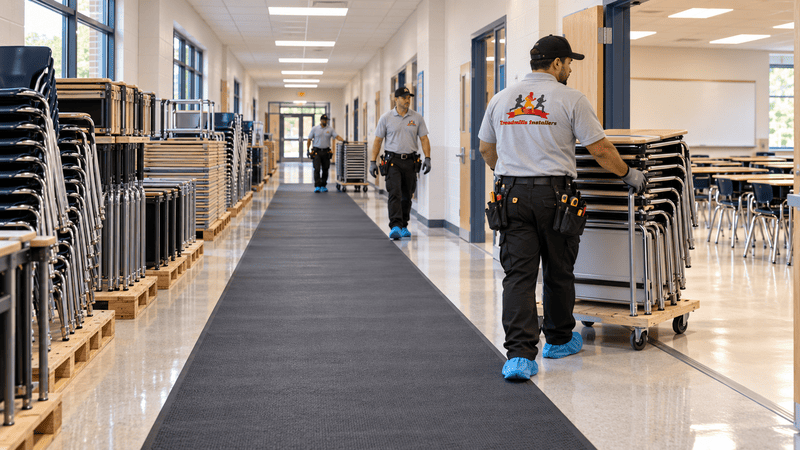
Professional classroom furniture installation typically includes delivery staging, component organization, desk and seating assembly, storage installation, technology furniture setup, anchoring considerations, room placement, and final checks. The right installation approach depends on furniture quantity, room layout, student age group, wall conditions, floor conditions, manufacturer requirements, school deadlines, accessibility needs, and applicable facility rules.
- High-volume projects need organized staging
- Consistent assembly matters across classrooms
- Tall storage requires extra planning
- Classroom layout affects daily movement
- Professional crews reduce installation backlog
School Furniture Installation Should Be Planned Before Delivery Day
A large school furniture delivery creates instant pressure. Hundreds of boxes arrive at once, along with mixed hardware, room assignments, and fixed installation deadlines.
Then the real challenge starts. Asking already-busy maintenance teams to assemble every desk, locker, shelf, and media station slows classroom readiness. Repairs, custodial coordination, and daily building needs still compete for their time.
Professional classroom furniture installation offers a practical path forward. Trained crews organize deployment, assembly, placement, and anchoring considerations before students return. From professional preschool furniture assembly to full high school buildouts, planning beats scrambling every time.
Classroom Furniture Requires Organized Deployment
High-volume school furniture installation works best with organized staging, sorted hardware, and room-by-room sequencing. Hundreds of cartons often arrive together with mixed furniture models. A structured plan keeps assembly moving and classrooms on schedule.
Consider a charter school renovation in Maryland. Three truckloads of desks, chairs, and cabinets land in one week. Without staging, boxes clog hallways and hardware goes missing.
Organized crews follow a clear sequence:
| Delivery Stage | What Crews Handle | Why It Matters |
|---|---|---|
| Carton staging | Sorting boxes by room assignment | Prevents lost components |
| Hardware organization | Grouping fasteners by furniture model | Speeds up assembly |
| Room sequencing | Completing one classroom at a time | Keeps corridors clear |
| Layout execution | Placing furniture per room plan | Supports daily instruction |
Staging essentials also include:
- Delivery staging near final rooms
- Hardware sorting before assembly begins
- Layout coordination with administrators
- Aisle awareness during active setup
- Efficient room-by-room sequencing
Student Desks and Seating Need Consistent Assembly
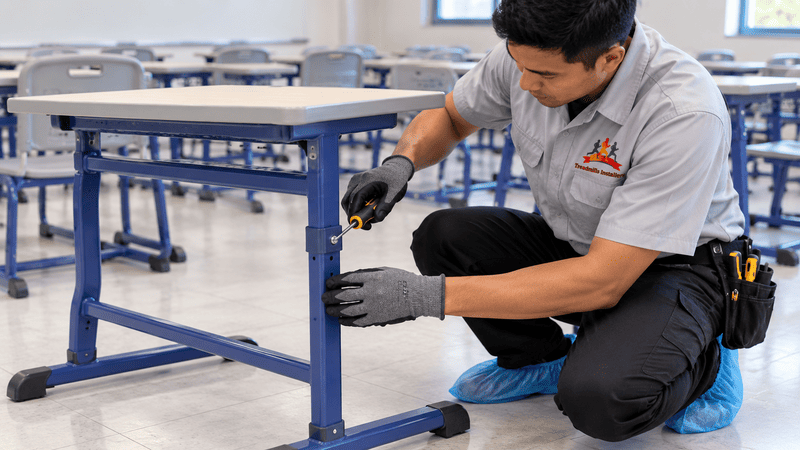
Student desk installation requires repeatable steps across every classroom. Crews tighten fasteners, align desktops, check chair stability, level tables, and verify hardware against manufacturer instructions. Consistency reduces avoidable setup variation across large deployments.
A Pennsylvania high school may need hundreds of individual student desks, integrated chair-desk combinations, collaborative training pod tables, and tiered lecture hall seating. Each furniture type follows different assembly steps.
Consistent school furniture assembly includes:
- Fastener tightening to specification
- Desk alignment within room layouts
- Chair stability checks
- Table leveling on uneven floors
- Hardware verification after assembly
- Final visual checks per room
Purchasing teams comparing styles can review student desk design examples when planning orders. For complex desk models, professional desk assembly support keeps builds uniform. Seating also matters, and professional chair assembly services help maintain consistency across hundreds of units.
Lockers and Storage Systems Require Extra Installation Planning
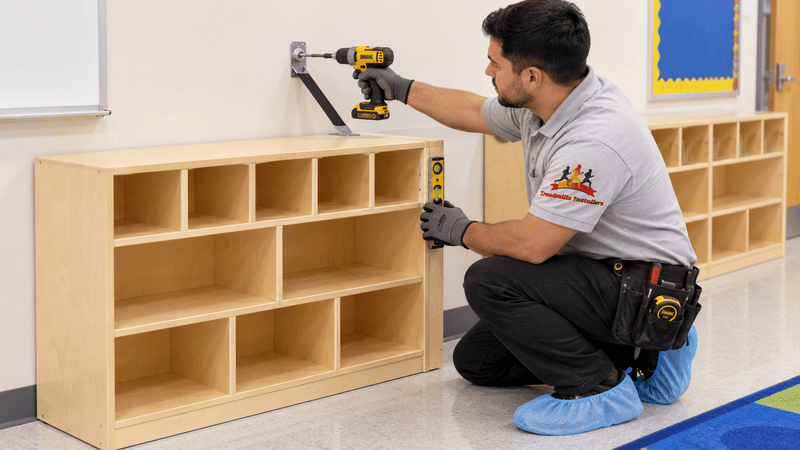
School locker installation demands more planning than standard furniture assembly. Multi-tier metal student lockers and heavy steel supply cabinets carry serious height and weight. Careful assembly, stable positioning, and wall-condition awareness support safer installation planning.
A Delaware middle school locker corridor illustrates the challenge. Rows of tall metal lockers must align, doors must swing freely, and aisles must stay clear.
Storage installation planning covers:
- Height and weight assessment
- Load distribution across shelving
- Tip-over considerations for tall units
- Wall conditions at each location
- Aisle clearance and door operation
- Floor conditions before positioning
Anchoring should follow manufacturer requirements, and site conditions should be evaluated before installation. Proper placement supports stable installation and may reduce avoidable movement. For related guidance, bookshelf assembly safety considerations apply similar stability thinking.
Library Shelving Needs Stable and Practical Placement
Library furniture assembly involves massive shelving arrays and tall wooden bookcases that anchor a room for decades. Installers must plan load capacity, circulation space, and sightlines before the first shelf goes up.
A Washington, DC elementary school library renovation shows why planning matters. Shelving rows must leave room for student traffic, reading nooks, and book carts.
Practical library shelving setup includes:
- Measuring wall runs before delivery
- Planning load distribution per shelf
- Following manufacturer anchoring instructions
- Leaving adequate aisle width
- Positioning shelves for supervision sightlines
Districts upgrading media centers often schedule professional library furniture assembly during summer breaks to avoid disrupting students.
Technology Furniture Must Fit the Classroom Infrastructure
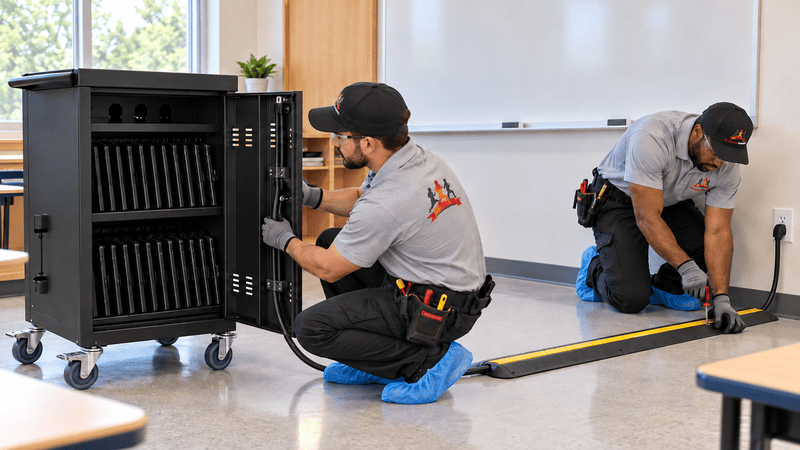
Instructional technology furniture requires coordination with existing classroom systems. Wall-anchored porcelain whiteboards, interactive smartboard framing, mobile media carts, and complete computer lab charging stations all depend on wall placement, electrical access, and cable management.
Smartboard installation, for example, involves more than mounting a frame. Crews must plan alignment, confirm manufacturer hardware, and route cables cleanly. Computer lab furniture setup adds charging access and network proximity to the checklist.
Technology furniture planning includes:
- Wall placement matched to room sightlines
- Electrical access for powered stations
- Cable management for clean finishes
- Manufacturer hardware requirements
- Coordination with existing classroom systems
A Northern Virginia computer lab retrofit might combine charging carts, cable trays, and smartboard framing in a single weekend project.
Athletic and Wellness Equipment Adds Another Installation Layer
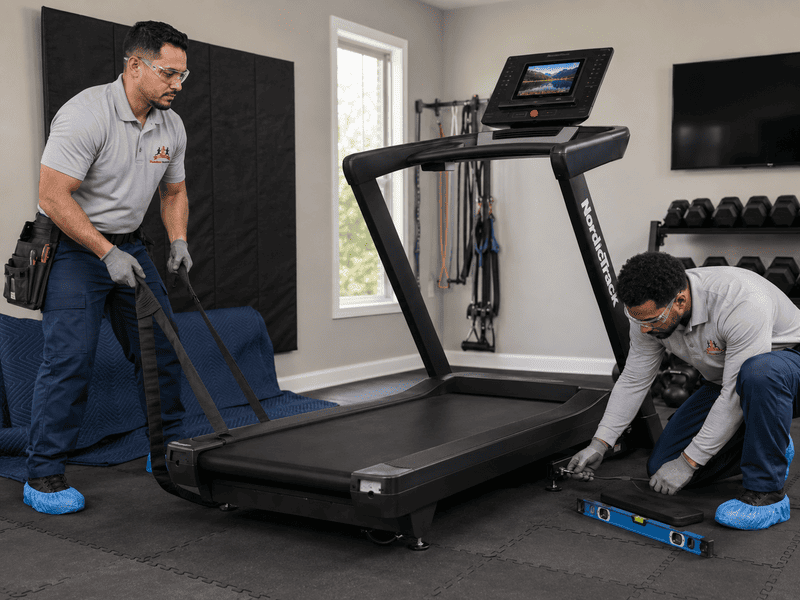
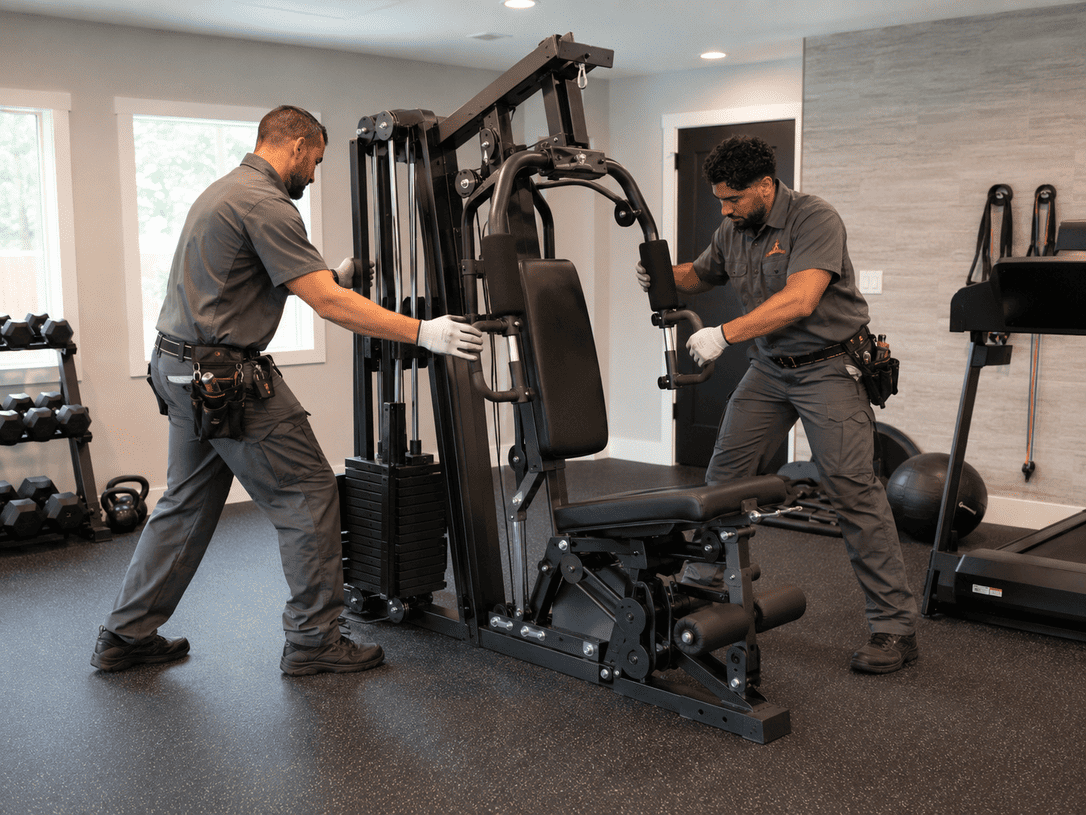
Campus fitness equipment involves heavy components, powered systems, floor-space planning, and frame alignment. Facility treadmills, stationary training bikes, weight storage racks, and physical education equipment organizers each follow manufacturer specific installation steps.
A multi-building campus in Delaware may need a weight room, a cardio suite, and outdoor activity areas completed in one summer window.
Athletic installation considerations include:
- Floor-space planning for safe clearance
- Frame alignment on level surfaces
- Powered system positioning near outlets
- Manufacturer-specific assembly sequences
- Storage rack placement for easy access
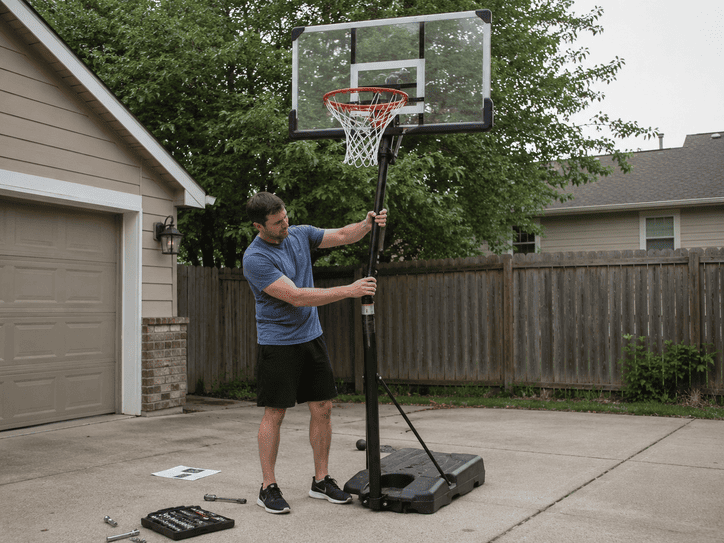
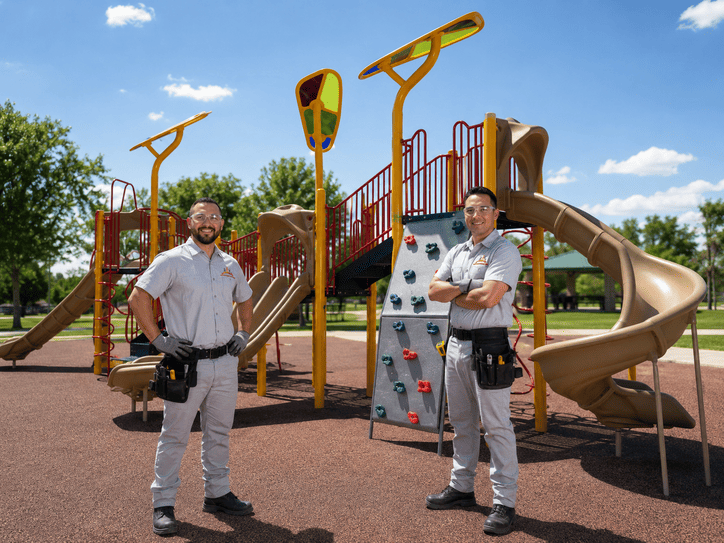
Outdoor areas need attention too. Schools upgrading play spaces can pair indoor work with outdoor recreation equipment installation in the same project window.
Larger outdoor builds follow similar planning logic. Districts often schedule school playground structure installation services alongside summer furniture deployments.
Classroom Layout Should Support Safe Daily Movement
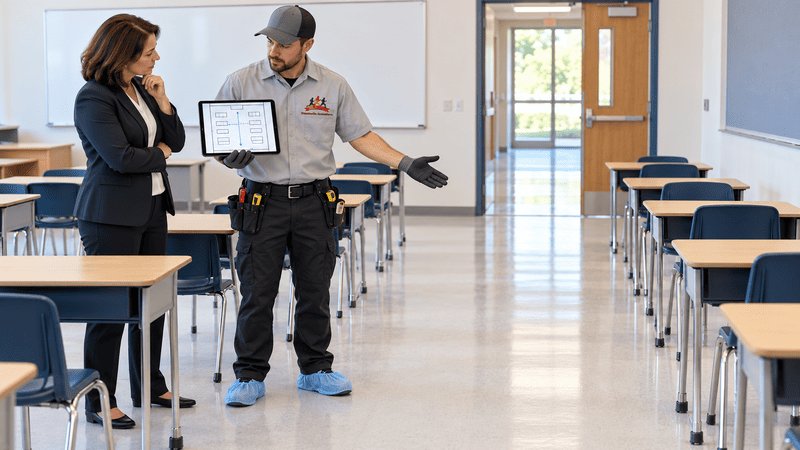
Furniture placement should account for student movement, teacher access, instructional zones, accessibility, doors, and technology. A well-assembled desk in the wrong spot still creates daily problems.
Layout planning covers:
- Desk spacing for student movement
- Collaborative seating arrangements
- Teacher circulation paths
- Door clearance and emergency pathways
- Media visibility from every seat
- Charging access near devices
- Room capacity limits
Applicable layout and safety requirements should be confirmed with the appropriate school or facility authority. Installation crews execute the plan; administrators define it.
What Professional Classroom Furniture Installation Looks Like
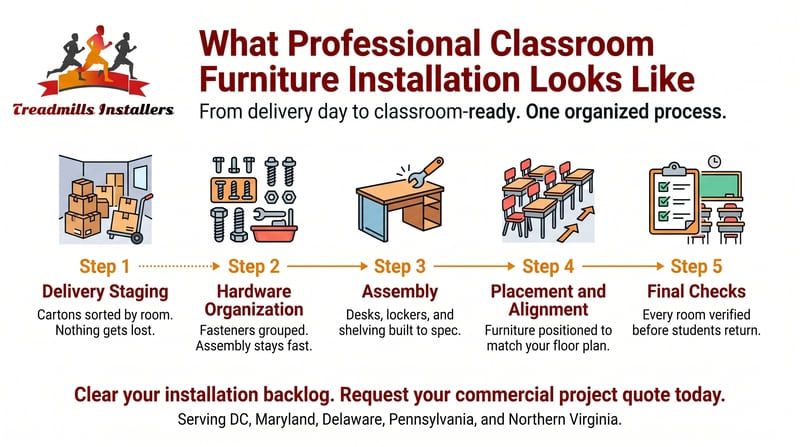
Professional classroom furniture installation means organizing, assembling, positioning, aligning, securing, and checking educational furniture according to manufacturer instructions, room requirements, campus conditions, and applicable facility considerations. It turns a chaotic delivery into a structured deployment.
From Delivery to Final Check
Crews begin with staging and hardware sorting. Assembly follows room by room, then placement, alignment, and final visual checks close out each space.
Budgeting the Project
Costs vary with furniture quantity, building access, and timelines. Early furniture installation cost planning helps procurement officers set realistic budgets. Shipments with boxed components benefit from experienced flat-pack classroom furniture assembly that keeps hardware organized from the start.
Why Internal Staff Can Struggle With Large Installation Backlogs
Internal maintenance teams already handle repairs, building operations, custodial coordination, and daily campus needs. Adding hundreds of unassembled desks, lockers, and shelves stretches them past capacity.
The Backlog Builds Fast
Renovation schedules and opening-day deadlines do not move. Meanwhile, mixed furniture models and limited storage space slow every step.
Old Furniture Complicates Timelines
Many projects require removing existing pieces first. Planning furniture disassembly moving preparation ahead of delivery day keeps the schedule intact.
Professional Installation Can Keep Campus Projects Moving
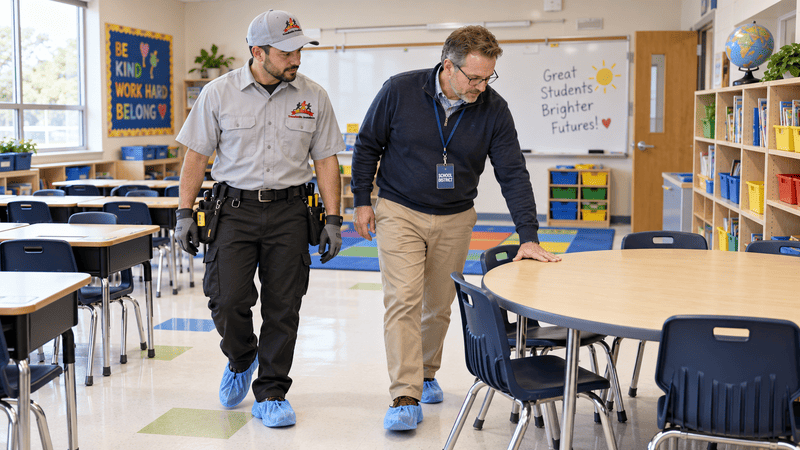
Districts outsource high-volume school equipment installation because specialized crews bring tools, sequencing experience, and hardware consistency that internal teams rarely have time to match.
Professional support:
- Can reduce installation guesswork
- Helps keep deployment organized
- Supports consistent furniture assembly
- May reduce avoidable installation errors
- Can help maintenance teams stay focused on core operations
Purchasing decisions also benefit from research. National guidance on children furniture regulation requirements helps administrators ask the right product questions. Applicable requirements should be confirmed with the appropriate school, facility, or safety authority.
Why Choose Our Team
Treadmills Installers is fully licensed and insured, providing professional support for school and institutional furniture deployment projects. Our crews handle high-volume furniture deployment with commercial assembly tools, room by room coordination, and campus-conscious work practices. From desk and seating installation to locker and shelving assembly, anchoring considerations, technology furniture, and fitness equipment, we follow manufacturer requirements on tight project schedules.
This approach helps reduce installation guesswork, supports organized campus deployment, and helps school teams approach installation with a clearer execution plan.
Specialized installation crews deploy daily across Washington, DC, Maryland, Delaware, Pennsylvania, and Northern Virginia. Each region brings distinct project types, from urban charter school openings to suburban campus renovations.
Request a Professional Classroom Installation Quote Today
Clear your uninstalled inventory, organize room-by-room deployment, and prepare classrooms before scheduled deadlines. Start planning details like large team desk planning for collaborative rooms or professional gymnasium hoop installation for athletic spaces. Outdoor assets deserve attention too, including seasonal outdoor equipment care.
Ready to move? Contact the commercial installation team or request a commercial project quote now.
Book Your Installation Crew Before the Deadline
School administrators, procurement officers, campus facility managers, and district operations teams across Washington, DC, Maryland, Delaware, Pennsylvania, and Northern Virginia can clear their installation backlog today by requesting a commercial project quote or booking a specialized installation crew with Treadmills Installers.
Frequently Asked Questions
Why do schools hire professional furniture installers?
Schools hire professional installers to manage high-volume assembly, anchoring considerations, and room by room deployment without overloading maintenance staff.
How long does classroom furniture installation take?
Timelines depend on furniture quantity, room count, and building access. A single classroom may take hours, while multi-building projects run on scheduled phases.
Can installers assemble hundreds of student desks?
Yes. Professional classroom furniture installation crews use organized staging and room sequencing to complete large desk orders efficiently.
Should school lockers be anchored?
Many tall lockers require anchoring when manufacturers specify it. Site conditions should be evaluated before installation begins.
Can professional installers assemble library shelving?
Yes. Crews assemble and position large shelving arrays while following manufacturer instructions and circulation-space plans.
Who installs smartboards and classroom media furniture?
Trained installation technicians handle smartboard framing, media carts, and charging stations while coordinating with existing classroom infrastructure.
Can installation crews work around school deadlines?
Professional crews regularly schedule summer projects, weekend work, and phased deployments around academic calendars.
When should schools schedule classroom furniture installation?
Schedule as soon as delivery dates are confirmed. Early booking gives schools more flexibility around renovation schedules and opening-day deadlines.