Portable Basketball Hoop Assembly Services
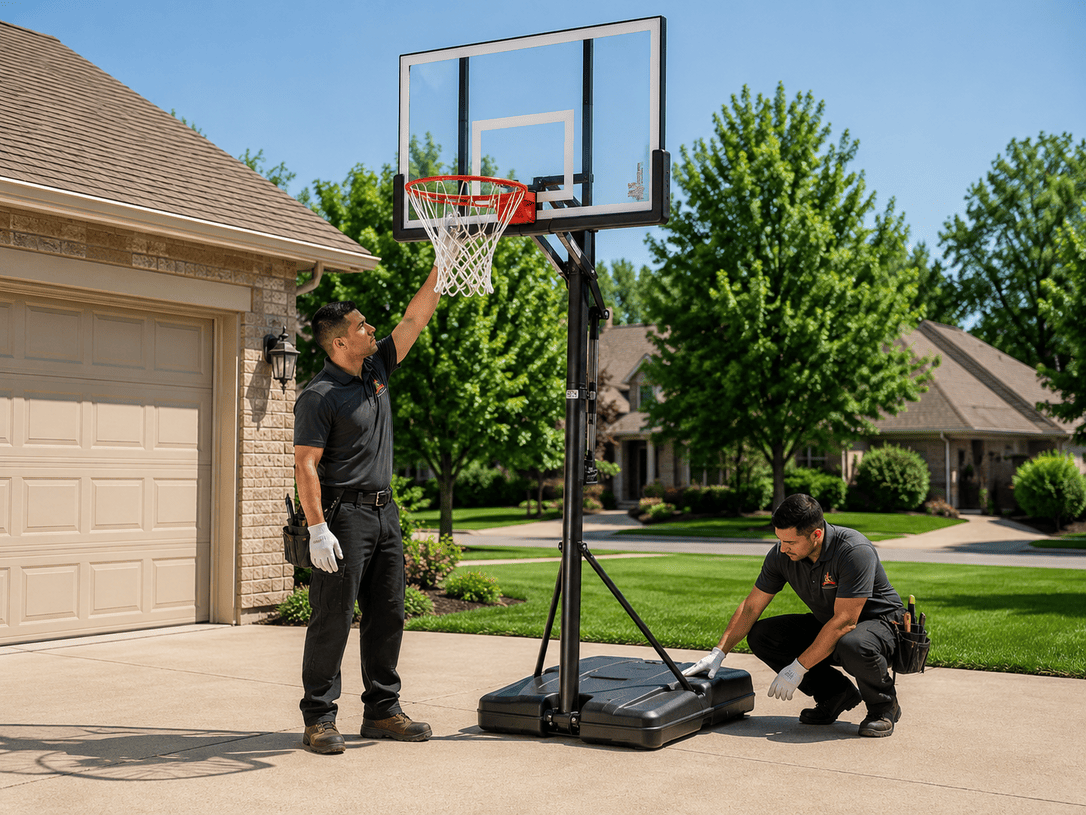
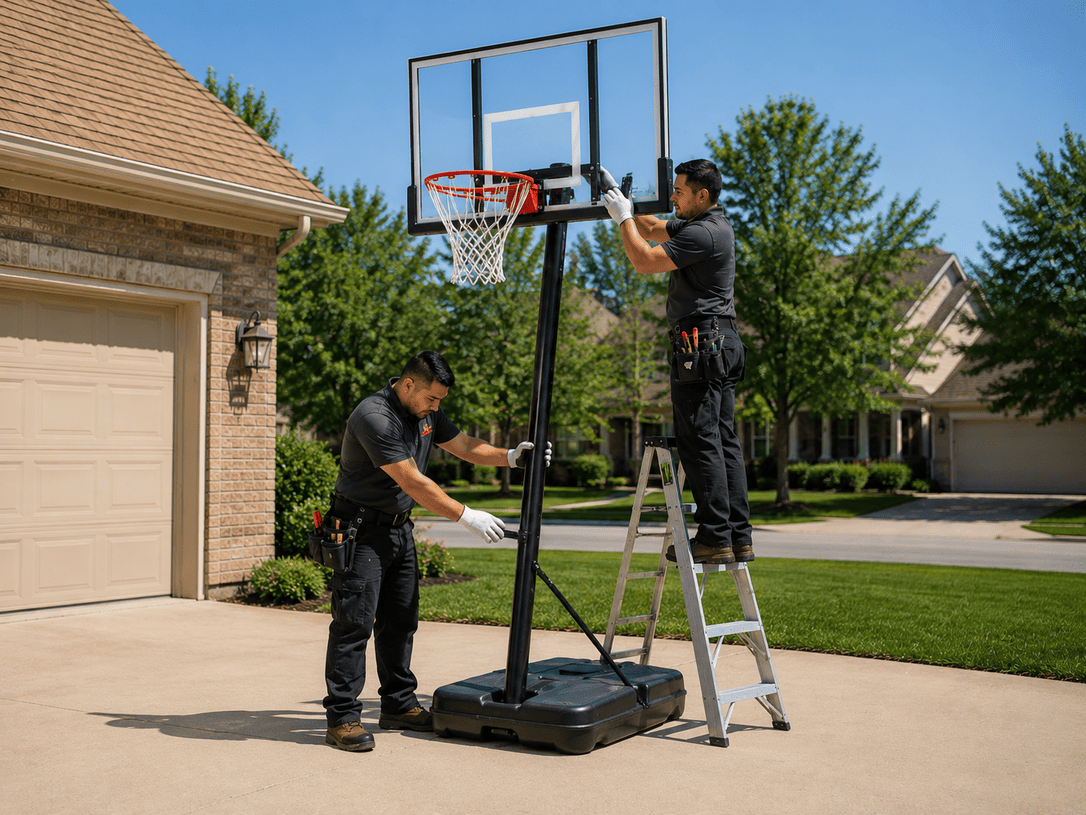
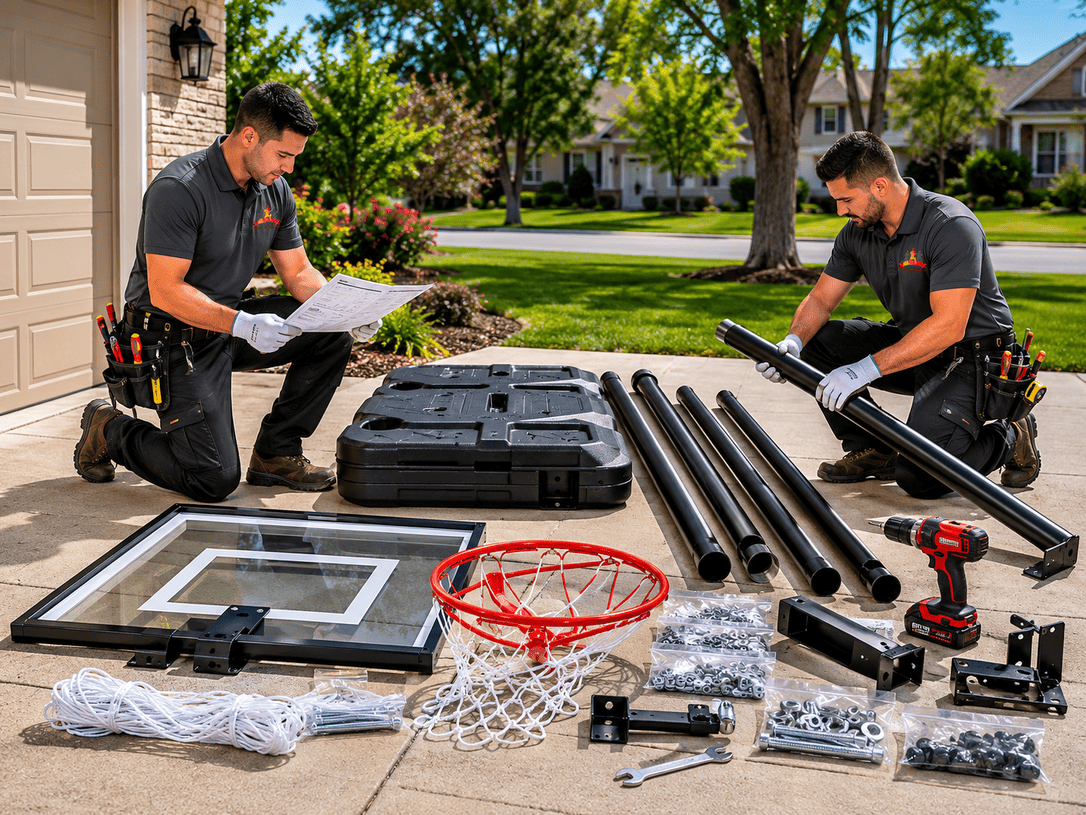
Portable basketball hoop assembly involves unboxing, organizing hardware, building the base, attaching the pole, mounting the backboard and rim, and securing the system for safe play.
Proper assembly protects your investment, prevents tipping, and ensures the hoop performs as the manufacturer intended. Hiring trained installers helps families avoid missing hardware issues, unstable bases, and incorrect torque settings that often lead to wobble or damage.
- Safer basketball hoop setup from the very first game
- Proper base and pole assembly using manufacturer guidelines
- Stable and secure installation on driveways or play areas
- Reduced risk of tipping during active or windy conditions
- Ready for immediate use once final inspection is complete
Portable Basketball Hoop Assembly Services for Safe and Reliable Backyard Play
Many homeowners underestimate how heavy and complex modern hoops have become. Backboards can weigh over 50 pounds, poles arrive in multiple sections, and bases often hold up to 35 gallons of water or sand. When hardware is missed, brackets are reversed, or the base is underfilled, the entire system becomes unstable and unsafe.
While portable systems are generally simpler than in-ground options, they still demand precision. Our trained portable basketball hoop installers handle every step, from unboxing to final torque checks, so your family can enjoy the hoop without worrying about loose bolts or tipping risks.
Basketball Hoop Systems Installed for Homes, Driveways, and Recreation Areas
We assemble portable basketball goals for a wide range of settings, including single family homes, townhouse driveways, schools, apartment recreation zones, and community centers. Each environment has unique space, surface, and safety requirements that influence how the hoop should be positioned and stabilized.
Family Recreation Spaces
Backyards and driveways remain the most popular locations for portable systems. Families want quick setups for weekend games, while community centers often need durable hoops capable of handling daily use. Our team adapts each assembly based on usage frequency, available space, and surrounding obstacles such as cars, fences, or landscaping.
Driveway and Backyard Placement Options
Sloped driveways, textured concrete, and grassy areas each require different placement strategies. For homeowners weighing portable versus permanent options, our in-ground basketball hoop installation services offer a more permanent alternative with concrete-anchored stability.
Portable Basketball Hoop Components That Require Proper Assembly
Every portable system includes several major components that must be installed in the correct sequence. Skipping a step or reversing a bracket often causes alignment issues that compromise rim height and backboard angle. Referencing standard
basketball hoop dimensions and clearances helps confirm proper spacing during setup.
| Component | Purpose | Assembly Priority |
|---|---|---|
| Base Tank | Holds water or sand for stability | Built first, filled last |
| Pole Sections | Connects base to backboard | Aligned and bolted carefully |
| Backboard | Provides rebound surface | Mounted with brackets |
| Rim and Net | Scoring target | Installed after backboard |
| Height Adjustment | Allows rim height changes | Tested before final use |
Assembly of Poles, Backboards, and Rims
Pole sections must be aligned cleanly to prevent lean. Backboards from brands like
Lifetime portable basketball hoops and
Goalrilla portable basketball systems often include specific bracket orientations that installers verify before tightening.
Site Selection and Surface Preparation for Stable Performance
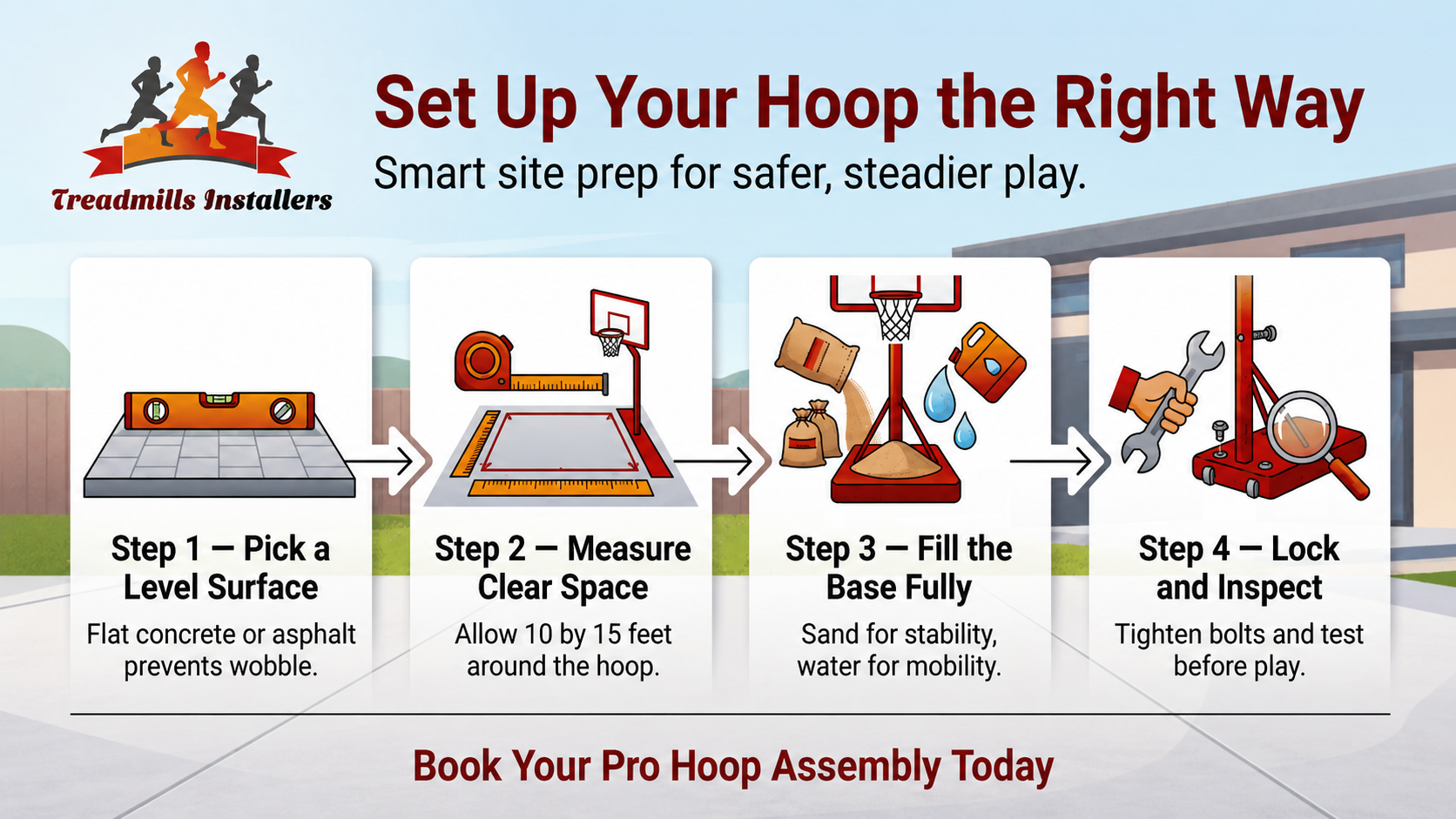
Choosing the right location is just as important as the assembly itself. A level, solid surface prevents wobble, reduces tipping risk, and extends the lifespan of the base. Before installation, review any local guidelines outlined in this home basketball court permits guide to confirm setbacks and HOA requirements.
Base Weight and Stability Requirements
A properly filled base is the single most important factor in hoop stability. Consider the following:
- Sand provides roughly 30 percent more weight than water
- Water is easier to drain when relocating the system
- Bases should be filled completely to prevent sloshing
- Antifreeze may be added in freezing climates to protect the tank
Water and Sand Base Considerations
Water works well for households planning seasonal moves. Sand is ideal for permanent placements where maximum stability matters. Our installers help homeowners choose based on climate, surface type, and how often the hoop will be moved.
Assembly Practices That Improve Safety and Long Term Durability
Safe assembly relies on torque accuracy, hardware verification, and post-installation inspection. Loose bolts and rushed setups are the leading causes of premature wear. For families adding multiple recreation items, our outdoor recreation equipment installation team coordinates installations to save time.
Adjustable Height Basketball Systems
Adjustable hoops require extra attention to the height mechanism, since incorrect spring or lever installation can prevent smooth height changes. Our technicians test the full range from 7.5 to 10 feet before completing the job.
Relocation and Reassembly Services for Existing Basketball Systems
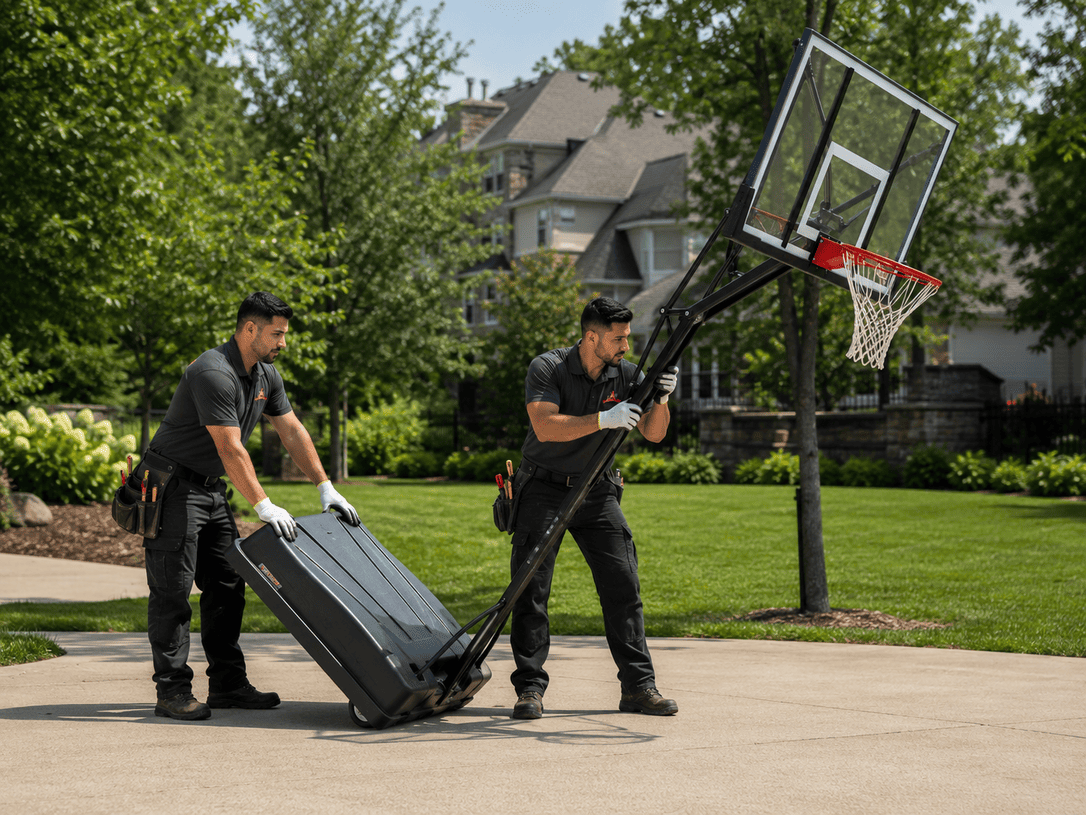
Relocating a portable hoop is not as simple as rolling it across the yard. Bases must be drained, components partially disassembled, and the system rebuilt at the new location.
Reviewing this playset and equipment relocation cost guide gives homeowners a realistic sense of what relocation involves.
Relocation and Reinstallation Projects
Moving day, landscaping projects, and seasonal storage often trigger relocation needs. Our team handles draining, transport prep, and full reassembly, similar to the careful process used for above-ground trampoline installation projects.
Why Homeowners Choose Professional Basketball Hoop Assembly Services
Professional assembly saves hours of frustration and prevents costly mistakes. Families also benefit from organized hardware management, proper packaging disposal, and trained technicians who follow manufacturer specifications precisely. Compared to general handyman services like those listed in this basketball hoop installation service area resource, our installers focus exclusively on sports and recreation equipment.
Key benefits include:
- Faster turnaround compared to DIY assembly
- Reduced risk of stripped bolts or damaged components
- Verified stability before first use
- Proper disposal of bulky packaging materials
For families adding indoor recreation gear, our game table assembly specialists complement outdoor hoop installations beautifully. Many customers also explore professional portable hoop assembly options before booking dedicated specialists.
Request a Quote for Portable Basketball Hoop Assembly
Ready to enjoy safe, stable, and reliable backyard play? Treadmills Installers deliver professional setup designed for long-term performance, whether you are upgrading a driveway hoop or outfitting a community recreation space.
We also coordinate with related services such as home setup with professional furniture assembly and office furniture installation for corporate spaces for households and facilities needing multiple installations at once.
Reach out through our Treadmills Installers contact page to schedule service. Share your hoop model, location, and preferred date, and our team will respond quickly with a transparent quote. For families also planning swing sets or play structures, ask about our playground structures installation services during booking.
You can also explore additional basketball hoop and court assembly options or learn about game table disassembly support for related projects.
Frequently Asked Questions
How long does portable basketball hoop assembly usually take?
Most portable basketball hoops take between two and four hours to assemble professionally. Larger systems with tempered glass backboards or advanced height adjustments may require additional time, especially when base filling is included.
Is water or sand better for filling the base?
Sand provides greater stability and works best for permanent placements, while water is easier to manage if you plan to move the hoop. Many homeowners choose water with antifreeze for cold climates and easier seasonal relocation.
How much space is needed around a portable basketball hoop?
A clear playing area of at least 10 by 15 feet is recommended for safe play. Additional clearance behind the hoop helps prevent collisions with fences, vehicles, or landscaping during rebounds.
Why do portable basketball hoops become unstable over time?
Instability often results from underfilled bases, loose bolts, uneven surfaces, or damaged components. Regular inspections and proper base maintenance keep the system stable and safe for active use.
Can a portable basketball hoop be relocated to a new home?
Yes, portable hoops can be relocated, but the process requires draining the base, partial disassembly, and careful reassembly at the new site. Professional relocation prevents damage to poles, backboards, and adjustment mechanisms.
Is professional basketball hoop assembly worth the cost?
Professional assembly saves hours of work, reduces safety risks, and ensures the hoop meets manufacturer specifications. It also protects your warranty and helps the system perform reliably for years.
How often should a portable basketball system be inspected?
A quick inspection every three to six months is recommended, with a more thorough check before heavy seasonal use. Look for loose hardware, base leaks, rim wear, and signs of pole lean during each inspection.