Exercise Bike Assembly and Installation Services
Exercise bike assembly and installation services help homeowners, apartment residents, and shared fitness spaces get indoor bikes built, leveled, positioned, and tested correctly. A properly installed bike feels stable, rides smoother, and reduces the risk of loose parts, wobbling, noise, or unsafe use.
Treadmills Installers provides professional exercise bike setup for home gyms, garages, apartments, and residential fitness areas.
- A stable bike starts with correct assembly, leveling, and hardware checks.
- Proper setup improves safety, comfort, resistance feel, and daily performance.
- Smart placement helps save space and protects floors.
- Professional installation reduces mistakes that can shorten equipment life.
- The right setup makes workouts easier to start and safer to repeat.
Many exercise bikes look simple in the box, but small setup errors can create big problems. A loose pedal, uneven stabilizer, poorly mounted console, or cramped location can lead to wobbling, noise, awkward riding, and safety concerns. These issues usually get worse once the bike is used daily. Professional exercise bike assembly and installation gives you a cleaner, safer, and more reliable setup from the start, so your equipment is ready for real workouts instead of trial-and-error frustration.
Why Professional Exercise Bike Assembly and Installation Matters
Professional exercise bike assembly matters because correct setup affects stability, safety, comfort, and confidence from the first ride. A bike that is properly tightened, leveled, positioned, and tested is less likely to wobble, shift, squeak, or feel unsafe during regular use.
Good installation goes beyond putting parts together. It includes checking the frame, stabilizers, pedals, handlebars, seat hardware, console, resistance controls, and leveling points. If one of those areas is rushed, the bike may still look complete but feel wrong when someone starts riding.
Correct bolt tightening is especially important. Under-tightened parts can loosen during use, while overtightened parts may damage threads or plastic mounts. Pedals also need careful installation because cross-threading can cause long-term damage. For homeowners who want fewer risks, the safety guidance in these fitness equipment installation safety tips shows why setup quality matters before the first workout.
Professional setup also protects user confidence. If the first ride feels shaky, most people stop trusting the equipment. A clean install helps the bike feel solid, secure, and ready for daily use.
What Types of Exercise Bikes Can Be Assembled and Installed
Most indoor exercise bikes can be professionally assembled and installed, including upright bikes, recumbent bikes, spin bikes, indoor cycling bikes, air bikes, and performance-oriented fitness bikes. Each style has different assembly needs, but all require stable frame setup, secure pedals, and proper positioning.
Common exercise bike types include:
- Upright exercise bikes for compact home workouts and general cardio.
- Recumbent bikes with back support, larger frames, and lower step-through access.
- Indoor cycling and spin bikes for higher-intensity rides and class-style workouts.
- Air bikes and fan bikes for conditioning, interval training, and performance use.
- Premium residential or commercial-style bikes for shared fitness areas.
- Connected bikes with consoles, screens, sensors, and power requirements.
Residential models like NordicTrack indoor bikes often include consoles, wiring, and connected features that need careful handling. Premium options such as Life Fitness bikes may have heavier frames and commercial-style parts. Performance-focused equipment, including Rogue conditioning bikes, can also require stronger placement planning because of higher workout intensity.
If you are comparing indoor bike setup options, professional stationary bike installation setup can help show how much proper assembly affects the final workout experience.
Who Benefits Most From Professional Installation Services
Professional installation is best for anyone who wants the bike assembled correctly without wasted time, missing steps, or safety guesswork. It is especially helpful for busy homeowners, apartment residents, seniors, first-time buyers, landlords, trainers, and shared households.
Homeowners and home gym users
A home gym works better when equipment feels intentional, not squeezed into a random corner. Exercise bike installers can help place the bike where it fits the room, protects the floor, and allows safe movement around the equipment.
Apartment residents and shared households
Apartments, condos, and multi-purpose rooms need careful setup because noise, clearance, and floor protection matter. A stable bike can reduce shifting and unnecessary vibration, which is a win for both the rider and the neighbors.
Busy families and first-time buyers
Many people buy an exercise bike with good intentions, then lose momentum when the assembly process gets annoying. Hiring Treadmills Installers keeps the process simple and helps the bike become usable faster.
Landlords, trainers, and residential fitness areas
Shared spaces need equipment that can handle more frequent use. Professional exercise bike services are useful when the bike must be safe, presentable, and ready for different users.
How Exercise Bike Assembly and Setup Works
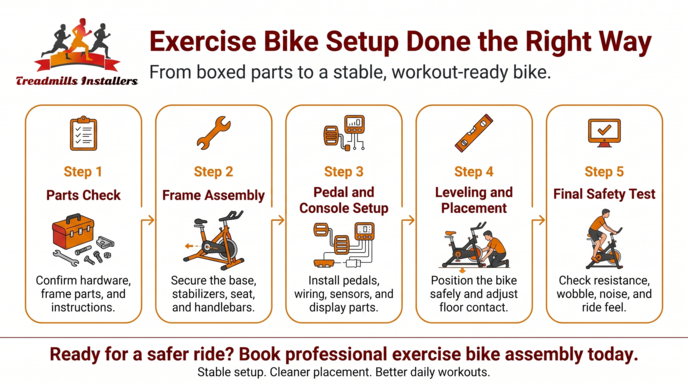
Exercise bike setup works by reviewing the parts, assembling the frame, securing moving components, attaching the console, leveling the bike, positioning it safely, and testing it before use. A careful process helps catch loose hardware, part alignment issues, and placement problems early.
A professional setup usually includes:
- Unboxing and reviewing parts, hardware, and manufacturer instructions.
- Assembling the base frame, stabilizers, seat post, handlebars, and support parts.
- Installing pedals correctly to avoid cross-threading or uneven rotation.
- Attaching the console, wiring, sensors, display, or power components when included.
- Checking bolts, adjustment knobs, seat rails, and handlebar security.
- Leveling the bike on the selected floor surface.
- Testing resistance, pedal motion, console function, and overall stability.
- Cleaning up packaging and leaving the space ready for use.
This step-by-step approach matters because bikes often include parts that look similar but install in specific directions. A rushed build can place a bracket backward, leave a stabilizer uneven, or make the seat adjustment feel loose. That is when “assembled” does not really mean workout-ready.
How to Choose the Right Placement for Your Equipment
The right exercise bike placement gives the rider enough room to mount, pedal, adjust settings, and move safely around the equipment. Good placement also reduces noise, protects flooring, improves airflow, and keeps the bike from crowding the room.
Floor type and protection
A flat, solid surface is best. Hardwood, tile, concrete, and low-pile carpet can work, but each may need different protection. A quality equipment mat can help reduce floor marks, minor vibration, and sweat damage.
Clearance and movement
Leave enough room around the bike for safe access. The rider should be able to step on and off without hitting walls, furniture, doors, storage bins, or nearby workout equipment.
Power, ventilation, and room flow
Connected bikes may need outlet access. Garages and multi-purpose rooms may also need better airflow, especially during longer workouts. For larger layout planning, the home gym setup guidance from Treadmills Installers can help you think beyond one machine and build a safer fitness space.
If the bike needs to be carried upstairs, moved across a property, or placed in a tight area, it helps to consider moving logistics early. This is similar to how homeowners compare labor and access details when reviewing moving cost factors in Baltimore, since stairs, distance, and heavy items can change the difficulty of the job.
What Causes Exercise Bikes to Feel Unstable or Unsafe
Exercise bikes usually feel unstable because of uneven floors, poor leveling, loose hardware, incorrect part orientation, or skipped post-assembly checks. Even a new bike can wobble if the stabilizers do not sit evenly or the frame was assembled too quickly.
Exercise Bike Stability Problems and Setup Fixes
A wobbly exercise bike is usually not a “normal” break-in issue. In many cases, it comes from uneven placement, loose hardware, or skipped setup checks.
| Common Issue | What You May Notice | Why It Matters | Professional Setup Fix |
|---|---|---|---|
| Uneven floor contact | Bike rocks during pedaling | Can affect balance and confidence | Adjust leveling feet and confirm stable contact |
| Loose frame bolts | Clicking, shifting, or wobbling | Parts may loosen more over time | Tighten hardware to the correct fit |
| Incorrect pedal installation | Pedals feel uneven or noisy | Can damage threads or crank arms | Install left and right pedals correctly |
| Poor stabilizer alignment | Bike feels tilted or unstable | Reduces safe riding support | Recheck stabilizer direction and placement |
| Loose seat or handlebars | Seat or bars shift while riding | Can affect posture and control | Secure adjustment points before use |
| Cramped placement | Hard to mount, ride, or adjust | Increases trip and bump risks | Position bike with safe clearance |
| Skipped final testing | Issues appear after first use | Small setup errors go unnoticed | Test resistance, wobble, noise, and ride feel |
Common causes include:
- Uneven flooring under the front or rear stabilizer.
- Loose frame bolts or adjustment knobs.
- Pedals installed incorrectly or not tightened enough.
- Seat post or handlebar parts not fully secured.
- Stabilizers attached in the wrong direction.
- Missing washers, spacers, or small hardware.
- Bike placed too close to walls, furniture, or other equipment.
- Cracked or stressed parts caused by poor assembly.
A small wobble can become more noticeable during standing climbs, sprint intervals, or heavier resistance. If the bike starts making unusual sounds after setup, stop using it until the cause is checked. When equipment damage or wear follows poor assembly, a specialized service such as fitness equipment repair support may be needed depending on the issue.
How Proper Setup Improves Performance and Longevity
Proper setup helps an exercise bike ride smoother, feel quieter, resist wobbling, and last longer. When parts are aligned and tightened correctly, the rider gets better resistance feel, safer movement, and less strain on pedals, stabilizers, adjustment points, and console components.
Correct assembly supports the bike’s full range of motion. Pedals rotate more cleanly, resistance changes feel more consistent, and the seat and handlebars hold their position better. That matters during daily workouts because small annoyances can turn into skipped sessions.
Setup quality also affects long-term value. Loose parts can create vibration, vibration can increase wear, and wear can lead to noise or part failure. The same principle applies across cardio machines, which is why the benefits of professional elliptical machine assembly also connect closely to exercise bike installation.
A properly installed bike is not just safer. It is easier to use, easier to trust, and easier to keep in your routine.
Common Installation Mistakes That Affect Equipment Use
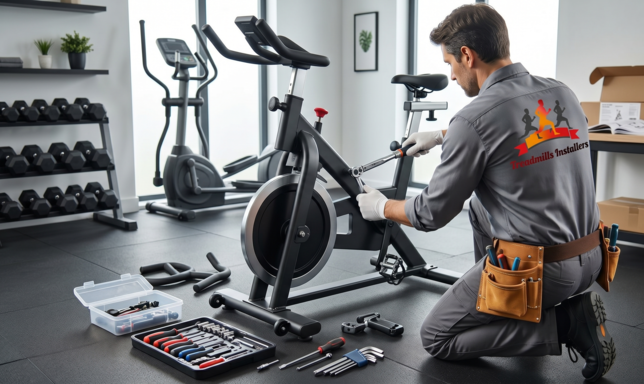
The most common exercise bike installation mistakes include under-tightening bolts, overtightening delicate parts, installing pedals incorrectly, skipping leveling, attaching the console poorly, and placing the bike in a cramped or unstable spot. These mistakes can affect safety, comfort, resistance feel, and equipment life.
Pedal installation errors
Pedals often have left and right threading. If they are forced into the wrong side or installed at the wrong angle, the crank arm can be damaged. That repair is not fun, and yes, it is as annoying as it sounds.
Poor leveling
A bike may look fine until someone rides it. If the stabilizers do not sit evenly, the frame can rock side to side. This is especially common on garage floors, carpeted rooms, and older apartment flooring.
Loose adjustment points
Seat posts, handlebar posts, and adjustment knobs need firm, even tightening. If they shift during riding, the user may lose balance or ride with poor posture.
Bad room placement
A bike shoved into a corner may save space, but it can make mounting, cleaning, and adjusting harder. For multi-purpose rooms, the setup should support daily life and workouts without turning the room into an obstacle course.
How to Plan a Safe and Efficient Home Gym Layout
A safe home gym layout gives your exercise bike enough space for access, movement, ventilation, floor protection, and nearby equipment. The goal is to make the bike easy to use without crowding the room or creating trip hazards.
Planning tips include:
- Place the bike on a stable, level surface.
- Leave clear walking space around the equipment.
- Use a mat to protect floors and reduce minor vibration.
- Keep cords away from walkways if the bike uses power.
- Avoid blocking doors, cabinets, vents, or storage areas.
- Leave room for seat and handlebar adjustments.
- Keep heavier equipment separated from high-movement zones.
In garages, check floor slope and temperature changes. In apartments, think about noise and neighbors below. In shared fitness spaces, plan for multiple users, cleaning access, and safe movement around nearby machines.
A good layout also leaves room for future equipment. If your workout area may expand later, place the bike where it supports the bigger plan instead of fighting it.
Get Your Exercise Bike Ready for Safe Daily Workouts
Treadmills Installers can assemble, place, level, and test your exercise bike so it is ready for safer daily use. For a smooth setup, contact Treadmills Installers to discuss your equipment and space, or use the quote request form to get started. If your room also needs related setup help, services like furniture disassembly and reassembly, TV stand assembly, and office furniture installation can help complete the space.
Frequently Asked Questions
How long does exercise bike assembly take?
Most exercise bike assembly jobs take one to two hours, depending on the bike style, parts, console, and room access. Larger bikes or connected models with screens and wiring may take longer.
Are exercise bikes hard to assemble?
Some exercise bikes are simple, but many include heavy frames, small hardware, pedals with specific threading, and console wiring. Professional assembly helps avoid mistakes that can affect stability, safety, and performance.
Why does an exercise bike wobble after setup?
An exercise bike may wobble because the floor is uneven, the leveling feet are not adjusted, or the frame hardware is loose. It can also happen when stabilizers are installed incorrectly or skipped checks leave small alignment problems.
How much space do you need for an exercise bike?
Most exercise bikes need enough space for the bike footprint plus safe room to mount, dismount, pedal, and adjust the seat or handlebars. A few feet of clearance around the bike is usually better than placing it tight against walls or furniture.
Is professional exercise bike installation worth it?
Yes, professional installation is worth it if you want the bike assembled correctly, leveled, tested, and placed safely. It saves time and reduces the risk of loose parts, wobbling, poor pedal installation, and frustrating setup errors.
Can an exercise bike go in an apartment or shared room?
Yes, an exercise bike can work well in an apartment or shared room when it is placed on a stable surface with enough clearance. A floor mat can help protect flooring and reduce minor vibration during workouts.
What should you do before the installer arrives?
Clear the area where the bike will be installed and make sure the equipment box is accessible. If the bike needs power, choose a location near an outlet and remove anything that blocks safe movement around the setup area.