
In-ground Basketball Hoop Installation Services
In-ground basketball hoop installation involves excavating a footing, pouring a reinforced concrete foundation, anchoring the pole, and assembling the backboard and rim to manufacturer specifications. Professional installation keeps the system level, stable, and structurally sound for years of play. A properly cured concrete base absorbs impact from dunks and rebounds, preventing pole lean, wobble, and safety concerns down the road.
- Strong permanent concrete foundation
- Professional pole anchoring and leveling
- Safe, code-conscious goal placement
- Improved long-term durability
- Ready for competitive driveway play
Professional In-ground Basketball Hoop Installation Services
Hoop it up with Treadmills Installers. Our crews transport, assemble, install, and relocate basketball goals of every size and brand. Poorly installed hoops rarely stay straight for long. Shallow footings, uneven curing, and misaligned poles quickly turn into leaning backboards, cracked slabs, and unsafe rims hanging over play areas. Over time, structural instability damages the pole, voids warranties, and creates real liability for homeowners and facility managers. That's where our trained installers step in, handling every detail from the initial dig to the final rim height check.
Complete Installation for Permanent Basketball Hoop Systems
Every in-ground project follows a proven two-visit process. On the first visit, our technician confirms placement with the homeowner, digs the footing, sets the manufacturer's anchor kit, and pours the concrete. After curing, we return to mount the pole, backboard, and rim.
Typical timelines include:
- Visit 1: 90 to 120 minutes for the dig and pour
- Curing period: 5 to 7 days minimum
- Visit 2: about 45 minutes for final assembly
- 24-hour wait before first use
We follow manufacturer specifications for every brand and confirm proper permanent hoop dimensions and clearances before final placement.
Backboard and Rim Assembly
Backboards ship in multiple pieces and require careful torque sequencing to protect the glass or acrylic surface. Our team assembles the backboard, breakaway rim, and net on the ground, then lifts the completed unit onto the cured pole.
Pole Alignment and Positioning
Alignment happens in two stages: an initial plumb check during the pour, followed by fine adjustment before the concrete sets. Laser levels keep the pole perfectly vertical from every angle.

Proper Concrete Foundation and Site Preparation
The foundation determines how long your hoop stays true. We dig a hole roughly 18 to 24 inches wide and 36 to 48 inches deep, depending on the unit. Homeowners are responsible for calling 811 for utility marking before we arrive, since state law prohibits digging within 36 inches of any marked line.
Marking colors follow a national standard:
- Red for electric, blue for water, yellow for gas
- Orange for communication, purple for reclaimed water
- Green for sewer, pink for temporary survey lines
Please check with your HOA or municipality about permits, and review permit and zoning requirements for home courts before we break ground. Provide a water source within 150 feet of the dig site, and make sure no one disturbs the anchor kit during curing.
Basketball Hoop Systems We Install
We install every major brand, from lightweight youth goals to tournament-grade commercial systems. Weather matters, too. Daytime temperatures should stay above 39 degrees, with no substantial rain within four hours of the pour.
| System Type | Typical Use | Footing Depth | Backboard Size |
|---|---|---|---|
| Residential Standard | Driveways, backyards | 36 inches | 54 to 60 inches |
| Heavy-Duty Residential | Serious home players | 42 inches | 60 to 72 inches |
| Commercial Grade | Schools, parks, HOAs | 48 inches | 72 inches |
| Adjustable Youth | Family courts | 36 inches | 44 to 54 inches |
Popular residential models include the Goalrilla in-ground basketball hoop lineup and the Lifetime basketball hoop collection. Need something for indoor play too? Ask about our portable basketball hoop assembly services.
Residential Driveway Installations
Driveway placement requires attention to slope, drainage, and garage-door clearance. The backboard typically hangs about 18 inches over the playing surface, which we confirm on-site.
Schools and Community Recreation Areas
Institutional projects often involve multiple hoops, pole padding, and facility standards. We handle bulk installations for schools, churches, and HOAs, and can bundle work with playground structure installation for community spaces.
Installation Practices That Improve Safety and Performance
Safety begins with proper anchoring and ends with a final walk-through. Our technicians verify rim height at exactly 10 feet, check backboard squareness, and torque every bolt to spec. Someone 18 or older must be present for both visits to approve placement and confirm satisfaction.
Common inspection points include:
- Verified 10-foot rim height
- Plumb pole confirmed from two angles
- Torque check on all hardware
- Anchor bolt inspection post-cure
- Optional pole padding for youth zones
We warranty the installation itself: base work for six months and above-ground assembly for 90 days. Manufacturer warranties for the equipment vary. For extra context on quality standards, see this in-ground basketball installation service guide.
Relocation, Replacement, and Existing Hoop Upgrades
Replacing or moving an in-ground hoop is more involved than a fresh install. Older footings may need to be broken out, and rusted anchors sometimes require cutting. Homeowners must have the existing unit removed before our first visit unless we scope removal as an add-on service.
Existing Hoop Replacement Projects
When customers upgrade, we can reuse the original anchor kit only if it matches the exact manufacturer model. Otherwise, we pour a fresh footing. Learn more on our in-ground basketball hoop installation page, or coordinate nearby court redesigns with playground and swing set relocation with safe disassembly.
How Much Does In-Ground Basketball Hoop Installation Cost?
The cost of in-ground basketball hoop installation depends on the basketball system, concrete foundation requirements, labor, and site conditions. Unlike portable basketball hoops, permanent systems require excavation, concrete work, secure anchoring, and precise assembly. Each property presents different installation requirements, so pricing should reflect the actual project scope rather than a fixed estimate.
Factors That Affect Basketball Hoop Installation Costs
Several factors determine the total cost of professional basketball hoop installation:
- Basketball Hoop Type and Size: Standard residential hoops, adjustable systems, and commercial-grade basketball goals have different assembly requirements. Larger backboards and heavier poles may require additional labor and specialized equipment.
- Concrete Foundation and Materials: In-ground systems need a properly sized concrete footing. The amount of concrete, anchor hardware, and foundation preparation depends on the manufacturer's specifications and equipment weight.
- Excavation and Site Preparation: Soil conditions, rocks, underground obstructions, and uneven terrain can increase installation complexity. Sites requiring additional digging or preparation may involve extra costs.
- Professional Installation Labor: Labor requirements depend on system weight, assembly complexity, accessibility, and the work needed across both installation visits.
- Location and Accessibility: Travel distance, limited equipment access, and difficult installation locations may affect the final service quote.
- Permits and Additional Services: Local permit requirements, existing hoop removal, foundation replacement, and optional accessories may increase the overall project cost.
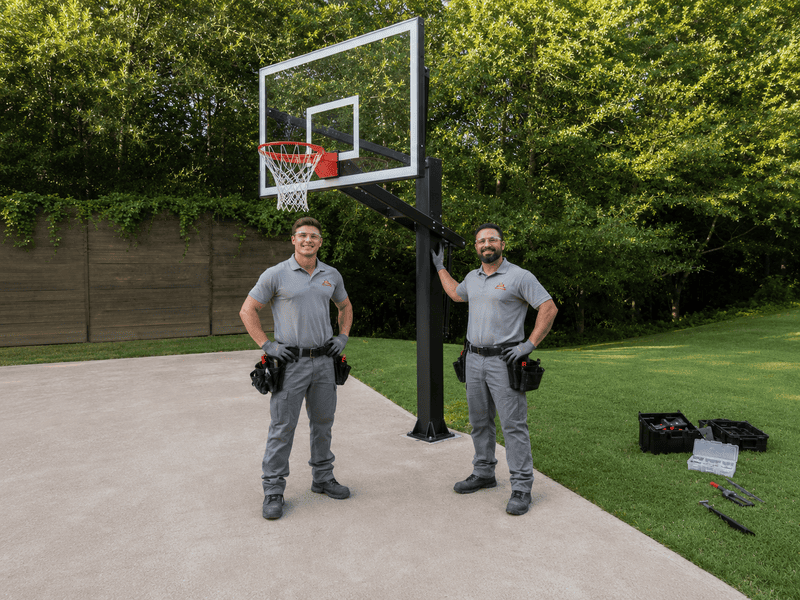
Why Homeowners Choose Professional Basketball Hoop Installers
Concrete work, heavy backboards, and precise plumb alignment are not weekend projects. One footing mistake can cost hundreds to fix later. Our insured crews arrive with the right tools, keep appointments on time, and protect your property throughout the install.
We also assemble related recreation gear, including game tables for home rec rooms and playground structures for backyards and schools. Comparing providers? Browse this basketball hoop installation service area guide or this complete basketball hoop and court service overview. Families adding backyard features often pair us with in-ground trampoline installation for residential yards.
Get an Accurate Basketball Hoop Installation Quote
Ready to hoop it up the right way? Treadmills Installers delivers accurate concrete foundation work, precise pole alignment, and safe, manufacturer-approved assembly for every project, big or small. Professional installation involves more than securing a basketball pole in the ground. Proper foundation preparation, accurate leveling, and manufacturer-compliant assembly help prevent structural problems and costly repairs.
For accurate pricing, contact our team with your basketball hoop model, installation location, and site details. We can review the project requirements and provide a quote based on your specific installation needs.
Schedule a visit through our main Treadmills Installers contact page or call to discuss your project. We also coordinate broader facility work, including game table disassembly and removal services, modular office furniture installation for businesses, and office installation day preparation to avoid delays. Let's build something that lasts.
Frequently Asked Questions
How long does the entire in-ground installation process take?
Once utilities are marked, the dig happens first, followed by a return visit at least 5 to 7 days later after the concrete has cured.
How deep does the footing need to be?
The hole is typically 18 to 24 inches wide and 36 to 48 inches deep, depending on the specific unit and manufacturer specs.
Why does my property need to be marked before digging?
State law requires utility marking before any dig, even if you believe nothing is buried in the area, to prevent damage and injury.
Can you install a new hoop using my existing anchor kit?
Only if the new unit is the exact same model, and we verify compatibility with the manufacturer before reusing any hardware.
What weather conditions are needed for installation?
Daytime temperatures must stay above 39 degrees, and heavy rain within four hours of the pour can compromise concrete integrity.
Do I need to be home for both visits?
Yes, someone 18 or older must be present for placement approval on visit one and to sign off on final workmanship on visit two.
Can an installed in-ground hoop be moved later?
Yes, but relocation requires breaking out the original footing and pouring a new foundation at the chosen location.
How much does professional in-ground basketball hoop installation cost?
Installation costs vary depending on the hoop model, concrete foundation, labor, and site preparation. Request a project-specific quote for accurate pricing.
Is installing a larger basketball hoop more expensive?
Larger or heavier basketball systems may require more labor, reinforced anchoring, and additional foundation materials, increasing installation costs.
Does replacing an existing in-ground basketball hoop cost more?
Replacement costs depend on whether the existing foundation and anchor system are compatible. Removing old concrete or installing a new footing may require additional work.


