How to Install Outdoor Recreation Equipment Safely: Courts, Playsets, Trampolines & Climbing Walls
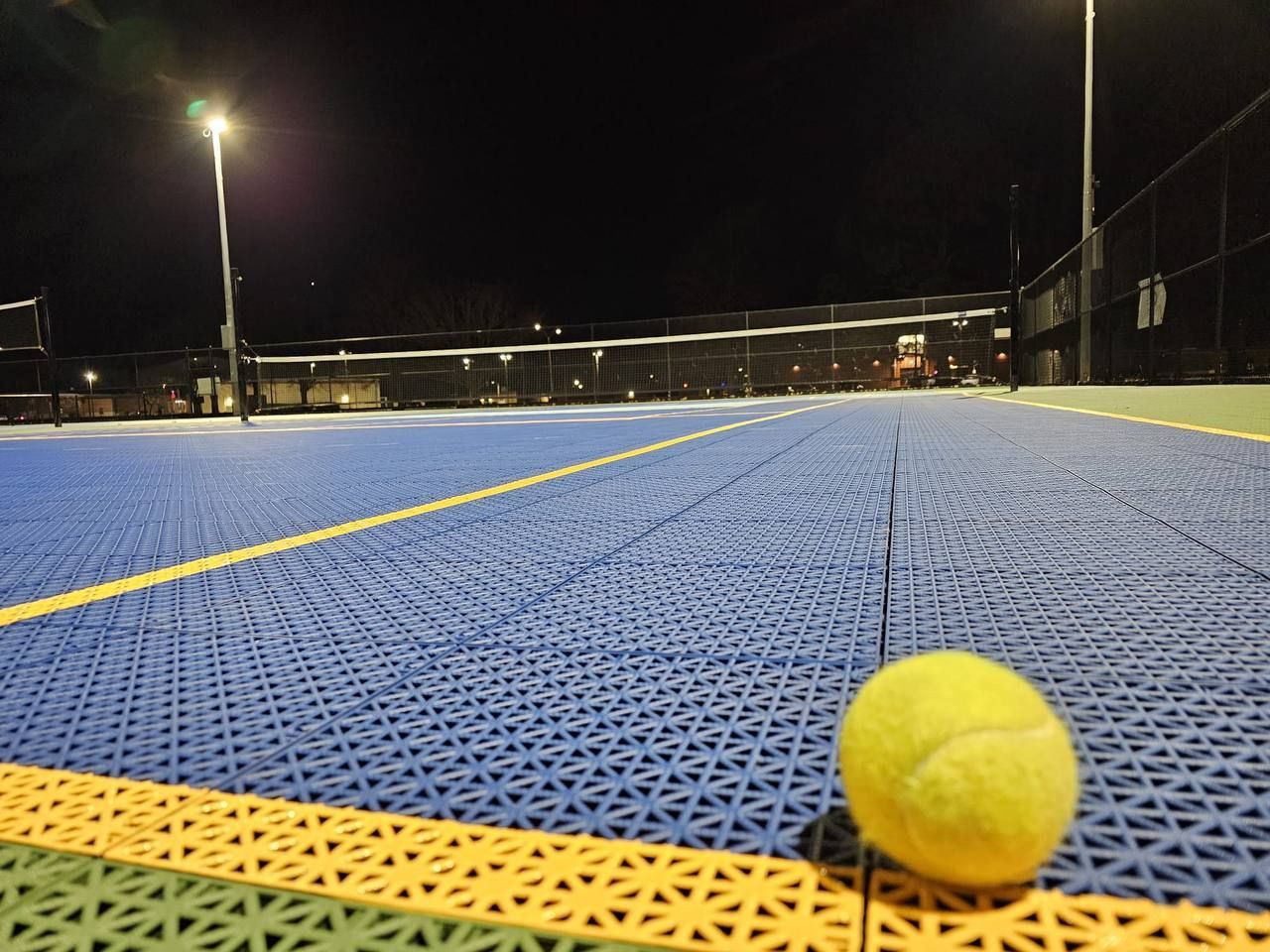
Installing outdoor recreation equipment is far more involved than unpacking boxes and following a printed guide. Whether you are adding a backyard playset for young children, anchoring a trampoline on a residential property, or constructing a full tennis or basketball court for a school or commercial facility, the installation process demands precision, proper surface preparation, and a clear understanding of safety standards.
Improper installation creates serious liability exposure. Loose anchoring systems, unleveled courts, inadequate fall zones, and incorrect hardware torque are among the most common causes of equipment failure and user injury. Local zoning ordinances and building permits also apply in many jurisdictions, including Maryland, Washington DC, Northern Virginia, and Pennsylvania.
Professional installers bring the equipment knowledge, tools, and compliance awareness that protect both users and property owners. Treadmills Installers serves residential homeowners, HOAs, schools, churches, parks departments, and commercial property managers throughout the region, delivering safe, code-aligned outdoor recreation equipment installation from start to finish.
What Should You Consider Before Installing Outdoor Recreation Equipment?
Before any outdoor recreation equipment is installed, the site must be evaluated for ground stability, drainage capacity, surface type, and local permit requirements. Skipping this phase leads to uneven courts, waterlogged play areas, and installations that may not pass municipal inspection. Both residential and commercial projects benefit from a structured pre-installation assessment.
Ground Preparation and Leveling
The foundation beneath outdoor recreation equipment is what determines long-term safety and structural performance. Soft, uneven, or poorly compacted soil causes anchoring systems to shift over time, which compromises the integrity of posts, frames, and play structures.
A proper site evaluation identifies:
- Slope and drainage direction
- Soil composition and compaction level
- Root systems or underground utilities
- Proximity to property lines and structures
Drainage Planning
Standing water under and around outdoor equipment accelerates surface degradation, promotes mold growth, and creates slip hazards. Grading the installation site to direct water away from the equipment footprint is a fundamental step, particularly for tennis and basketball courts where surface integrity is critical.
Concrete vs. Turf vs. Modular Surfaces
The surface material selected for a court or play area directly affects performance, maintenance requirements, and safety outcomes.
- Concrete: durable, low-maintenance, suitable as a base for acrylic or cushioned sport surfaces
- Asphalt: commonly used for larger court footprints with a cost advantage over concrete
- Synthetic turf: appropriate for multi-use recreational areas and cushioned play zones
- Modular interlocking tiles: a flexible, DIY-adjacent option for residential courts
For homeowners and facility managers evaluating modular court tile systems, VersaCourt modular tile surfaces offer interlocking panel designs compatible with backyard basketball and multi-sport setups.
Permits and Zoning
Tennis and basketball courts, due to their size and permanent surface construction, often require building permits in Maryland, DC, and Virginia jurisdictions. Playsets and climbing walls may trigger zoning setback requirements depending on property size and proximity to fence lines.
Commercial installations are subject to additional layers of municipal review, including ADA compliance assessments and load capacity documentation.
Treadmills Installers can guide you through the permitting considerations relevant to your specific location and project scope before a single post is driven into the ground.
How Is a Tennis Court or Basketball Court Installed Properly?
Proper court installation requires engineered surface preparation, precise post or hoop anchoring, correct drainage slope, and compliant line marking. Both tennis and basketball courts must meet dimensional standards to function safely and competitively. DIY attempts frequently result in unlevel surfaces, misaligned markings, and drainage failures that require costly correction.
Tennis Court Installation Requirements
A regulation tennis court requires a base that can support heavy foot traffic and weather cycling without cracking or shifting. The installation process involves several interdependent phases.
Base Construction
The subbase is typically compacted gravel, followed by an asphalt or concrete wearing surface. Asphalt provides a degree of flexibility that reduces surface cracking over time, while concrete offers superior dimensional stability.
Drainage Slope
A proper cross-slope of approximately 1 percent is engineered into the court surface to direct water off the playing area. Without this slope, standing water pools at the center or baselines, accelerating surface wear and creating hazardous conditions.
Post Anchoring and Net System
Net posts are set in concrete footings to specified depths, typically 36 to 42 inches depending on soil conditions. The net tensioning system must produce the correct sag height at the center strap: 36 inches for singles and doubles play.
Line Striping and Surfacing
Acrylic sport coatings are applied over the cured base to provide the final playing surface. Court lines are then painted using regulation dimensions, and a cushioned surfacing layer is optional for player joint protection.
For a detailed overview of the professional court building process, proper sequencing from excavation through final striping is essential to a court that performs and holds up over years of use.
Basketball Court Installation Requirements
Basketball court installation varies significantly depending on whether the project involves a permanent in-ground hoop system, a full court surface, or portable hoop placement on an existing hardscape.
In-Ground Hoop Anchoring
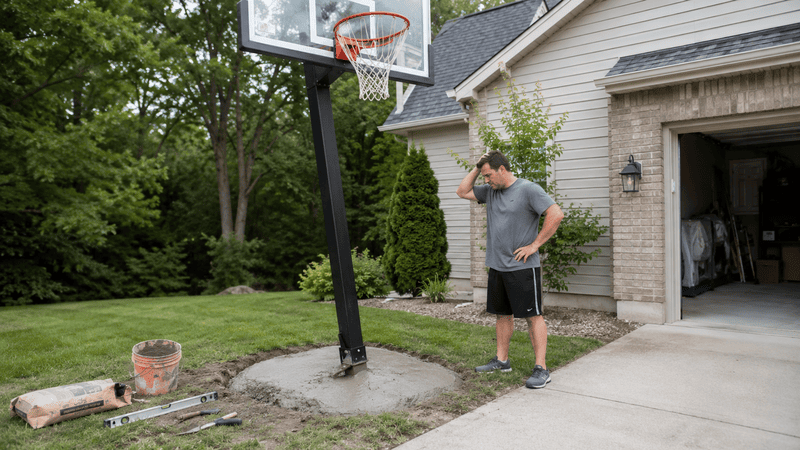
In-ground basketball systems require a concrete sleeve or direct burial footing. The depth and diameter of the concrete base must match the pole specifications provided by the manufacturer. Undersized footings are one of the most common causes of pole lean and eventual structural failure.
Court Surfacing Systems
Full court surfaces for basketball follow similar base construction principles as tennis courts. Modular tile systems are a popular choice for residential basketball courts due to their ability to handle freeze-thaw cycles and their shock-absorbing properties.
Safety Zone Spacing
Adequate buffer space behind each baseline and along the sidelines is a safety requirement in both residential and competitive court standards. This buffer zone helps prevent players from running into fences, walls, or other fixed structures.
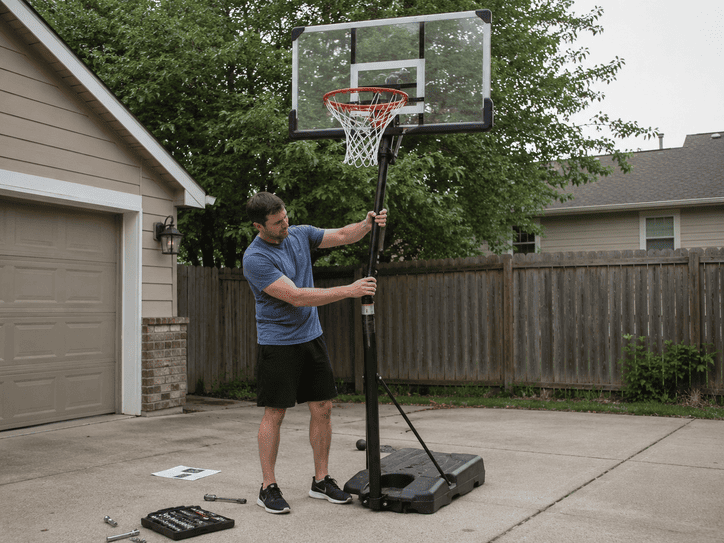
Treadmills Installers handles the full range of basketball hoop assembly services, from portable unit setup to in-ground anchor systems across Maryland, DC, Virginia, and Southern Pennsylvania.
What Is Involved in Professional Playground and Climbing Wall Installation?
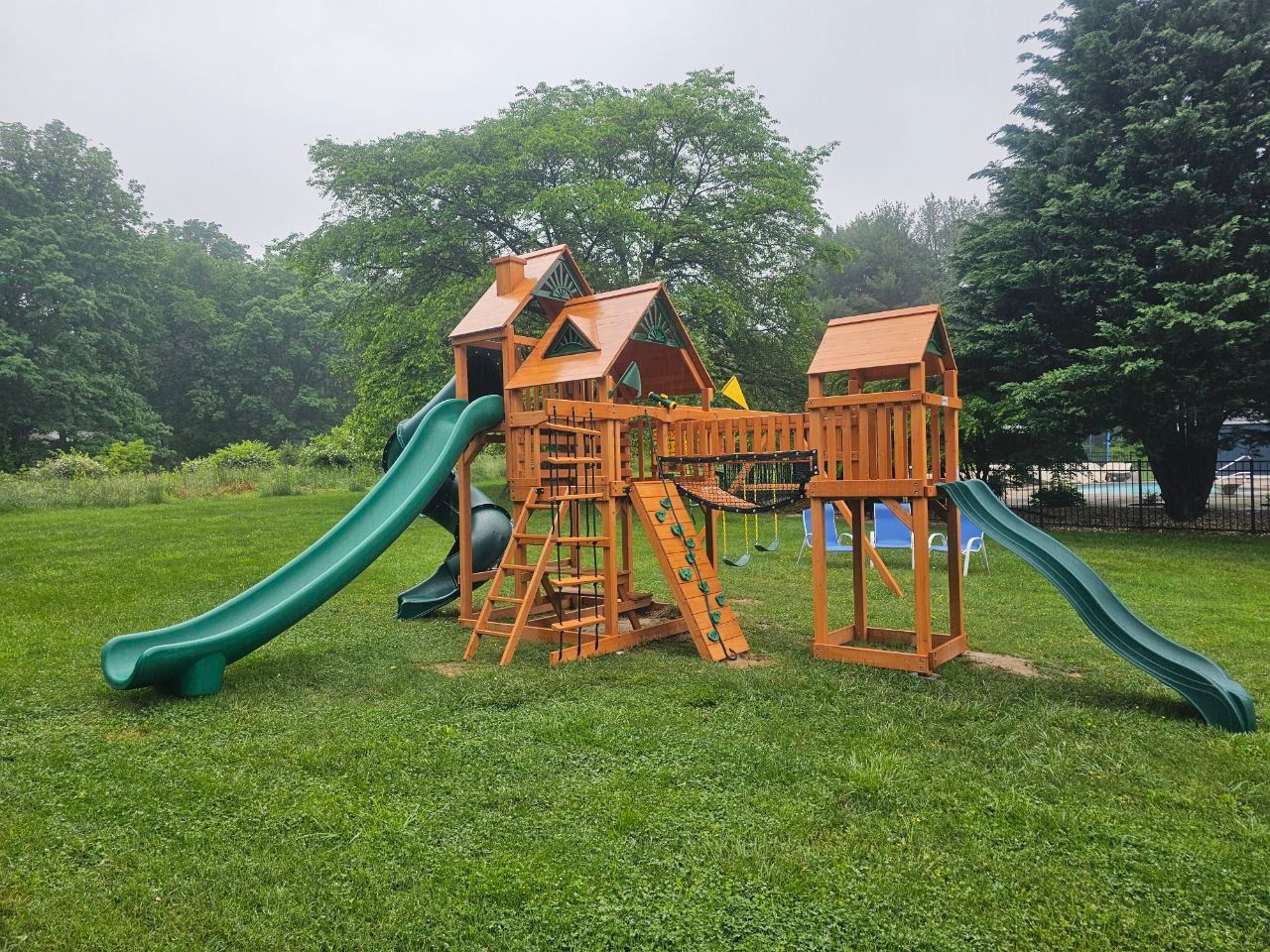
Professional playground and climbing wall installation requires anchored post systems, engineered fall zone preparation, compliant protective surfacing, and manufacturer-specified hardware torque. Commercial and residential installations have different safety thresholds, but both demand attention to anchoring depth, load ratings, and surfacing type beneath and around the structure.
Ground Anchoring Systems
Playset posts are anchored using ground-set hardware or concrete footings depending on manufacturer specifications and local soil conditions. Anchor bolts must reach undisturbed soil and be torqued to specification. Over-tightening or under-tightening fasteners compromises structural integrity and can void equipment warranties.
Fall Height Safety Zones
The critical fall height of any playground equipment determines the required depth and type of protective surfacing. A climber or swing set with a maximum fall height of six feet requires a protective surfacing zone that extends at least six feet beyond every side of the equipment structure.
Approved surfacing materials under play areas include:
- Engineered wood fiber (EWF): a common standard for residential and commercial play areas
- Rubber mulch: durable and effective for high-traffic commercial installations
- Poured-in-place rubber: common in ADA-compliant commercial playgrounds
- Sand or pea gravel: acceptable for residential settings with regular depth maintenance
Hardware Torque Specifications
Every bolt, lag, and carriage hardware point on a playset or climbing wall has a manufacturer-specified torque value. Installers use calibrated torque wrenches to meet these values exactly. Under-torqued connections loosen under repetitive load cycles. Over-torqued connections damage hardware and wood components, creating failure points.
Commercial Playground Safety Standards
Commercial playground installations must comply with ASTM F1487 and CPSC guidelines. These standards govern everything from equipment spacing to maximum fall heights to the number of play positions required per child capacity. ADA accessibility requirements add additional surfacing and pathway standards for public and commercial settings.
Treadmills Installers handles residential backyard setups and full-scale playground structure installation services for schools, churches, HOAs, and parks departments throughout the region.
For homeowners purchasing equipment from major brands, Treadmills Installers handles purchased items from Gorilla Playsets and other leading manufacturers, providing professional assembly and anchoring that meets safety requirements the moment installation is complete.
What Makes Trampoline Installation Risky Without Professional Help?
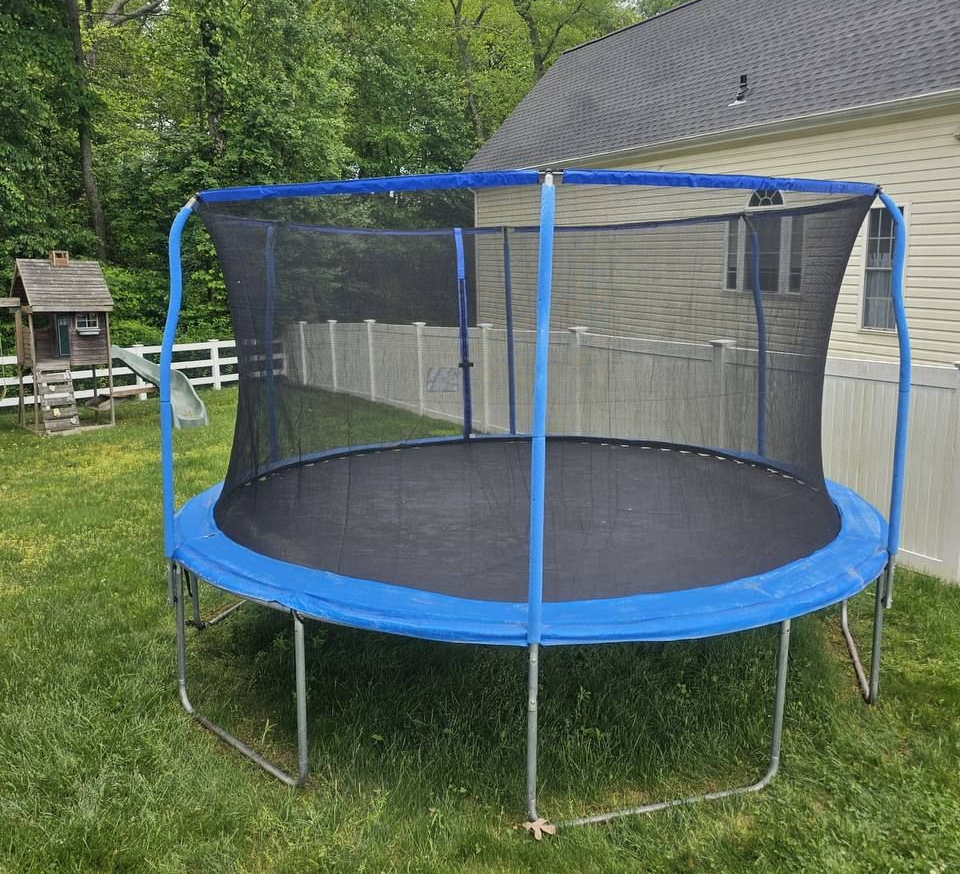
Trampoline installation carries a higher-than-average risk profile when performed without professional assistance. Frame alignment errors, unbalanced spring tension, inadequate enclosure setup, and insufficient wind anchoring are all failure points that lead to injury. Above-ground and in-ground systems each carry distinct installation requirements that are frequently underestimated.
Frame Alignment
A trampoline frame must sit level on all contact points. Even minor unevenness creates uneven spring loading, which causes the jump mat to migrate toward the lower side under repeated use. This migration increases the probability of edge contact and enclosure failure.
Spring Tension Balancing
Springs must be installed in a specific sequence and tension pattern to distribute loading evenly across the frame. Random or incomplete spring installation produces hot spots in the mat where force concentrates, accelerating wear and increasing the chance of spring detachment under load.
Enclosure Safety Systems
Enclosure poles and netting must be anchored to the frame in strict alignment with the net's attachment points. Misaligned poles create gaps at the base of the enclosure where users can slip through during a fall. Proper installation closes these gaps and ensures the enclosure performs as designed.
Anchoring Against Wind Uplift
An unanchored trampoline can be displaced by wind events even in moderate weather conditions. Ground anchor kits use auger-style stakes driven into the soil, with straps that connect to the frame legs. Anchor placement and strap tension must be balanced across all attachment points to be effective.
For in-ground trampoline systems, the excavation depth, drainage layer, and frame support structure require precise construction. Reviewing the above-ground trampoline installation process illustrates how much technical detail separates a correctly installed trampoline from one assembled with shortcuts.
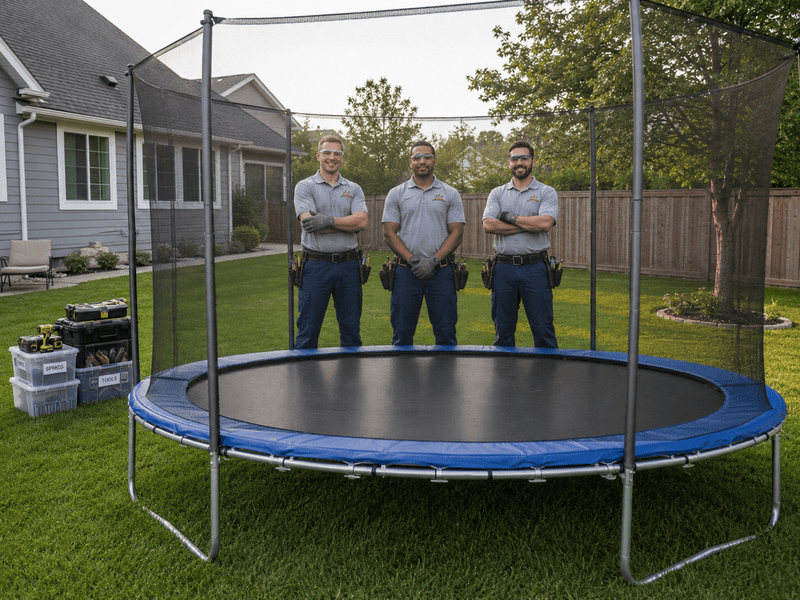
Treadmills Installers provides complete trampoline assembly and setup for both residential and commercial properties, handling frame assembly, spring installation, enclosure alignment, and ground anchoring as a single coordinated service.
For homeowners selecting a trampoline prior to scheduling installation, Skywalker Trampolines offers a range of residential models that Treadmills Installers is experienced in assembling correctly.
Residential vs. Commercial Installation: What Is the Difference?
Residential and commercial outdoor recreation equipment installations differ in scale, compliance requirements, insurance obligations, and durability standards. A backyard playset and a school playground may use similar components, but the installation protocols, inspection requirements, and liability thresholds are substantially different. Property managers and facility operators must understand these distinctions before proceeding.
Insurance Requirements
Commercial installations require the installing contractor to carry general liability insurance at elevated coverage levels. This protects the property owner and the installing company in the event of a post-installation injury claim. Residential projects benefit from licensed and insured installers as well, but the documentation and coverage requirements at the commercial level are more formalized.
ADA Compliance Considerations
Public-facing recreational facilities, including those operated by schools, HOAs, parks departments, and churches, must meet Americans with Disabilities Act requirements. This affects surfacing type, pathway access routes, equipment selection, and clearance dimensions around all play elements.
Municipal Inspections
Commercial playground installations frequently require a final inspection by a municipal official or a Certified Playground Safety Inspector (CPSI) before the facility can be opened to the public. Residential projects may require permit close-out inspections for permanent structures such as tennis courts and in-ground sport systems.
Higher Load and Durability Requirements
Commercial-grade equipment is engineered to sustain heavier usage cycles and accommodate multiple users simultaneously. Installation hardware, anchor depths, and concrete footing specifications are all scaled upward compared to residential-grade products.
Treadmills Installers serves both audiences with the same commitment to anchored, compliant, and safety-reviewed installation. Contact the team before purchasing equipment to ensure the selected product matches the installation environment and intended user load.
When Should You Hire a Professional Outdoor Equipment Installer?
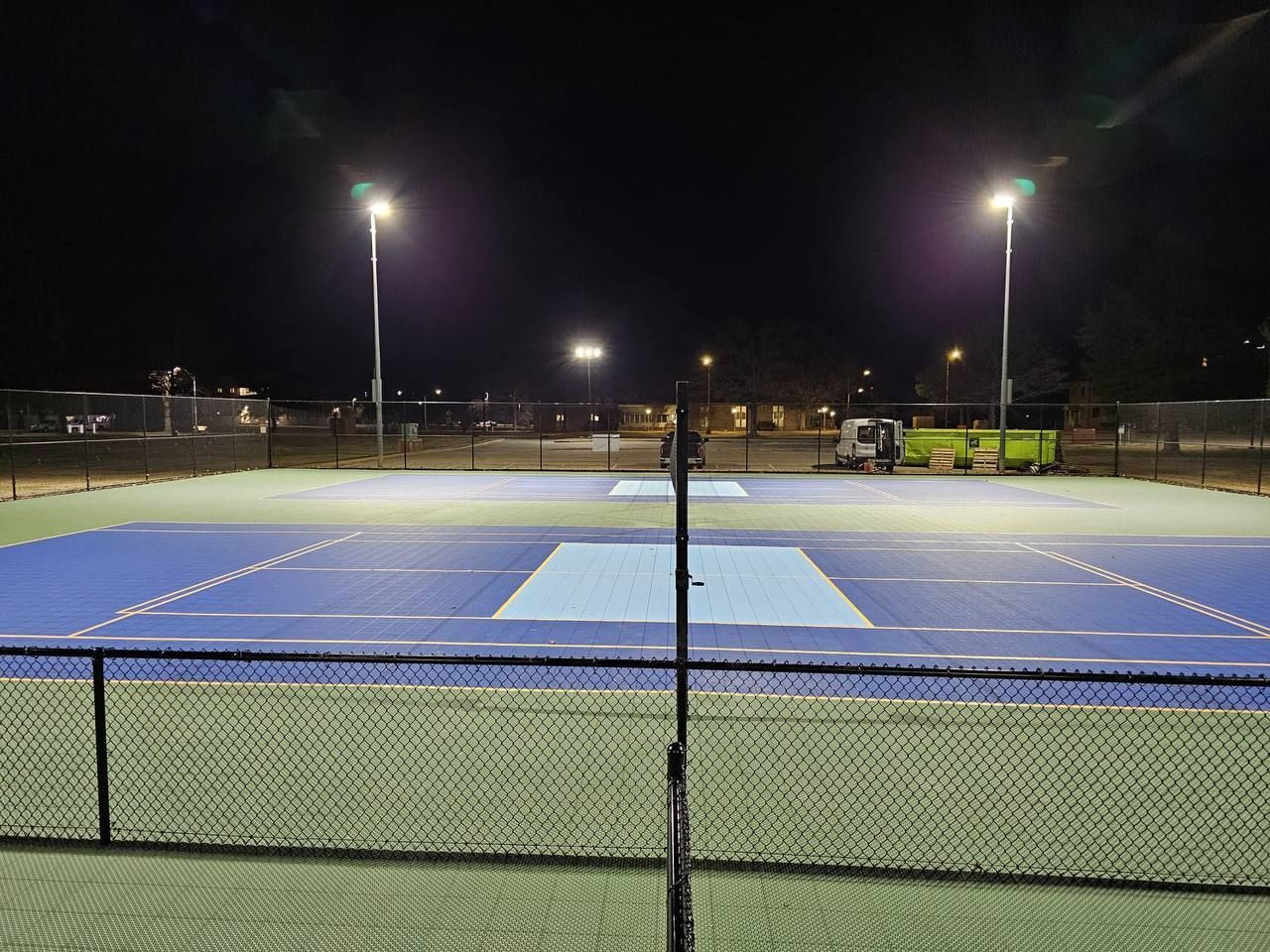
Hire a professional whenever the project involves concrete anchoring, structural post setting, or multi-component assembly where manufacturer warranty and user safety depend on precise execution.
Professional installation protects you on four fronts:
- Heavy lifting and precision anchoring: Footing errors on in-ground basketball systems, tennis posts, and commercial structures cannot be corrected without full disassembly.
- Warranty protection: Most manufacturers require professional installation for coverage to remain valid. An improperly assembled unit that causes injury may not be covered.
- Time savings: A professional team completes in hours what an unassisted homeowner may spend an entire weekend attempting.
- Safety liability reduction: A licensed installation creates a documented record of reasonable care for property owners hosting guests on recreational equipment.
For those managing multiple equipment types, sports equipment assembly services represent a growing category of specialized labor that property owners increasingly rely on. Additional references for outdoor furniture and equipment assembly, residential furniture assembly support, and commercial office furniture installation are useful when coordinating broader property setups.
For moves and relocations, the game table disassembly and relocation guide and the playset relocation cost reference for DC, Maryland, and Virginia are practical planning resources.
Treadmills Installers is licensed, insured, and ready to handle your project across Maryland, Washington DC, Northern Virginia, and Pennsylvania. Contact the team before your equipment arrives to schedule a site evaluation.
Step-by-Step Overview of a Safe Outdoor Installation Process
Treadmills Installers applies a structured seven-step process on every project, residential or commercial, to ensure no phase introduces errors that carry into the next.
- Site Evaluation: Grade, soil condition, drainage direction, utility locations, and property line clearances are assessed before any work begins.
- Surface Preparation: The ground is graded, compacted, or excavated as required, with drainage slope and base materials addressed at this stage.
- Equipment Layout Mapping: The full equipment footprint, safety zone buffers, and clearance distances from structures and fences are mapped prior to anchoring.
- Anchoring and Leveling: Posts and frame hardware are set to manufacturer-specified depths and torque values, with concrete footings allowed to fully cure before structural load is applied.
- Structural Assembly: Components are assembled in the manufacturer-prescribed sequence using calibrated tools, with all connections confirmed before advancing.
- Safety Inspection: The completed structure is checked for level, plumb, and structural integrity, with hardware, surfacing, and enclosure systems verified.
- Final Walkthrough and Use Guidance: The property owner receives a walkthrough covering safe use practices, load limits, maintenance schedules, and warranty documentation.
From a single backyard hoop to a full commercial playground installation, every step is completed with the precision required for a safe, long-lasting result. Treadmills Installers stands behind the process and the outcome.
Get Your Free Outdoor Equipment Installation Estimate in MD, DC, VA, and PA
The installation quality you choose today determines the safety and durability your property delivers for years to come. Treadmills Installers handles the full project lifecycle for residential and commercial properties throughout Maryland, Washington DC, Northern Virginia, and Southern Pennsylvania.
Whether you are a homeowner, HOA manager, school facilities director, parks department coordinator, or commercial property operator, the team is equipped to assess your site and complete your installation to specification.
- Review completed work in the outdoor installation project gallery across residential and commercial settings.
- Discuss your project directly through the outdoor equipment installation consultation page.
- Submit your site details through the free outdoor installation quote form for a no-obligation estimate.
Licensed and insured. Residential and commercial. Maryland, Washington DC, Northern Virginia, and Southern Pennsylvania.
Frequently Asked Questions About Outdoor Recreation Equipment Installation
How long does it take to install a backyard basketball or tennis court?
A residential basketball court installation typically takes one to three days depending on surface type and hoop system. A full tennis court, including base construction and surfacing, can take one to two weeks. Site preparation and concrete curing time are the primary factors that affect the overall schedule.
Do I need a permit to install a playset in Maryland or DC?
In most Maryland and DC jurisdictions, residential playsets do not require a building permit, but setback rules from property lines still apply. Larger permanent structures, including tennis courts and in-ground sport systems, typically do require permits. Always verify with your local planning or zoning office before beginning ground preparation.
Can trampolines be installed on uneven ground?
A trampoline should not be installed on uneven ground without first leveling the site. Uneven placement creates imbalanced spring tension and increases the risk of frame instability and mat displacement during use. Site leveling is a standard part of professional trampoline installation.
What surface is best under a climbing wall?
Engineered wood fiber (EWF) or poured-in-place rubber are the most effective protective surfaces under climbing walls. The surface must meet the critical fall height requirements specific to the climber's maximum accessible height and should extend at least six feet beyond each side of the structure.
Is professional installation required to maintain warranty on outdoor recreation equipment?
Many outdoor recreation equipment manufacturers explicitly require professional installation as a condition of the product warranty. This applies to trampolines, in-ground sport systems, and commercial playsets. Reviewing the warranty documentation before installation is the best way to confirm what is required for coverage to remain valid.
How much space do I need around a tennis court or trampoline?
A regulation singles tennis court requires a minimum total footprint of approximately 60 by 120 feet when run-off space is included. A full doubles court with adequate buffer zones requires roughly 78 by 144 feet. For trampolines, a minimum clearance of 8 feet on all sides and overhead is recommended, with the ground area beneath and around the frame kept free of hard surfaces.
What is the difference between in-ground and above-ground trampoline installation?
Above-ground trampolines rest on frame legs at surface level and require wind anchoring. In-ground trampolines are recessed into an excavated pit, which lowers the jump surface closer to grade level and reduces fall height risk. In-ground systems require excavation, a drainage layer, and a precisely framed retaining structure before the trampoline can be installed.
What outdoor recreation equipment does Treadmills Installers handle?
Treadmills Installers handles the installation of tennis courts, basketball courts, backyard playsets, commercial playground structures, climbing walls, and trampolines across Maryland, Washington DC, Northern Virginia, and Southern Pennsylvania. The team works with equipment purchased from major brands and retailers, providing professional assembly and anchoring for residential and commercial properties.
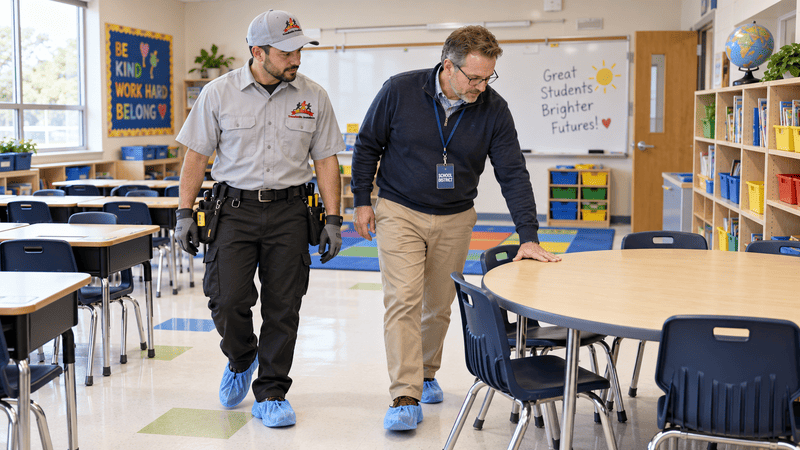
Why Schools Trust Professional Classroom Furniture Installation Services to Put Student Safety First