How Professional Commercial Gym Installation Prevents Costly Breakdowns and Floor Damage
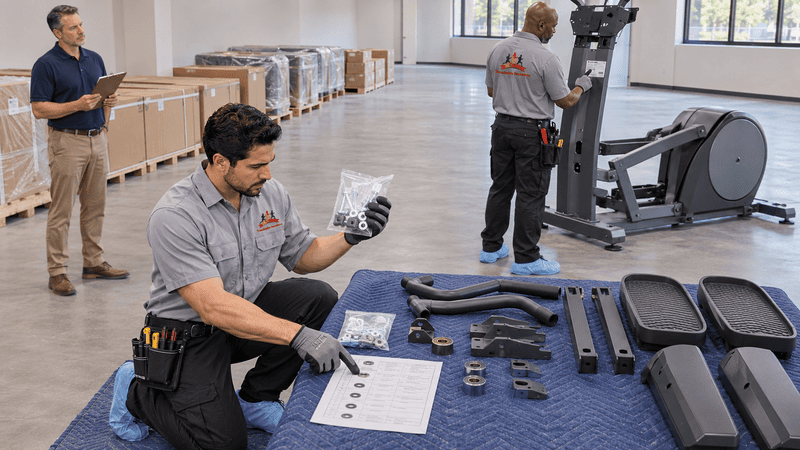
Commercial gym installation involves inspecting components, assembling equipment, positioning machines, leveling units, checking manufacturer procedures, and preparing spaces for regular operation. Requirements depend on equipment type, floor conditions, electrical access, manufacturer specifications, machine footprint, facility layout, and project scope.
- Check equipment components before assembly.
- Protect flooring during handling and setup.
- Level machines before confirming final placement.
- Follow manufacturer calibration procedures where required.
- Plan machine spacing before opening.
Component Checks Prevent Costly Setup Delays
Before commercial gym installation begins, component checks help identify missing, damaged, or incorrect parts that could interrupt assembly. Incorrect assembly, poor positioning, and dragging across finished floors can create expensive problems. Placing equipment into service before completing setup checks can compound those issues.
Loose hardware, uneven machines, and incorrect component alignment can affect operation once users arrive. Meanwhile, blocked power access and unnecessary repositioning can turn a minor correction into additional labor and floor contact.
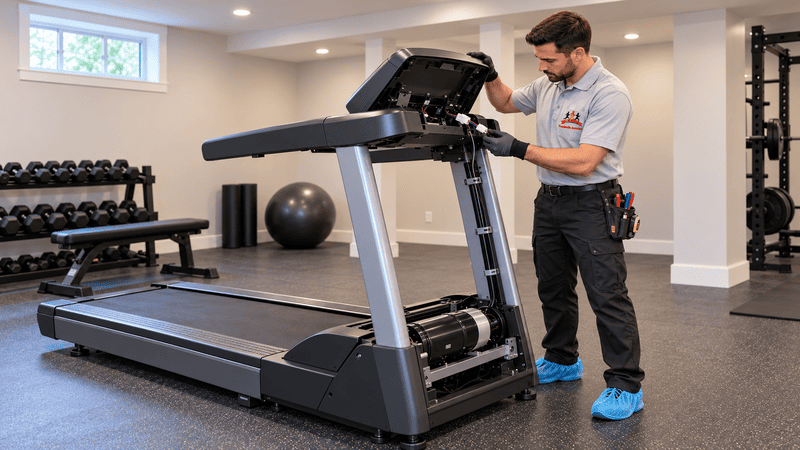
Professional installation coordinates assembly, placement, leveling, component checks, floor protection, and manufacturer-directed setup procedures. For a Washington, DC gym or Maryland hotel, that coordination supports a more organized opening. It also helps facility teams identify unresolved problems before regular equipment use begins.
Commercial gym installation means assembling, positioning, leveling, checking, and preparing fitness equipment for operation. Manufacturer procedures, facility conditions, and project requirements guide the work.
Inspect Parts Before Assembly
A complete inspection involves more than counting shipping boxes. Compare the delivered components with the equipment’s parts list and assembly instructions.
- Frames and supports: Inspect frames, rails, handles, pedals, and adjustment mechanisms for visible damage or incorrect components.
- Fasteners and hardware bags: Match bolts, washers, nuts, and other fasteners to the manufacturer’s parts list.
- Drive and resistance components: Check supplied cables, belts, and weight-stack components for visible damage and correct identification.
- Controls and electrical parts: Inspect consoles, safety keys, power cords, and accessible connectors.
- Manufacturer documentation: Confirm that instructions match the model and include required assembly and startup procedures.
Keep each machine’s hardware together. Similar-looking fasteners may differ in length, thread, or intended location.
Finding an incorrect rail early can avoid dismantling a nearly finished elliptical. Likewise, identifying a missing weight-stack component can prevent an incomplete strength station from blocking the room.
Installers cannot necessarily repair manufacturer defects. Document damaged or incorrect parts, then coordinate replacements through the appropriate supplier or manufacturer.
Why Choose Our Installation Team
Treadmills Installers provides commercial exercise equipment assembly services for gyms, hotels, apartment fitness centers, wellness facilities, and other commercial spaces.
Our work covers treadmill installation, elliptical assembly, weight bench setup, strength equipment, machine leveling, and equipment placement.
Floor-conscious installation, component checks, and manufacturer procedures help reduce commercial setup guesswork. Professional project coordination also helps facility teams organize multiple machines before opening.
Floor Protection Starts Before Heavy Machines Move
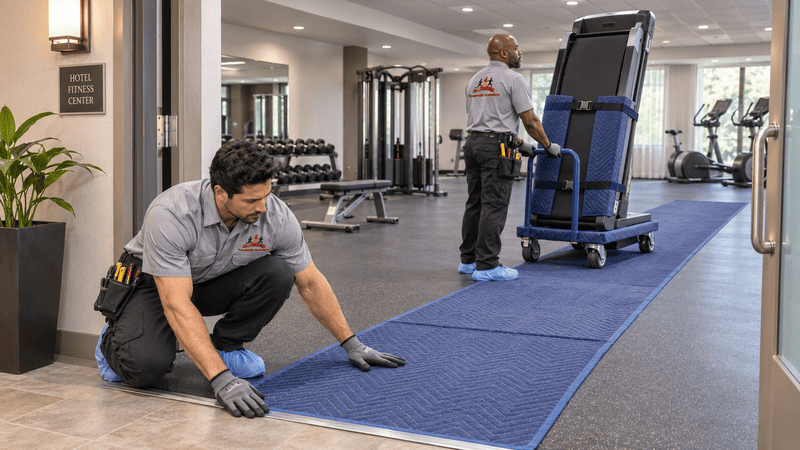
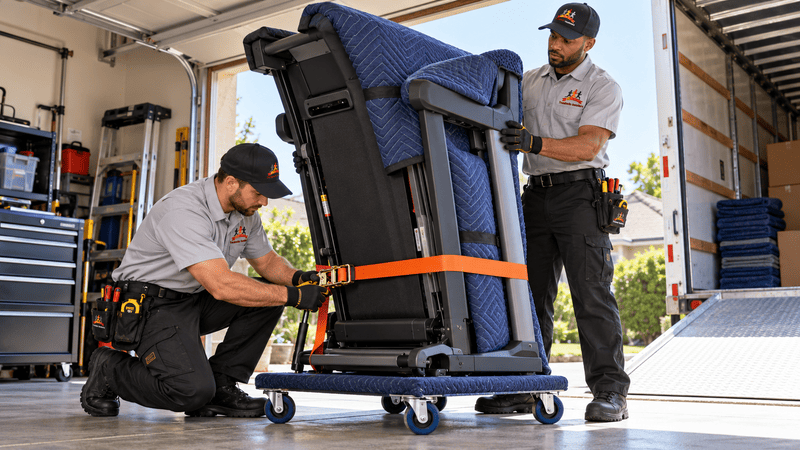
Floor protection starts with evaluating the surface, equipment weight, machine feet, and installation route before assembly begins. Heavy frames, trapped packaging debris, and repeated movement can mark finished surfaces. Appropriate handling and compatible protection can help limit unnecessary floor contact during setup.
Rubber flooring does not make every handling method appropriate. Tile, concrete, vinyl, wood, and specialty gym flooring each require attention to their condition and intended use.
Inspect the route from the delivery entrance to the final machine position. Look for loose flooring, damaged tiles, uneven transitions, exposed edges, and debris.
Equipment weight also affects handling plans. Where floor capacity remains uncertain, facility teams should obtain qualified guidance before installation.
| Floor surface | Setup concern | Practical planning step |
|---|---|---|
| Rubber flooring | Seams, surface condition, and mat compatibility | Inspect seams and confirm suitable protection |
| Tile | Existing cracks, grout lines, and uneven sections | Check the route and proposed machine positions |
| Concrete | Uneven areas and surface debris | Clean the route and assess stability |
| Vinyl | Scraping, trapped grit, and concentrated contact | Avoid dragging and confirm compatible protection |
| Wood | Finish damage and unsuitable protective materials | Follow flooring guidance before placing mats |
| Specialty gym flooring | Product-specific installation requirements | Coordinate flooring and equipment instructions |
Match Protection to the Floor
Equipment mats may suit some installations, but they are not a universal solution. Their material, thickness, stability, and compatibility need consideration. Temporary floor protection must also suit the surface and handling method. A protective layer should not introduce unstable footing or conceal debris.
Remove staples, grit, straps, and broken packaging before lowering machine feet. Small debris beneath a heavy frame can create unnecessary contact with the finish. Plan suitable lifting or equipment-handling methods instead of dragging machines across finished flooring. Confirm final positions early to reduce repeated movement.
For a Delaware hotel renovation, this could mean preparing the complete cardio area before bringing machines inside. That sequence helps avoid moving installed equipment to accommodate later deliveries.
Level Machines Before They Enter Service
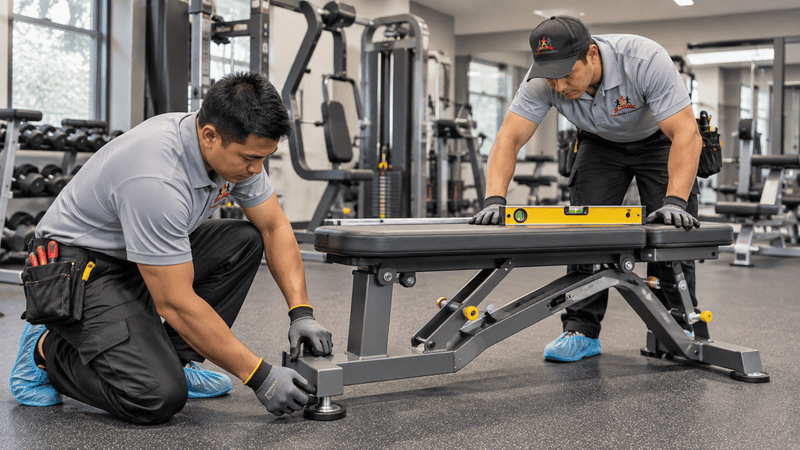
Proper leveling gives equipment a stable base, while alignment helps frames and moving components sit as designed. Depending on the machine, poor leveling can contribute to rocking, movement, noise, or added wear. Leveling addresses one potential problem, but it cannot prevent every equipment breakdown.
Exercise equipment leveling and component alignment serve different purposes. A level base cannot correct an incorrectly assembled frame, reversed bracket, or misplaced rail.
Follow the manufacturer’s assembly sequence. Some connections need alignment before final tightening, while others require a specific installation order.
- Treadmills: Check frame stability and machine feet before completing manufacturer-directed belt-tracking checks.
- Ellipticals: Inspect frame alignment, pedals, handles, rails, and moving connections.
- Weight benches: Check base contact, adjustment points, and locking mechanisms across intended positions.
- Strength machines: Inspect connected frames, cable routing, adjustment mechanisms, and weight-stack components where applicable.
- Adjustable equipment: Confirm that moving sections engage as described in the manufacturer’s instructions.
Arrange professional treadmill assembly services around the actual model, floor conditions, and intended location. Similarly, commercial weight bench assembly should include checking adjustable sections rather than testing only one bench position.
Recheck After Final Positioning
A Northern Virginia apartment fitness center may have slight floor variations across one room. Therefore, installers should assess each machine rather than copy another unit’s foot settings.
Complete initial leveling before confirming placement, then recheck stability after movement. Follow equipment instructions when adjusting machine feet or other leveling points.
Report persistent rocking, rubbing, binding, or unusual noise. Do not assume that leveling alone will resolve damaged parts or incorrect assembly.
Calibration Errors Can Affect Equipment Performance
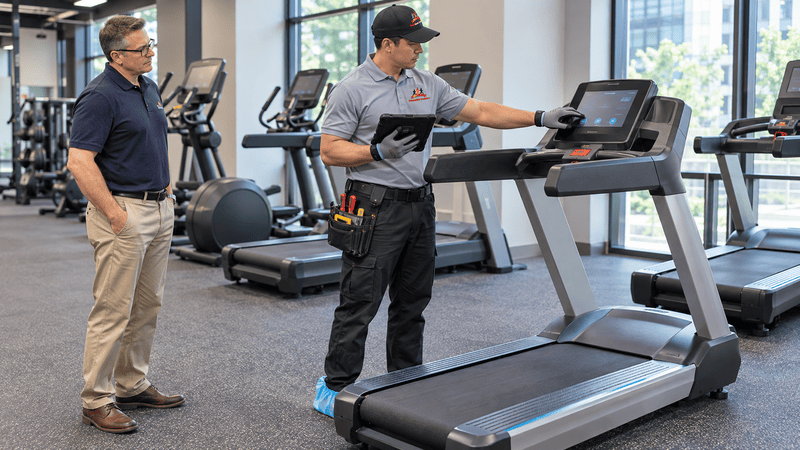
Some commercial fitness equipment requires startup checks, initialization, or manufacturer-directed calibration after assembly. These procedures help confirm that controls and selected functions respond as intended. Requirements vary by model, so installers should follow equipment documentation instead of applying the same routine to every machine.
Assembly connects physical components. Calibration checks or adjusts specific operating functions when the manufacturer requires it.
A working console does not prove that every setup step is complete. Depending on the equipment, manufacturer procedures may address:
- Treadmill belt operation, belt tracking, speed settings, and incline systems.
- Elliptical resistance, console setup, and machine initialization.
- Sensors, adjustment mechanisms, and accessible component connections.
- Diagnostic checks specified for installation or startup.
Fitness equipment calibration should never rely on guessed values or unrelated service codes. Some procedures require manufacturer support or an appropriately qualified service technician.
For equipment-specific planning, professional elliptical assembly services can help coordinate physical assembly with documented startup requirements.
Separate Startup From Maintenance
Startup checks address readiness at installation. Maintenance addresses cleaning, inspection, adjustment, and servicing throughout equipment use.
Neither replaces the other. A correctly assembled treadmill still needs the care described in its maintenance schedule.
A Pennsylvania rehabilitation facility may also need staff orientation before using newly installed commercial cardio equipment. Facility teams should keep installation checks separate from clinical decisions and user supervision.
Record incomplete procedures, error messages, or unexpected responses during startup. Refer unresolved faults to the appropriate service provider before regular use.
Machine Placement Controls Daily Gym Operations
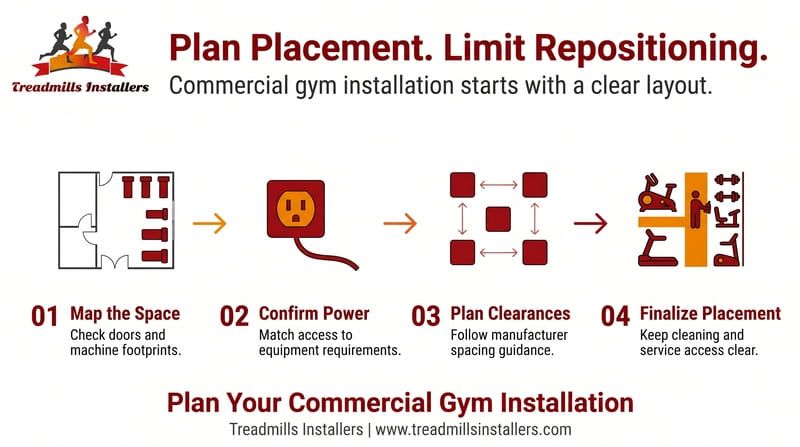
Machine placement affects how people enter, circulate, clean, and maintain a commercial fitness room. Finalizing positions before opening helps reduce repeated equipment movement and blocked access. Plan around machine footprints, operating space, outlets, doors, and maintenance needs rather than arranging equipment by appearance alone.
A machine’s footprint describes the floor area occupied by its base. Its operating space may extend farther when users exercise or adjustable components move.
Manufacturer instructions and applicable facility requirements should guide clearances. Do not substitute one universal spacing measurement for model-specific guidance.
- Machine spacing: Account for moving components, access points, and the intended exercise area.
- Walkways and emergency access: Preserve required routes and avoid creating bottlenecks.
- Power access: Confirm outlet locations and equipment requirements before positioning heavy cardio machines.
- Room features: Consider doors, windows, mirrors, and HVAC vents when choosing equipment orientation.
- Cleaning access: Leave practical access around machine feet and accessible areas beneath equipment.
- Maintenance access: Account for service panels, adjustment points, and components technicians may need to reach.
Confirm Power Before Placement
A nearby outlet may not meet a machine’s electrical requirements. Facility teams should arrange qualified electrical evaluation when power requirements or existing connections remain unclear.
Planning power access early helps avoid shifting an assembled treadmill to reach an unsuitable or blocked outlet. For corporate wellness spaces in Maryland, gym equipment placement should accommodate both cardio users and strength-training circulation. A neat-looking row can still interfere with cleaning or door access.
Strength stations need particular attention because moving arms, cables, and adjustable sections affect usable space. Planning professional weight machine installation services around those movements supports more accurate positioning.
Commercial fitness equipment installation services also support Pennsylvania facilities coordinating multiple exercise rooms. An agreed layout helps teams assign equipment before assembly begins.
Installation Mistakes Can Become Expensive Repairs
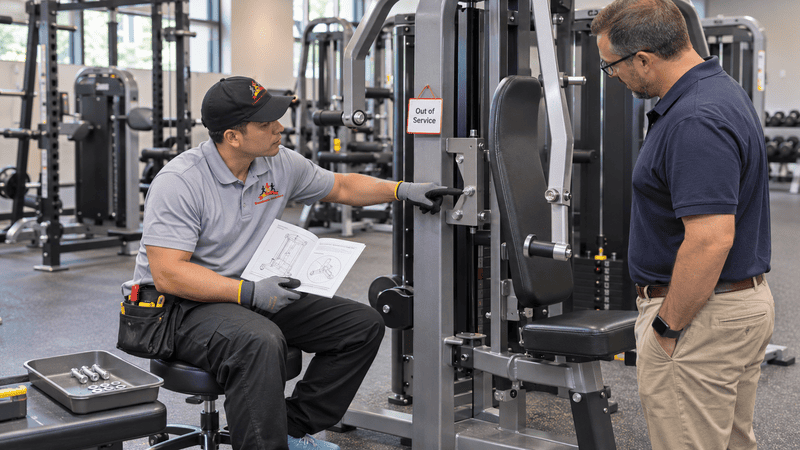
Installation mistakes can create loose connections, unstable bases, restricted movement, and unnecessary floor contact. Problems may appear during startup or emerge after repeated use. Correcting them after full setup can require additional labor, partial disassembly, and equipment movement, although not every malfunction begins with installation.
A clear sequence helps reduce avoidable rework. Check components first, confirm access, protect the route, and plan assembly near the intended position.
Common mistakes include:
- Dragging heavy equipment across finished floors.
- Skipping leveling or ignoring unstable machine feet.
- Using incorrect hardware or leaving fasteners loose.
- Tightening misaligned frames before checking connection points.
- Installing components in the wrong orientation.
- Blocking power access or leaving poor machine spacing.
- Skipping manufacturer startup checks.
- Repositioning machines repeatedly because the layout remains undecided.
- Using unsuitable floor protection or trapping debris underneath it.
Incorrect cable routing may cause rubbing or interfere with movement. Adding a mat will not correct a misaligned frame or loose connection.
Record incomplete checks and keep affected equipment out of service until the appropriate party addresses the issue. Installation handover should distinguish completed work from unresolved faults.
Coordinating Multi-Machine Installation
Professional gym installers can reduce installation guesswork when several machines share limited space and a tight opening schedule. Commercial treadmills, ellipticals, weight benches, weight machines, and large cardio equipment involve different handling and assembly demands. Strength equipment installation may also require careful sequencing around frames, cables, and weight stacks.
Coordinated fitness facility setup supports organized equipment placement and helps limit unnecessary machine repositioning. Hotels, apartment fitness centers, corporate wellness spaces, and multi-room facilities often benefit from a shared installation plan.
Renovations add challenges when crews work around completed flooring, occupied areas, or restricted entrances. For example, a Delaware hotel may need its strength equipment positioned before installers complete an adjacent cardio row. A Washington, DC facility might coordinate elevator access before scheduling a multi-machine project.
Commercial Installation Cost Factors
Commercial gym installation costs depend on equipment, facility conditions, access, requested services, and overall project scope. Machine count, equipment type, size, weight, and assembly complexity affect labor planning. Multiple rooms can add coordination needs, especially when equipment requires different handling routes.
Floor conditions, stairs, elevators, and restricted access may change the installation approach. Some projects also require multiple installers for handling and assembly.
Power requirements, final machine placement, calibration procedures, and after-hours scheduling can influence the requested work.
Provide model information, equipment quantities, room photos, and access details when requesting pricing. Include the proposed layout and any known floor or power concerns. Those details support a more useful assessment than machine count alone. They also help define which services the facility actually needs.
Schedule Commercial Gym Installation
Plan commercial gym installation with Treadmills Installers before opening or upgrading your fitness room. We serve Washington, DC, Maryland, Northern Virginia, Delaware, and Pennsylvania.
To coordinate assembly, floor-conscious handling, and accurate machine placement, contact commercial gym installers. Share your equipment list, access details, and opening timeline to request a commercial gym installation quote.
Frequently Asked Questions
What does commercial gym installation include?
Typically, commercial gym installation includes component checks, assembly, placement, leveling, and manufacturer-directed startup procedures.
Why should treadmills be leveled before use?
Leveling supports a stable base and can help reduce rocking, uneven operation, and some setup-related noise.
Can professional installers help protect gym flooring?
Suitable handling, compatible floor protection, and planned placement can help limit unnecessary floor contact and damage.
Do ellipticals require calibration after assembly?
Some models require initialization or calibration, so manufacturer documentation should guide startup checks.
When should a facility schedule installation?
Schedule after confirming equipment details, floor readiness, access, power requirements, and the proposed layout, allowing time to resolve issues.
Can professionals install several gym machines at once?
Multi-machine Home Gym Installation can coordinate assembly order, component organization, positioning, and final checks within the agreed project scope.
Why Schools Trust Professional Classroom Furniture Installation Services to Put Student Safety First