When Outdoor Furniture Becomes Unstable: What Homeowners Should Do Before Peak Patio Season

Outdoor furniture can become unstable after loose hardware, uneven ground, weather exposure, worn joints, missing parts, poor assembly, or rough seasonal storage take their toll. Before peak patio season, homeowners should check chairs, tables, benches, umbrellas, gazebos, fasteners, frames, feet, and floor surfaces so the setup feels steady before daily use begins.
- Check loose bolts and joints early before wobble gets worse
- Uneven patios and decks can make solid furniture feel unstable
- Rain, sun, wind, and storage stress can weaken outdoor pieces
- Gazebos and larger structures need closer seasonal inspection
- Professional assembly can help reduce avoidable setup mistakes
Patio Season Starts Better When the Furniture Feels Steady
Outdoor furniture may look ready in spring, but months of storage, weather, and heavy use can leave chairs, tables, benches, and gazebos less stable than they seem. That small movement can make the whole patio feel unfinished before the busy outdoor season even starts.
Once people start hosting, eating outside, and moving pieces around, minor looseness becomes harder to ignore. A practical fix is to handle inspection and setup early with patio furniture assembly for seasonal setup, which helps create a cleaner layout, tighter build, and more usable outdoor space before spring turns into summer.

Wobbly Chairs Usually Start With Small Hardware Problems
Most wobbly outdoor chairs start with small hardware problems, not total failure. A single loose screw, worn foot, or shifting joint can change how a chair sits on concrete, pavers, or a wood deck, and that movement usually gets worse as the season picks up.
Common trouble spots include:
- loose armrest bolts
- seat screws backing out
- worn or cracked chair feet
- bent folding joints
- missing washers or brackets
These problems show up often after quick winter storage or rushed reassembly. They also show up when homeowners tackle patio set assembly for outdoor spaces without enough room to sort hardware, level the pieces, and tighten connections in the right order.
Uneven Patio Surfaces Can Make Good Furniture Feel Bad
Outdoor furniture can feel unstable even when the frame is fine because the real issue is the surface underneath it. Uneven pavers, settling concrete, porch transitions, and soft deck boards can all create wobble that looks like bad furniture when it is really bad placement.
Surface problems usually include:
- pavers that sit at different heights
- sloped concrete near drainage paths
- deck boards with flex or gaps
- outdoor rugs bunching under chair legs
- furniture spread across mixed surfaces
This is why layout matters as much as assembly. Looking at outdoor patio furniture for backyard planning can help homeowners picture better spacing, cleaner traffic flow, and furniture groupings that fit the actual footprint instead of fighting it.
Weather Exposure Can Loosen Outdoor Furniture Over Time
Rain, heat, wind, and winter temperature swings can loosen outdoor furniture over time. Metal hardware may corrode, wood joints can dry and shift, and resin or composite pieces may weaken at stress points, especially after repeated moving and seasonal exposure.
Watch for these weather-related signs:
- rust around bolts or brackets
- faded or brittle connection points
- widened joints on wood frames
- umbrella bases shifting after storms
- sectional clips that no longer hold tight
Outdoor furniture stability planning means checking the furniture frame, bolts, feet, joints, surface level, weather exposure, storage condition, layout, and seasonal use before patio furniture is placed back into daily outdoor service.
Good preseason prep also aligns with outdoor furniture construction and use guidance, which reinforces why structural integrity, durability, and stable placement matter when outdoor pieces are used regularly.

Tables and Benches Need Stability Before Guests Arrive
Tables and benches should be checked before guests arrive because even slight movement becomes obvious once people lean, serve food, or shift seats. A loose patio table or unstable bench can make the whole dining area feel off, even when the setup looks polished at first glance.
Before hosting, inspect:
- leg brackets and corner connections
- center supports under tabletops
- bench seat fasteners
- adjustable feet and floor contact
- umbrella hole stabilizers
This matters on patios, porches, and backyard dining zones where heavy pieces get dragged for cleaning or rearranged for extra seating. Comparing outdoor benches for patio seating can also help homeowners think through bench size, walkway clearance, and how fixed seating fits around tables.

Gazebos Require More Attention Than Basic Patio Sets
Gazebos require more attention because they involve more parts, more alignment points, and greater exposure to wind and surface conditions than a basic chair or table set. Small setup errors at the base or roof connection can lead to noticeable movement or uneven fit across the whole structure.
Key gazebo checks include:
- post alignment at each corner
- base plates sitting level
- roof frame connections
- anchor points and hardware tension
- clearance from fences and branches
For larger backyard projects, gazebo assembly services for backyards can help simplify a job that often becomes frustrating fast. Homeowners planning beyond a simple patio set may also need garden structure assembly for outdoor spaces, especially when a gazebo is only one part of a bigger outdoor upgrade.
Stored Furniture Should Be Checked Before It Goes Outside
Stored furniture should always be checked before it goes back outside because winter storage can hide loose hardware, warped parts, missing screws, and worn feet. A set that looked fine when packed away may feel unstable the moment it is placed back on the patio.
A quick preseason reset helps
Before moving everything into place, test each piece on a flat surface and tighten visible hardware. It is much easier to fix a problem in the driveway or garage than after the full patio layout is already built.
| Item to Check | What to Look For | Why It Matters |
|---|---|---|
| Chairs | Loose joints, uneven feet | Reduces wobble during daily use |
| Tables | Shifting legs, weak brackets | Helps keep dining surfaces steadier |
| Benches | Seat movement, missing screws | Supports better weight distribution |
| Umbrellas | Base looseness, pole play | Improves overall placement stability |
| Sectional seating | Loose clips, frame gaps | Keeps pieces aligned in use |
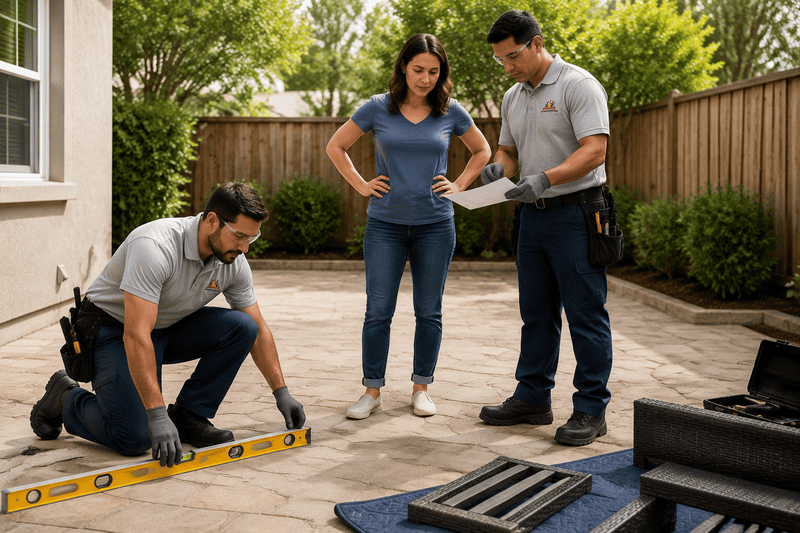
Outdoor Layouts Work Better When Pieces Fit the Space
Outdoor layouts work better when the furniture actually fits the space, the surface, and the way people move through it. Crowded placement, oversized pieces, and poor spacing can make stable furniture feel awkward, force constant repositioning, and lead to faster wear at joints and feet.
Helpful layout habits include:
- leave clear paths around tables
- keep heavy items off uneven transitions
- avoid crowding sectionals into corners
- place benches where all feet sit flat
- allow enough room for umbrellas and doors
This becomes even more important when patios connect to decks, garden structures, or hauling plans. Homeowners thinking ahead about expansion, replacement, or budgeting often benefit from outdoor structure installation cost planning so the layout stays realistic before new pieces arrive.
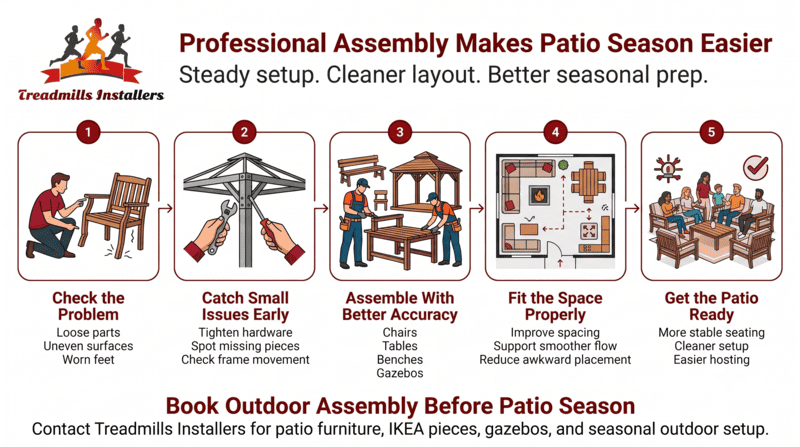
Professional Assembly Helps Patios Feel Ready for the Season
Professional assembly makes sense when furniture arrives in multiple boxes, hardware is missing, old pieces need re-tightening, or the project includes large dining sets, sectional seating, umbrellas, or gazebos. It can help improve stability, reduce common setup mistakes, and support smoother seasonal preparation.
When extra help is worth it
Professional support is especially useful after a move, during spring cleaning, or when stored furniture is being mixed with new pieces. Treadmills Installers can also help when outdoor projects overlap with indoor work, such as IKEA furniture assembly for outdoor pieces for boxed seasonal sets or home office furniture setup support during a larger whole-home refresh.
Schedule Outdoor Furniture Assembly Before Patio Season
The best time to steady up patio chairs, tables, benches, gazebos, and outdoor seating is before the busy season starts, when there is still time to tighten hardware, correct layout issues, and set the space up with less stress.
If your outdoor reset also includes equipment relocation help, moving hauling help, inground goal removal, or moving cost planning, it helps to coordinate those jobs before final placement.
Get the Patio Ready Before the Rush
Contact Treadmills Installers to schedule outdoor furniture assembly today for patio furniture assembly, IKEA furniture assembly, gazebo assembly services, seasonal outdoor setup support, and practical scheduling help.
Frequently Asked Questions
Why does patio furniture get wobbly after winter?
Cold, moisture, storage pressure, and repeated movement can loosen hardware and shift joints before the new season starts.
Can uneven pavers make outdoor chairs unstable?
Yes. Even sturdy chairs can wobble if one or more legs sit on uneven pavers or settling concrete.
Should patio furniture be tightened before summer?
Yes. A preseason tightening check helps catch loose bolts, screws, and brackets before daily use increases.
What should I check on outdoor benches?
Look at seat supports, leg connections, frame movement, and missing fasteners before placing benches in active seating areas.
Do gazebos need seasonal inspection?
Yes. Posts, anchors, roof connections, and alignment should be checked before regular seasonal use.
Can stored patio furniture become loose?
Yes. Storage can hide missing screws, cracked feet, bent parts, and loosened joints that show up later outdoors.
When should homeowners schedule patio furniture assembly?
The best time is before peak patio season, especially before spring cleaning, hosting weekends, or larger backyard changes.
Should damaged outdoor furniture be repaired or replaced?
It depends on the frame condition, missing parts, and overall wear. Minor assembly issues may be repairable, while heavily worn pieces may need replacement.

Why Schools Trust Professional Classroom Furniture Installation Services to Put Student Safety First