The Safest Way to Transport Heavy Treadmills and Fitness Gear Without Damaging the Calibration
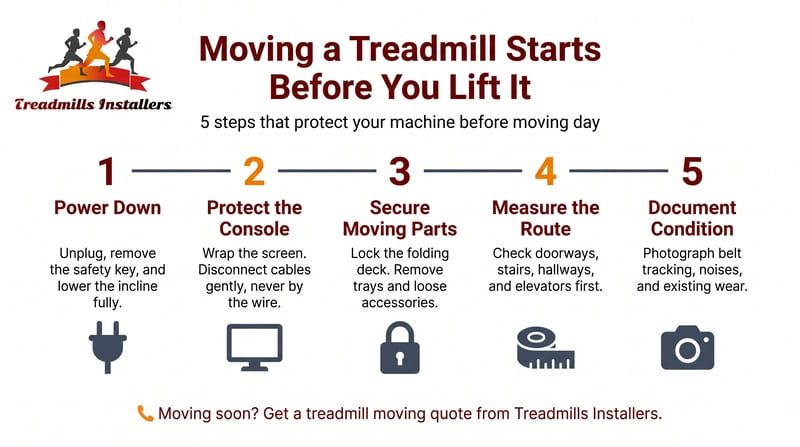
Moving a treadmill safely typically involves powering it down, protecting the console and wiring, securing movable parts, planning the access route, using controlled lifting, transporting it in a stable position, and checking alignment after reassembly. The right approach depends on treadmill size, model, weight, folding design, stairs, doorways, destination access, manufacturer instructions, and any other fitness equipment involved.
- Power down before disassembly
- Protect consoles and cables
- Plan the moving route first
- Secure moving and folding parts
- Recheck leveling after relocation
Moving a Treadmill Starts Before You Lift It
Safe treadmill relocation begins with preparation, not lifting. Before anyone touches the frame, the machine needs a condition check, the route needs measurements, and the plan needs to match the treadmill model. Skipping this stage is where most avoidable handling problems begin.
A treadmill is not ordinary furniture. It combines a heavy steel frame with electronics, rollers, a running belt, an incline system, and alignment-sensitive components. Dragging it across a floor, tipping it onto its console, or yanking cables loose can create problems that only appear after the move. This is why many homeowners, renters, and property managers turn to treadmill moving services instead of improvising with a dolly and good intentions.
Treadmill moving services involve preparing, partially disassembling, protecting, transporting, reassembling, leveling, and checking treadmill equipment according to its model, access conditions, manufacturer instructions, and destination setup.
What to Check Before Moving Day
A short inspection before the move gives you a clear baseline. It also helps you separate pre-existing issues from anything that happens during transport.
- Power cord: check for fraying, pinch marks, or damaged plugs.
- Safety key: confirm it works, then remove and store it separately.
- Console and console cables: note any loose connections or flickering displays.
- Folding deck and incline position: fold and lock the deck if the design allows, and lower the incline fully.
- Accessory trays and loose parts: remove anything that can rattle, crack, or fall.
- Leveling feet: check that each foot turns freely for later adjustment.
- Belt tracking: walk the belt slowly and note whether it drifts left or right.
- Existing noises: listen for squeaks, grinding, or thumping during a brief run.
- Visible damage: photograph scratches, cracks, or bent parts before the move.
Documenting the treadmill's pre-move condition matters. Photos and short notes help you identify issues that existed before relocation, so you do not blame the move for an old belt problem. That said, relocation does not cause every calibration or mechanical issue, and pre-existing wear should not be ignored either.
Measure the Path First
Moving path measurements save enormous frustration. Measure doorways, hallway widths, stairwell turns, and elevator interiors before lifting anything. A basement gym in Maryland, for example, often means a tight stair landing, while a Washington, DC apartment move may involve an elevator reservation and a long corridor. Measure the destination too, not just the exit.
Disassembly Protects More Than the Frame
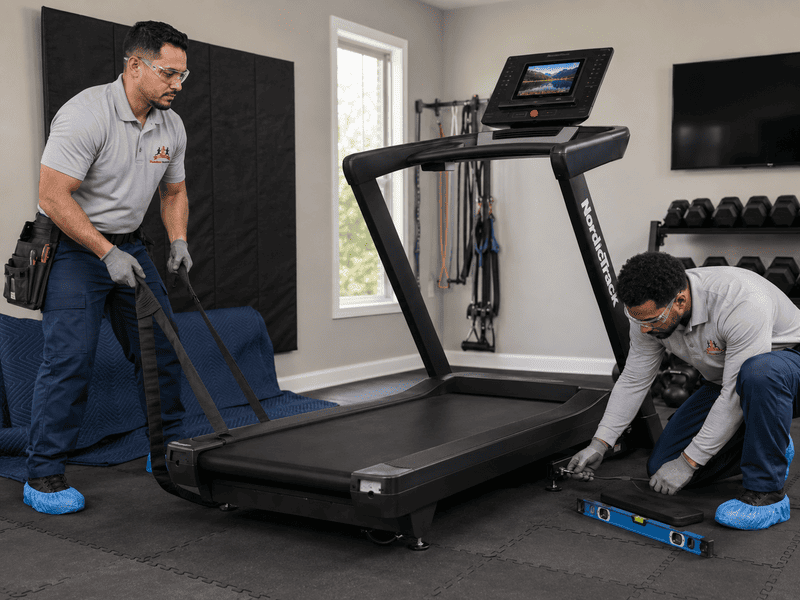
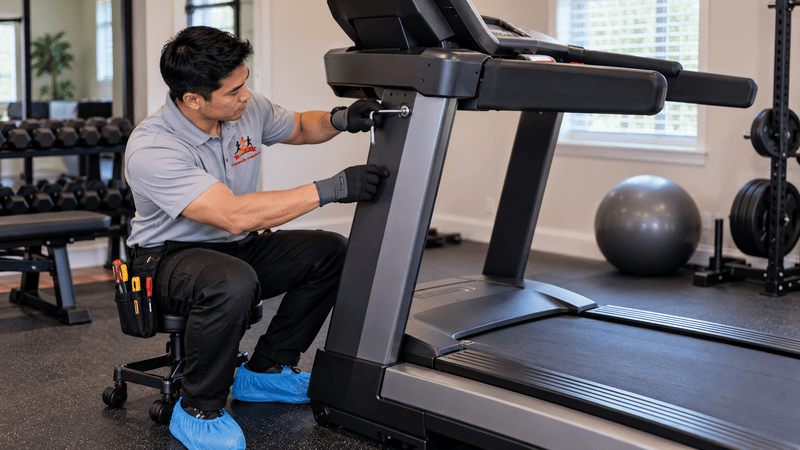
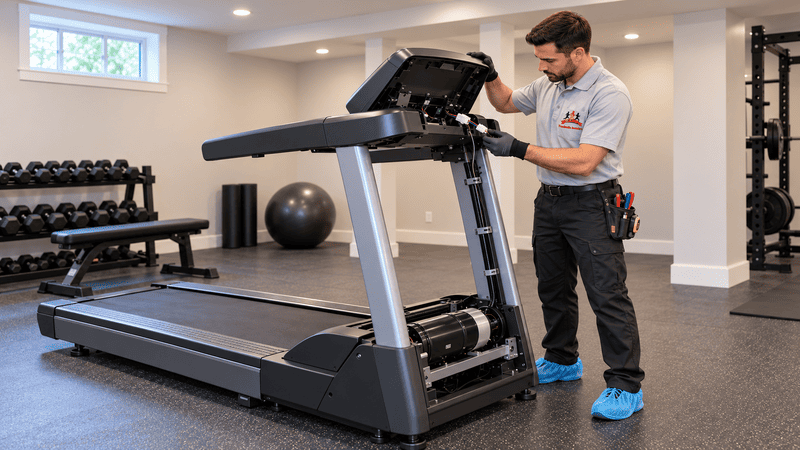
Selective disassembly makes a heavy treadmill easier to carry through doors, stairs, hallways, and elevators. Removing the console, uprights, and handrails reduces weight at awkward points and protects fragile electronics. The depth of disassembly depends on the treadmill design and the manufacturer's instructions.
What Usually Comes Off
Most full-size treadmills allow partial disassembly without touching internal components.
Common removals include:
- Console: often the most fragile and expensive part of the machine.
- Uprights: the vertical posts that hold the console and handrails.
- Handrails: helpful for narrow doorways and stair turns.
- Accessory trays: lightweight plastic that cracks under pressure.
- Cross-members: stabilizing bars on some folding designs.
- Power cables and display wiring: disconnected carefully, never pulled by the wire.
Keep in mind that treadmill disassembly does not mean opening the motor cover. Internal motor, roller, and electrical components should stay in place unless the manufacturer says otherwise.
Label Everything
Hardware organization sounds minor until reassembly. Small bolts look identical after a long moving day.
- Bag bolts and fasteners by component, not all together.
- Label each bag with tape and a marker.
- Wrap the console in padded material and mark it clearly.
- Photograph cable routing before disconnecting anything.
- Group component boxes so nothing travels separately.
Careful labeling supports organized equipment handling and helps owners prepare machines for reassembly and setup checks at the destination.
Heavy Gym Equipment Needs a Moving Plan
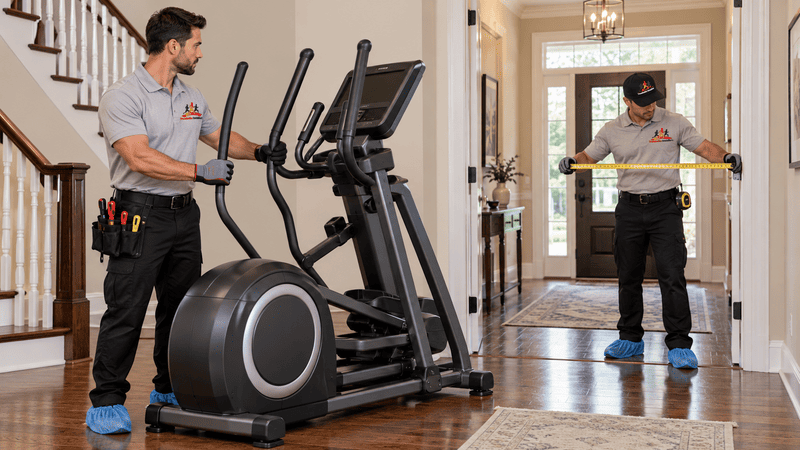
Treadmills, Smith machines, home gyms, and weight benches need planned handling because of their weight and shape. Center of gravity, lifting points, and access conditions differ between machines. A coordinated plan keeps the move controlled instead of reactive.
A folding treadmill may weigh 200 to 300 pounds, while a Smith machine frame with attached components can weigh far more. Different machines require different lifting and disassembly strategies. A home gym owner in Northern Virginia moving a multi-station unit, for instance, faces a very different project than a renter carrying an exercise bike down one flight of stairs.
Handling Factors That Matter
- Equipment weight and balance: heavy machines shift unexpectedly when tilted.
- Multiple handlers: two or more people allow controlled, slow movement.
- Lifting points: frames have safe grip zones; consoles and rails are not handles.
- Stairs and landings: tight turns require pause points and clear communication.
- Doorways and elevators: measured clearances decide how much disassembly is needed.
- Floor protection: runners or cardboard protect hardwood and carpet alike.
- Destination clearance: the final spot needs space for the machine and the crew.
Property managers coordinating gym equipment relocation in Delaware apartment buildings often add elevator padding and scheduled access windows to this list. Planned handling can help reduce avoidable handling problems, though no approach eliminates every risk.
Why Choose Our Team
Treadmills Installers provides treadmill, home gym, Smith machine, and fitness equipment relocation support across Washington, DC, Maryland, Northern Virginia, Delaware, and Pennsylvania. The team handles treadmill disassembly, console protection, cable organization, heavy equipment handling, reassembly, equipment leveling, and belt tracking checks with clean work practices and professional project coordination.
Whether the project involves a single folding treadmill or a full basement gym, dedicated crews who offer professional Smith machine moving services understand how rack frames, bar catches, and weight storage differ from cardio equipment. Likewise, households relocating multi-station setups benefit from home gym equipment relocation services that treat each machine as its own project.
This kind of support helps reduce relocation guesswork and can make heavy fitness equipment moves easier to coordinate from start to finish.
Transport Position Can Affect Sensitive Components
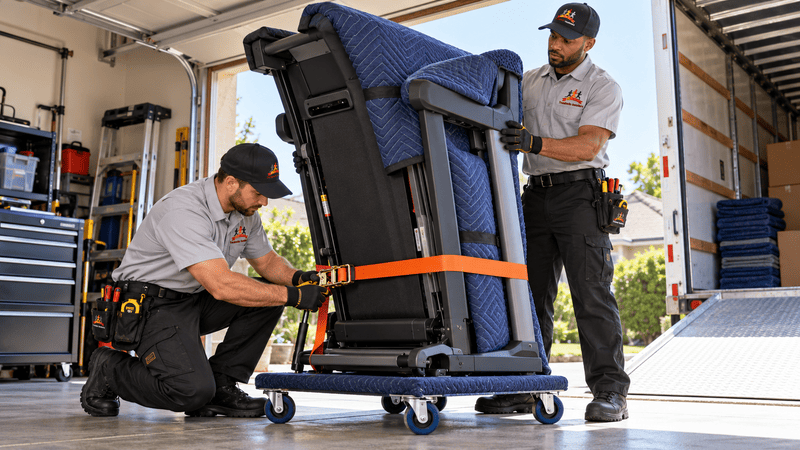
How a treadmill sits inside the vehicle matters as much as how it was carried out the door. Stable positioning, padding, and secure strapping protect the frame, belt, and console from pressure and shifting during transport. The method should match the machine design and the moving conditions.
Loading Principles Worth Following
- Stable positioning: keep the deck folded and locked, or fully flat per the manufacturer.
- Protective padding: place moving blankets at frame contact points.
- Straps: secure the machine against vehicle walls using frame points, not the console.
- Loose component containment: box the console, trays, and hardware separately.
- Belt and display protection: avoid stacking weight on the running belt or screen.
- Hardware together: keep labeled bags in one box so reassembly starts smoothly.
- Vehicle movement: drive smoothly and avoid sudden braking where possible.
- Unloading sequence: plan which items come off first at the destination.
Manufacturers publish model-specific transport guidance, so check it before loading. Universal tie-down specifications rarely fit every treadmill, and pressure on the wrong component can leave marks or alignment issues. A rowhouse move in Pennsylvania with street parking, for example, may call for a different loading order than a suburban garage pickup.
Reassembly Is Where Alignment Problems Show Up
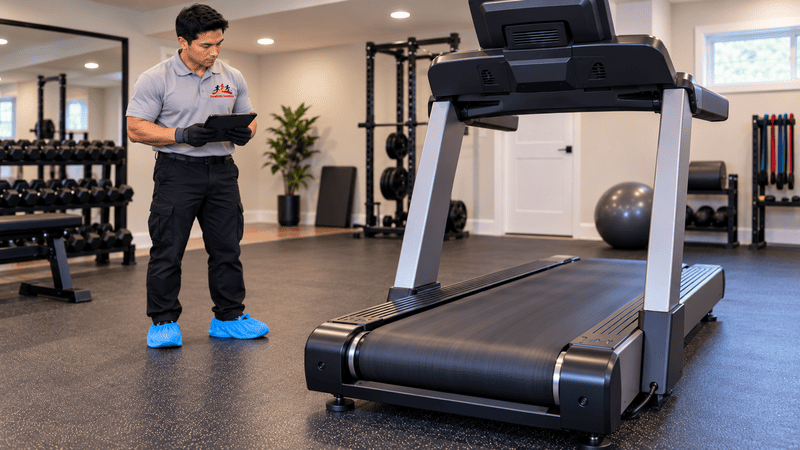
After delivery, the treadmill needs frame reassembly, cable reconnection, upright alignment, hardware tightening, leveling, and a series of function checks. Reassembly should follow manufacturer requirements, because calibration procedures vary by model. Rushing this stage invites tracking drift and console errors.
Post-Move Setup Checks
- Frame reassembly: attach uprights and cross-members in the documented order.
- Cable reconnection: match display wiring to the photos taken before the move.
- Hardware tightening: snug bolts evenly instead of overtightening one side.
- Leveling: adjust the leveling feet until the frame sits stable with no rocking.
- Belt tracking: run the belt at low speed and watch for drift.
- Incline movement: raise and lower the deck through its full range.
- Console operation: confirm buttons, display, and heart-rate sensors respond.
- Safety key: test that the belt stops immediately when the key is removed.
- Low-speed testing: walk the belt for several minutes before full-speed use.
- Unusual noise: stop and investigate new sounds rather than ignoring them.
Post-move calibration procedures vary by treadmill model. Some machines recalibrate incline automatically on startup, while others need a manual sequence from the settings menu. Relocation will not preserve every setting in every case, and persistent mechanical or electrical issues may require qualified service.
Crews providing professional fitness equipment moving services typically handle reassembly, leveling, and treadmill calibration support as part of the same visit, which keeps the whole process consistent.
Moving Costs Depend on Access and Equipment
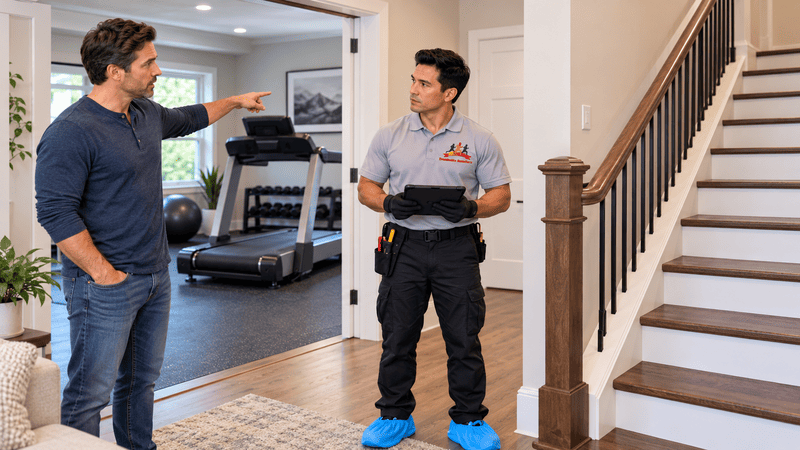
Treadmill and fitness equipment moving costs depend on actual equipment, access conditions, distance, and service requirements. No two projects price out the same way, because stairs, disassembly depth, and crew size change the labor involved. Accurate quotes come from accurate project details.
| Cost Factor | Why It Matters |
|---|---|
| Equipment size and weight | Heavier machines need more handlers and time |
| Number of machines | Multi-machine gym moves extend crew hours |
| Disassembly requirements | Console and upright removal adds labor |
| Stairs and elevators | Vertical carries slow the move and raise difficulty |
| Carry distance | Long walks from door to truck add time |
| Doorway and hallway access | Tight turns may require deeper disassembly |
| Parking and travel distance | Remote parking and long drives affect scheduling |
| Destination conditions | Narrow rooms or upper floors change the plan |
| Reassembly and calibration checks | Post-move setup adds service time |
| Special handling needs | Oversized or unusual equipment needs extra care |
Final pricing depends on the real scope, so a single treadmill ground-floor move differs from a five-machine home gym relocation with two staircases. Timing also plays a role. Booking ahead improves scheduling flexibility, and this early professional moving preparation guidance explains how planning in advance can make relocation smoother overall.
Book Treadmill Moving Services
Disassembly, console protection, equipment handling, transport positioning, reassembly, leveling, and post-move checks all work better when one team coordinates them. Professional treadmill moving services connect these steps into a single organized project, so nothing gets skipped between the old location and the new one.
To start planning your relocation, contact fitness equipment movers with details about your machines and access conditions, or request a treadmill moving quote to outline your project scope.
Get Your Heavy Fitness Equipment Move on the Schedule
Homeowners, renters, property managers, and home gym owners across Washington, DC, Maryland, and Northern Virginia can request moving quotes and schedule fitness equipment relocation support with Treadmills Installers, with service also available across Delaware and Pennsylvania. Share your equipment list, access details, and destination conditions so the crew can plan disassembly, transport, and setup checks around your actual project.
Frequently Asked Questions
Should a treadmill be disassembled before moving?
Most full-size treadmills benefit from partial disassembly, such as removing the console, uprights, and handrails. The right depth depends on the model, the access route, and the manufacturer's instructions.
Can moving a treadmill affect its calibration?
Relocation can shift leveling, belt tracking, or incline settings, so post-move checks matter. Calibration procedures vary by model, and some machines need a manufacturer-specific sequence after reassembly.
How should a treadmill console be protected during transport?
Remove the console when the design allows, wrap it in padded material, and box it separately. Never let straps, weight, or other equipment press directly against the screen.
Can movers take a treadmill up or down stairs?
Yes, though stairs require multiple handlers, measured landings, and controlled lifting. Stair access usually affects project planning and overall moving costs.
How should treadmill hardware be organized during a move?
Bag bolts and fasteners by component, label every bag, and photograph cable routing before disconnecting anything. Organized hardware makes reassembly faster and reduces guesswork.
Should a treadmill be leveled again after relocation?
Yes. New flooring rarely matches the old surface, so adjust the leveling feet until the frame sits stable. Then check belt tracking at low speed before regular use.
What factors affect treadmill moving costs?
Equipment size and weight, disassembly needs, stairs, carry distance, travel, and reassembly requirements all shape pricing. Final costs depend on the actual equipment and access conditions.
When should I hire professional treadmill moving services?
Professional treadmill moving services make sense when the machine is heavy, the route involves stairs or tight spaces, or multiple pieces of gym equipment are moving together. Coordinated support helps reduce relocation guesswork and keeps preparation, transport, and setup checks consistent.

Why Schools Trust Professional Classroom Furniture Installation Services to Put Student Safety First