Why Professional Treadmill Assembly Is Essential for Calibration, Belt Alignment, and Home Workout Safety
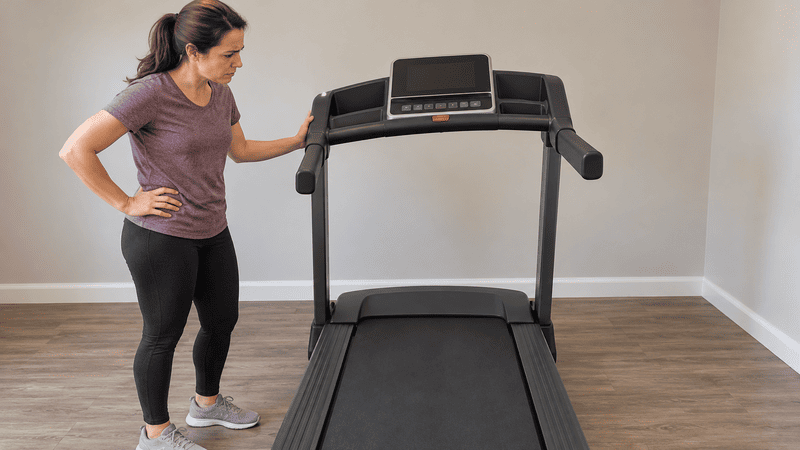
Professional treadmill assembly typically includes frame construction, upright installation, console connection, deck checks, leveling, belt alignment, hardware tightening, incline-system checks, and initial operational testing. The right setup approach depends on the treadmill model, floor surface, frame design, belt condition, electrical requirements, manufacturer instructions, room clearance, and equipment weight.
- Frame alignment directly affects treadmill stability during use
- Belt tracking needs careful adjustment, not guesswork
- Level flooring supports smoother, quieter operation
- Console connections require correct routing and orientation
- Professional assembly reduces setup guesswork from day one
A Treadmill Can Be Fully Built and Still Be Set Up Wrong
A treadmill can look completely finished and still have serious setup problems hiding inside. Many homeowners connect the frame, attach the console, and plug in the power cord. However, professional treadmill assembly involves far more than that final click. Loose uprights, poor leveling, incorrect belt tracking, and uneven hardware tension often stay invisible at first. Then the symptoms appear. The belt drifts to one side. The frame rocks during faster runs. The console shows inconsistent readings. As a result, a brand new machine feels worn out within weeks.
Professional setup addresses frame alignment, belt positioning, leveling, console connections, incline operation, and manufacturer directed startup checks before those small errors grow into daily frustrations.
Frame Alignment Starts Where the Treadmill Meets the Floor
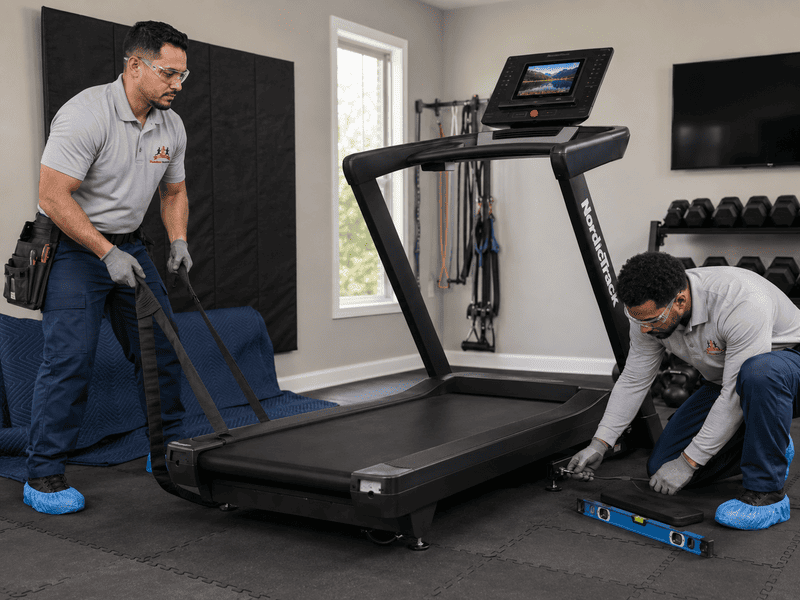
Treadmill performance starts with two things: the frame itself and the surface beneath it. A correctly assembled frame can still feel unstable when the floor is uneven or the leveling feet sit out of adjustment. Therefore, installers check both the machine and the room.
Frame Hardware and Structural Sequence
Treadmill frames rely on a specific assembly order. Cross-members support the deck, and uprights carry the console and handrails. When bolts go in out of sequence, tension builds unevenly across the frame. For example, fully tightening one upright before seating the cross-member can twist the entire structure slightly. That twist later shows up as rocking, squeaking, or belt drift. A careful treadmill frame assembly follows the manufacturer hardware sequence and snugs bolts before final tightening.
Floor Surface, Leveling Feet, and Room Clearance
The installation surface matters just as much as the frame. Consider these practical factors:
- Hard flooring offers a stable base but may amplify vibration noise
- Carpeted surfaces can hide uneven contact points under the frame
- Uneven flooring requires leveling-foot adjustment on each corner
- Equipment mats protect floors and help dampen movement
- Room clearance allows safe belt access, folding, and maintenance
Folding treadmills add another step. The folding mechanism and locking pin need verification after leveling, since a tilted frame can stress the hinge. Homeowners in Washington, DC rowhouses and Maryland basements often deal with older, uneven floors. In those spaces, treadmill leveling becomes the difference between a machine that feels solid and one that wobbles at every stride. Even so, no setup can promise perfect stability on every surface, and floor conditions should be evaluated before final adjustments.
Belt Drift Often Points to a Setup Problem
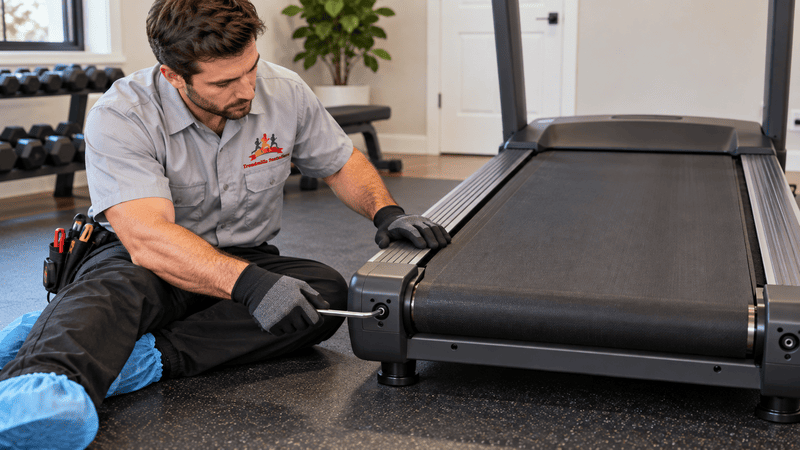
The walking belt should stay centered and move consistently across the deck. When the belt drifts left or right, the cause often traces back to assembly conditions rather than a defective machine. Treadmill belt alignment depends on rear roller adjustments, frame squareness, and even floor contact.
Belt Tension and Belt Tracking Are Different Things
Many new owners mix up tension and tracking. Tension controls how firmly the belt grips the rollers. Tracking controls where the belt sits on the deck. A belt can be tight and still drift sideways. Adjustments should follow manufacturer procedures, because excessive tightening creates different problems than a belt that is too loose. An overtightened belt strains the motor, rollers, and deck. A loose belt slips underfoot. Manufacturers supply model-specific guidance, so universal tension measurements do not apply.
Here is a quick reference for common belt symptoms:
| Symptom | Possible Setup-Related Cause | First Thing to Check |
|---|---|---|
| Belt drifts to one side | Uneven rear roller adjustment | Roller bolt positions |
| Belt slips underfoot | Insufficient belt tension | Manufacturer tension procedure |
| Squeaking during use | Deck or frame contact points | Leveling and deck alignment |
| Vibration at higher speeds | Loose hardware or rocking frame | Bolt sequence and floor contact |
Initial low-speed checks reveal most tracking problems early. Running the belt slowly for several minutes lets installers watch drift patterns before full-speed use. If the belt still wanders after careful adjustment, the floor or frame alignment deserves a second look.
Homeowners who prefer a guided setup can work with a team providing professional treadmill assembly services that include belt tracking checks from the start.
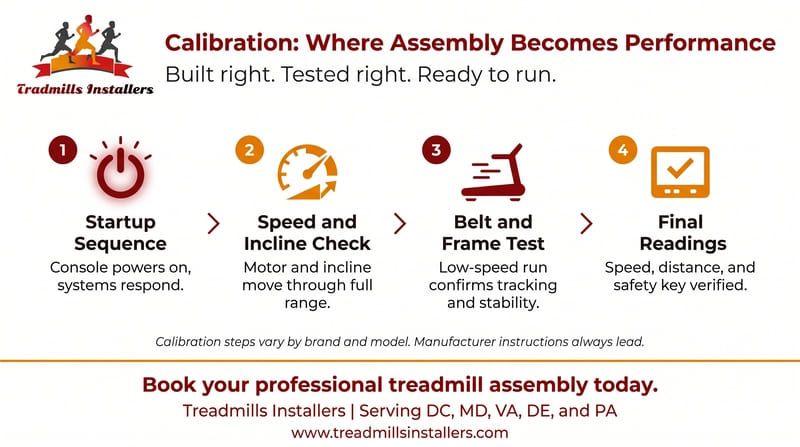
Calibration Connects Assembly to Actual Treadmill Performance
Calibration links the physical build to the treadmill's electronic behavior. Without it, the console may display speeds or incline levels that do not match reality. In practical terms, calibration tells the machine how its motor, incline system, and sensors should respond.
What Calibration Means in Practical Terms
Professional treadmill assembly means constructing, aligning, leveling, connecting, checking, and initially testing a treadmill according to its manufacturer instructions, installation surface, model requirements, and intended use. Calibration sits inside that definition as the electronic counterpart to mechanical alignment. Procedures differ between manufacturers and models. One brand may require a button sequence on the console, while another runs an automatic startup cycle.
Startup Checks That Confirm Real Performance
A thorough treadmill calibration and testing process typically covers:
- Startup sequence and console power response
- Speed response from low to moderate settings
- Incline movement through its full range
- Console readings for speed, distance, and incline
- Safety-key attachment and stop function
- Belt behavior at low speed
- Unusual noise from the motor, rollers, or frame
- Frame movement during operation
Low-speed testing matters because small problems appear before they become big ones. Installers cannot override manufacturer specifications, and assembly alone cannot diagnose every internal electronic fault. Persistent mechanical or electrical issues may require qualified service beyond installation.
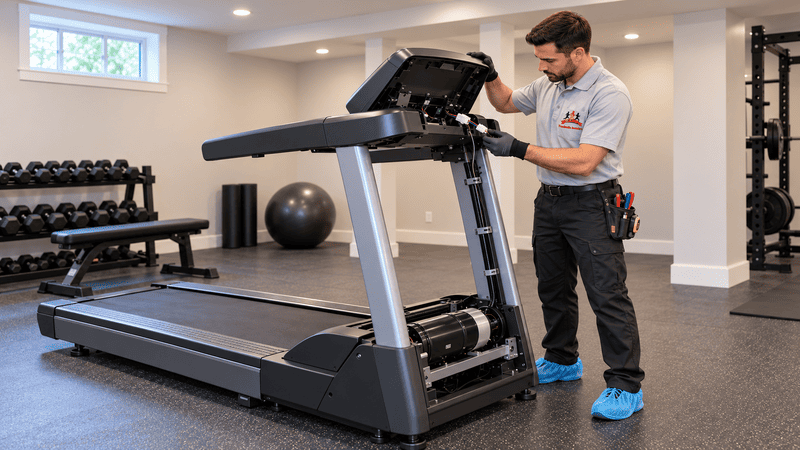
Console Wiring and Incline Systems Need Careful Attention
Modern treadmills include far more than mechanical parts. Console cables, incline motors, safety-key systems, and control wiring all run through the uprights. Rushed wiring creates problems that only surface after the machine is fully closed up.
Cable Routing Before Panels Close
Console cables should be routed according to manufacturer instructions before panels and uprights are fully secured. Common wiring issues include pinched cables, reversed connector orientation, and stretched connections at the display. A pinched cable inside an upright may work for days and then fail mid-workout. For that reason, careful treadmill setup treats cable routing as a distinct step, not an afterthought.
Incline Motors and Powered Folding Features
Incline systems need setup checks of their own. The incline motor should raise and lower the deck smoothly through its full travel. Powered folding features on some models also rely on correct wiring and frame alignment. Property managers setting up fitness rooms in Northern Virginia apartment buildings frequently choose commercial-grade machines with heavier incline assemblies. Those units reward careful wiring and leveling from the start, since correcting a wiring mistake later often means partial disassembly.
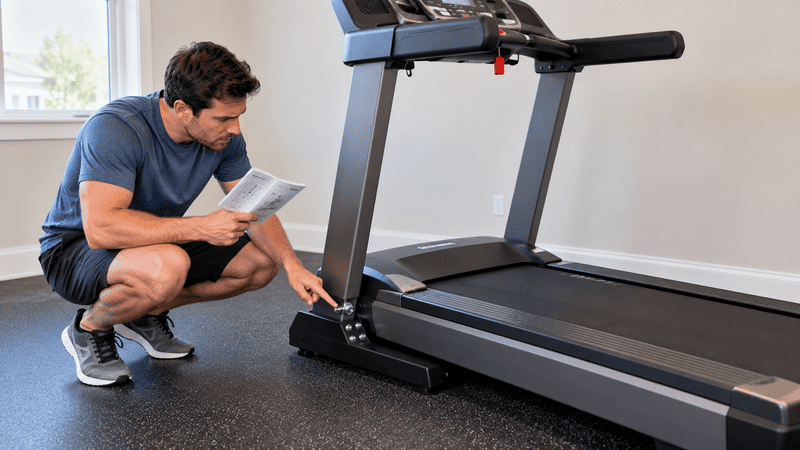
Small Installation Errors Can Affect Every Workout
Rushed or incomplete assembly leaves symptoms that show up in daily use. These problems can have several causes, so inspection should come before adjustments. Assembly errors do not explain every treadmill issue, but they account for many early complaints.
Setup Mistakes Homeowners Notice First
Watch for these warning signs after a DIY build:
- Loose hardware causing rattles or clicking sounds
- Frame rocking on one corner during runs
- Belt drifting toward the same side repeatedly
- Excessive vibration at moderate speeds
- Misaligned uprights creating visible lean
- Pinched cables causing console dropouts
- Uneven deck positioning against the frame
- Skipped startup checks hiding calibration issues
Each symptom deserves a methodical check rather than random tightening. Many of these patterns match common improper treadmill setup problems that appear when leveling, belt tracking, or hardware sequence gets skipped.
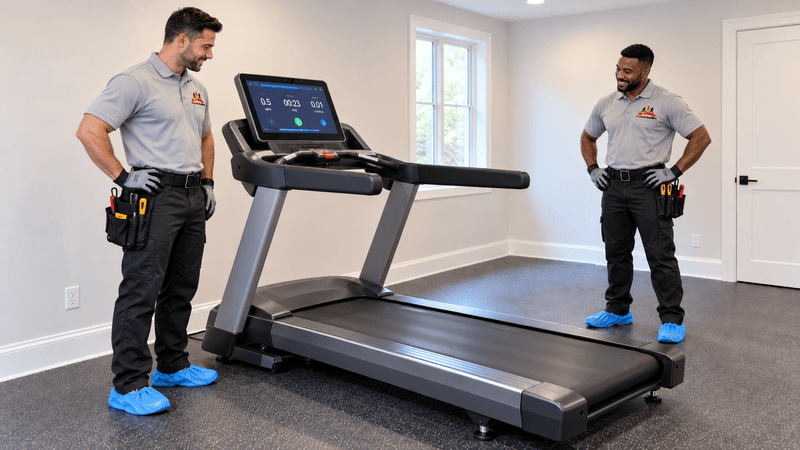
When Professional Treadmill Assembly Makes Sense
Large motorized treadmills present real physical challenges. Heavy decks, oversized uprights, and tight rooms with stair access often require multiple installers. Folding systems, console wiring, belt checks, leveling, and calibration procedures add time and complexity. Professional assembly can reduce assembly guesswork, supports accurate frame alignment, helps keep components organized, and may reduce avoidable setup errors. Families in Delaware and Pennsylvania suburbs often schedule home treadmill installation for exactly these reasons, since it can make heavy fitness equipment installation more manageable and safer to complete.
Why Choose Our Team
Treadmills Installers provides treadmill and fitness-equipment assembly support for residential and commercial projects, including commercial exercise equipment assembly services for gyms, offices, and shared amenity spaces. Our crews follow manufacturer instructions, handle heavy equipment carefully, and work with clean, property-conscious practices.
We also coordinate with landlords and property managers on multi-unit fitness room projects across the region. For broader home gym equipment setup beyond a single machine, homeowners sometimes turn to professional fitness equipment installation services that cover multi-station builds. Either way, a structured approach helps reduce setup guesswork, supports accurate treadmill alignment, and helps owners approach installation with a clearer process.
Book Professional Treadmill Assembly Before Your First Run
Frame alignment, belt tracking, leveling, wiring checks, calibration procedures, and startup testing all deserve attention before regular use begins. Professional treadmill assembly addresses these steps in one organized visit, so your machine starts its life on a stable, correctly adjusted foundation.
To plan your installation, you can contact treadmill installation specialists about your space and equipment, or request treadmill assembly quote details for your specific model. Reach out today and give your new treadmill the careful setup it was designed to receive.
Frequently Asked Questions
Why does my treadmill belt keep moving to one side?
Belt drift usually points to uneven rear roller adjustment, frame misalignment, or an unlevel floor. Small tracking adjustments should follow the manufacturer's procedure.
Does a new treadmill need calibration?
Most motorized treadmills benefit from a startup calibration sequence. The exact procedure differs by brand and model, so check the manual first.
How tight should a treadmill belt be?
Belt tension specifications come from the manufacturer, since every model differs. Overtightening can strain the motor and rollers, while a loose belt may slip.
Why does my treadmill shake after assembly?
Shaking often comes from loose hardware, unlevel flooring, or misadjusted leveling feet. An inspection of the frame and floor contact points is a good first step.
Can an uneven floor affect treadmill performance?
Yes. Uneven floors can cause frame rocking, belt drift, and extra vibration. Leveling feet and equipment mats help, but floor conditions should be evaluated first.
Should a treadmill be tested before the first workout?
Low-speed testing before regular use helps catch belt tracking, noise, and calibration issues early. Many professional treadmill assembly visits include this operational check.
Can professional installers assemble commercial treadmills at home?
Yes. Experienced crews regularly handle commercial-grade treadmills in residential settings, including heavy decks and complex incline systems that benefit from multiple installers.
When should I hire professional treadmill assembly services?
Consider professional help when the machine is heavy, the room is tight, stairs are involved, or you want leveling, belt alignment, and calibration handled correctly from the start.

Why Schools Trust Professional Classroom Furniture Installation Services to Put Student Safety First