Home Gym Equipment Assembly and Installation Services
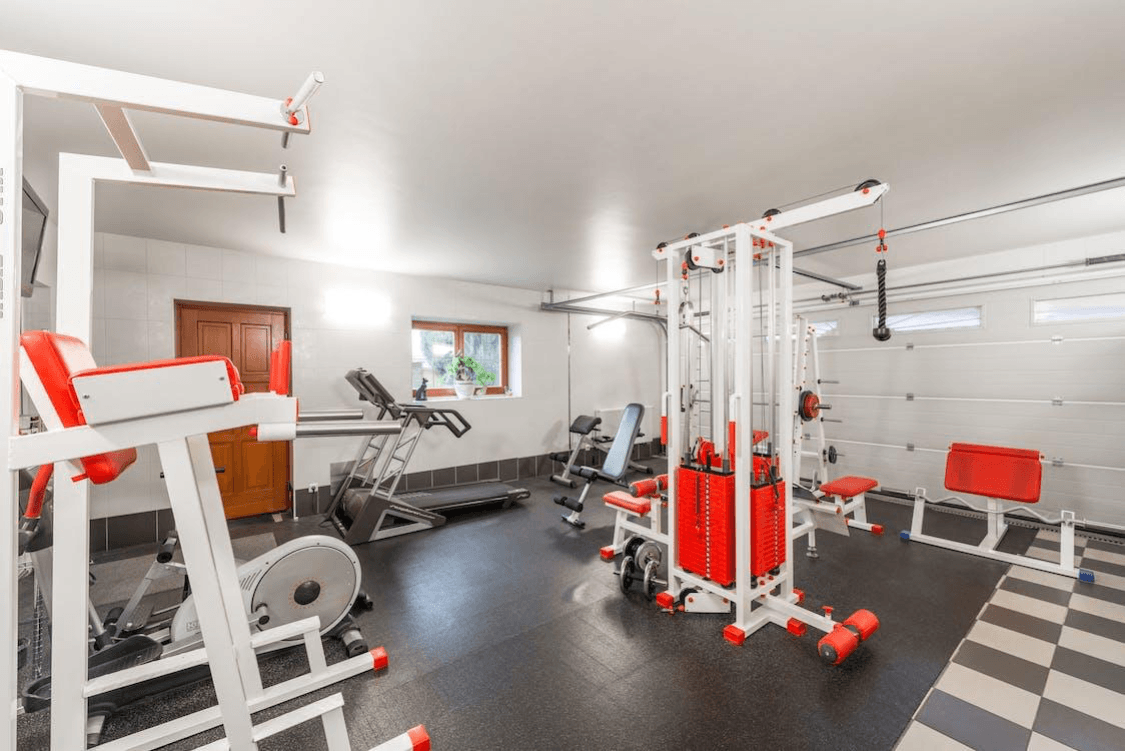
Home gym equipment assembly and installation services cover the complete setup of treadmills, ellipticals, bikes, weight benches, and multi-station machines inside residential spaces. Trained installers handle heavy lifting, precise alignment, cable tensioning, and safety checks so every machine sits level, operates smoothly, and supports efficient workouts without risk of injury or damage.
- Safer equipment setup with verified stability and tested components
- Better workout performance through proper leveling and calibration
- Correct spacing and positioning for full range of motion
- Fewer installation mistakes thanks to professional tools and experience
- Improved equipment longevity from accurate assembly and floor protection
Avoid Costly Mistakes With Expert Home Gym Installation
Setting up fitness equipment looks straightforward in the manual, but reality tells a different story. Misaligned bolts, uneven flooring, and tangled cables quickly turn a new treadmill or rack into a safety hazard. Wobbly machines damage subfloors, belts wear unevenly, and console electronics fail months earlier than expected. Worse, an unstable bench or loose cable system can cause serious injury during a heavy lift or sprint interval.
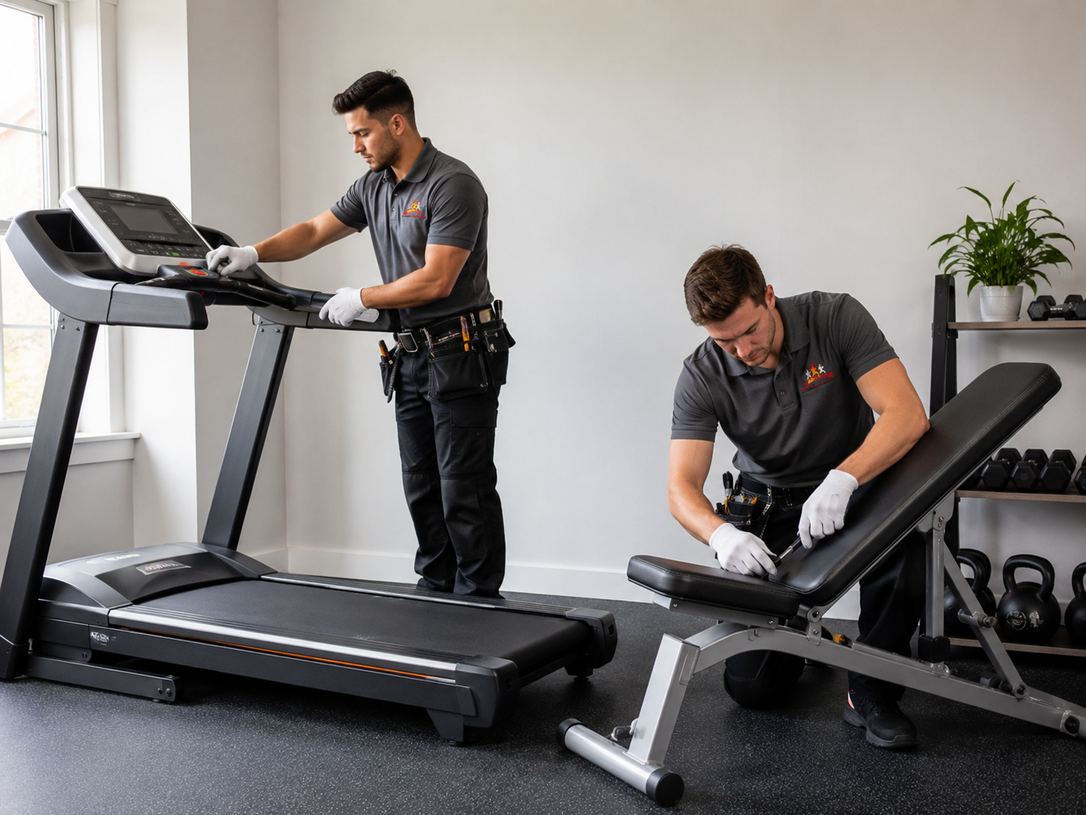
Professional assembly removes these risks by combining manufacturer specifications with hands-on experience. Treadmills Installers takes ownership of the entire setup process, so the only thing left to do is start training.
Why Professional Home Gym Equipment Assembly Matters
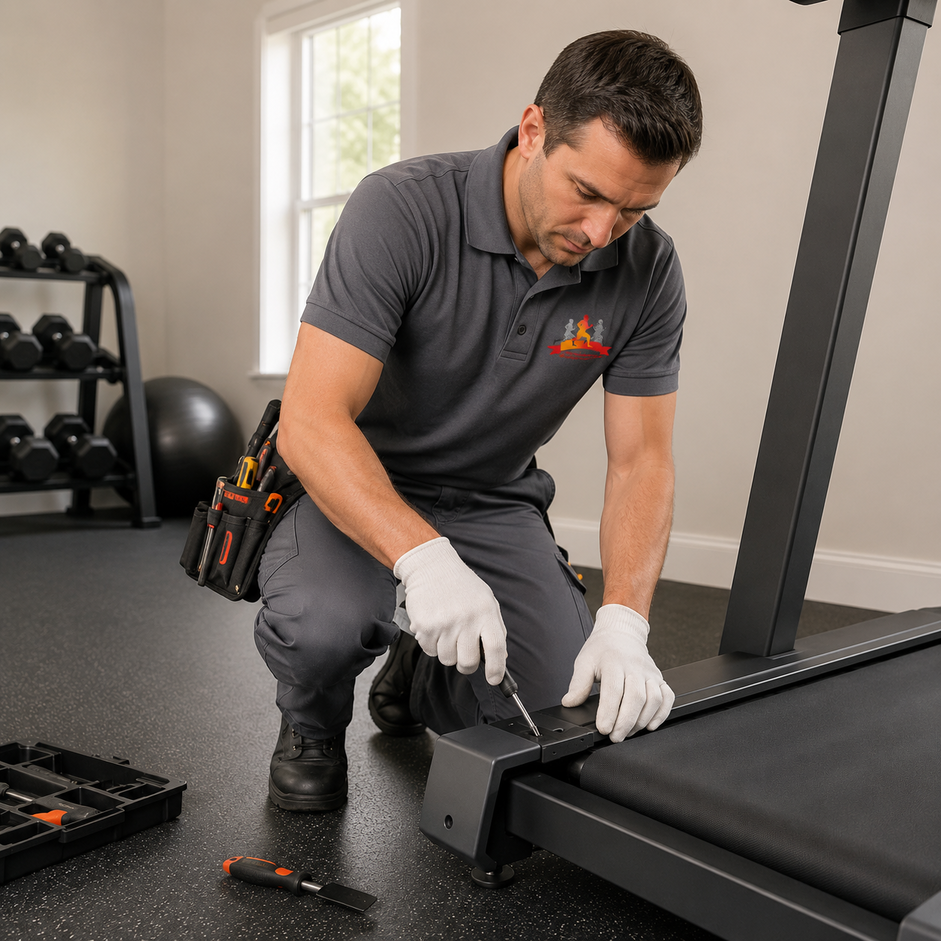
Professional home gym equipment assembly matters because precision affects safety, performance, and warranty validity. Trained technicians follow torque specifications, level frames to subfloor variations, and confirm that moving parts operate within manufacturer tolerances. The result is a workout space that performs as intended on day one and continues running reliably for years.
Protecting Manufacturer Warranties
Most premium brands, including NordicTrack treadmills and ellipticals, require correct assembly to honor warranty claims. Improper torque or skipped break-in steps can void coverage. Certified installers document each step and follow brand guidelines closely.
Saving Time and Physical Strain
A single commercial-grade treadmill can weigh over 300 pounds. Moving it through doorways, up stairs, or into a basement without proper equipment risks both the machine and the user. Skilled crews bring straps, dollies, and lifting techniques developed across thousands of jobs.
What Types of Home Gym Equipment Can Be Installed
Almost every category of residential fitness equipment benefits from professional installation. From single cardio machines to full multi-station systems, expert installers handle assembly, anchoring, and testing. Below is a quick look at common equipment types and their typical setup considerations.
| Equipment Type | Typical Setup Time | Key Installation Focus |
|---|---|---|
| Treadmills | 60–90 minutes | Deck leveling, belt tracking, console wiring |
| Exercise Bikes | 30–45 minutes | Pedal torque, resistance calibration |
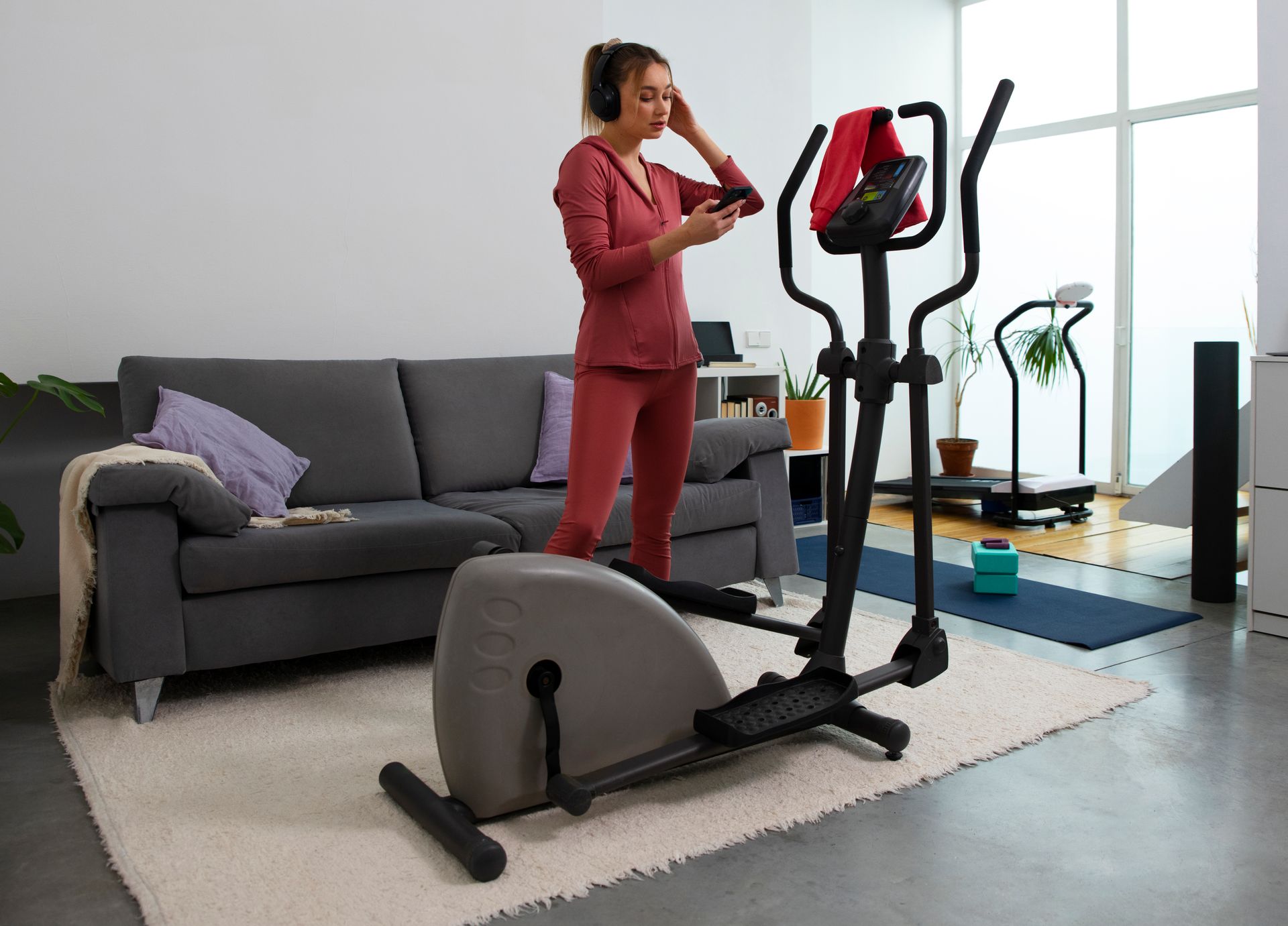
| Ellipticals | 75–120 minutes | Arm alignment, stride balance |
| Stair Climbers | 60–90 minutes | Step tension, handrail stability |
| Weight Benches & Racks | 45–90 minutes | Bolt torque, frame squaring |
| Multi-Gyms | 2–4 hours | Cable routing, pulley alignment |
Cardio and Strength Machines
Specialized services like professional treadmill assembly work, careful exercise bike setup and calibration, precise elliptical machine installation services, and detailed stair climber assembly and testing cover every cardio category. Strength gear such as adjustable weight bench installation, squat racks, and cable machines from brands like Bowflex home fitness systems also receive complete assembly support.
Who Benefits Most From Professional Home Gym Setup
Anyone investing in residential gym equipment benefits from professional installation, but certain situations make expert help essential. Heavy machines, multi-unit setups, and tight architectural spaces all demand experience that goes beyond a standard toolkit.
Homeowners Building Dedicated Workout Rooms
Spare rooms and finished basements often become full home gyms with cardio, strength, and recovery zones. Coordinating multiple machines requires planning for outlets, ventilation, and traffic flow.
Apartment and Condo Residents
Smaller spaces demand creative layout and noise-conscious installation. Installers help select positioning that reduces vibration on shared walls and floors. For relocations between units, partners such as licensed gym equipment movers handle transport before reassembly.
Families With Multi-User Gyms
Households with several users need durable layouts that handle frequent rotations. Commercial-grade brands available through Life Fitness equipment retailers often require multi-person crews and specialty tools to assemble safely.
How Proper Installation Improves Safety and Performance
Proper installation improves safety by stabilizing frames, securing cables, and aligning moving parts so equipment behaves predictably under load. Performance gains follow naturally because calibrated machines transfer effort efficiently and protect joints during repetitive motion.
- Level decks prevent uneven belt wear on treadmills
- Tensioned cables keep pulleys quiet and responsive
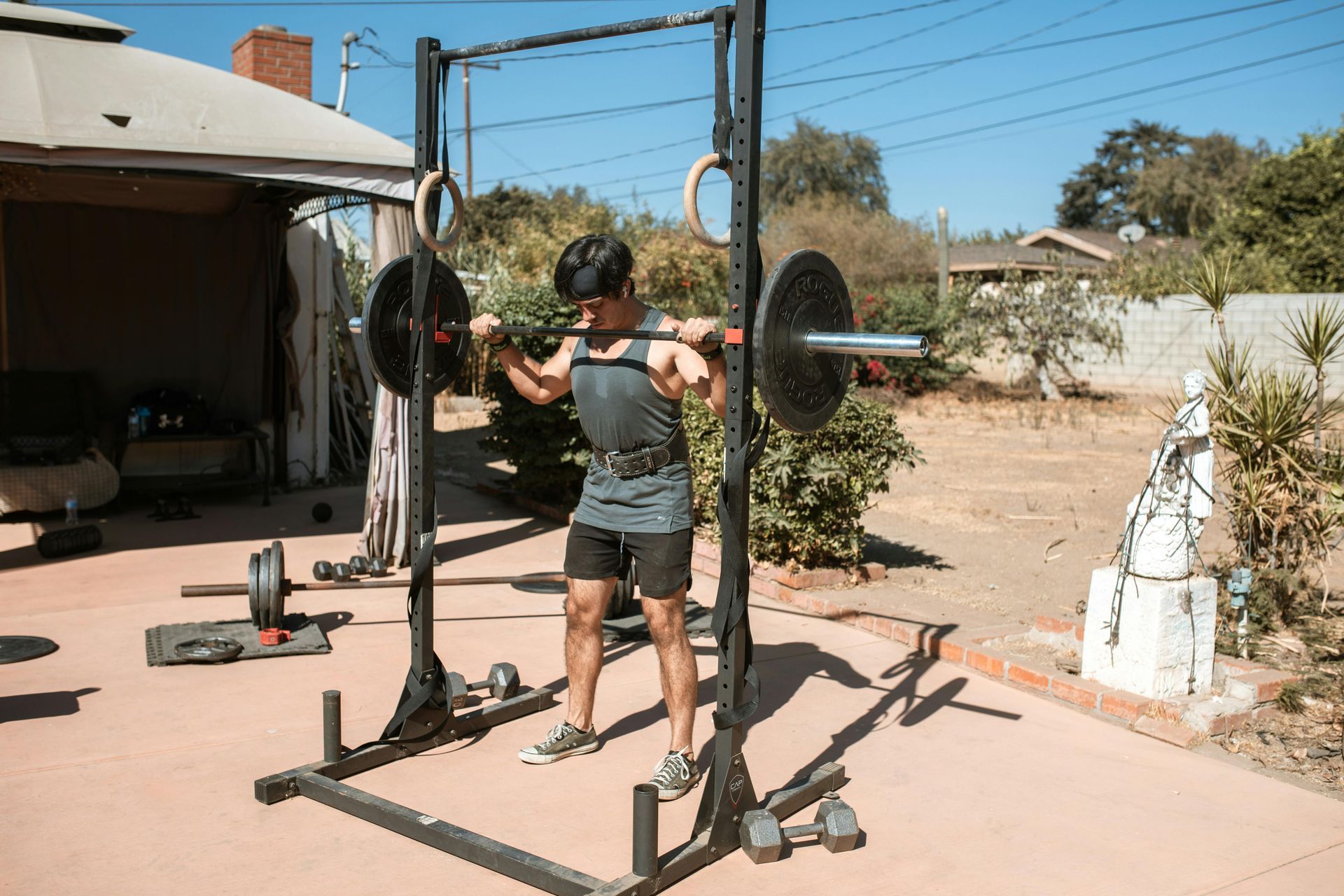
- Anchored racks eliminate sway during heavy lifts
- Tested electronics ensure accurate speed and incline readings
Creating Safe Workout Clearance
Manufacturers specify minimum clearance zones around each machine. Installers measure and confirm these distances, leaving room for emergency dismounts and full range of motion.
Common Problems Caused by Incorrect Gym Equipment Assembly
Incorrect assembly creates problems that surface weeks or months after setup. Loose hardware, misaligned components, and skipped calibration steps slowly degrade both the equipment and the workout experience.
Wobbling, Noise, and Premature Wear
A treadmill that rocks slightly on an uneven floor wears its deck twice as fast. Loose pedal arms on an elliptical create clicking sounds and eventually crack. These issues often require parts replacement that could have been avoided. Repair specialists, similar to trampoline repair professionals, confirm that most failures trace back to original installation errors.
Damaged Flooring and Subfloors
Heavy machines concentrate weight on small footprints. Without mats or leveling, they dent hardwood, crack tile, and stress floor joists.
How to Plan an Efficient Home Gym Layout
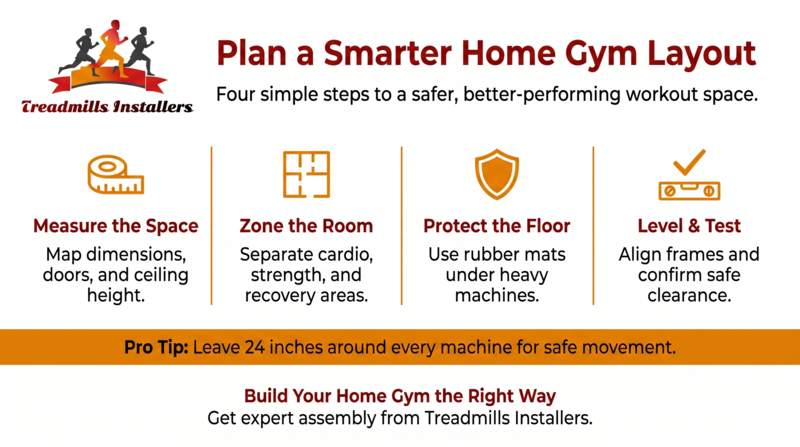
Efficient layout planning starts before the equipment arrives. Measure the room, mark traffic lanes, and confirm electrical access. A thoughtful plan prevents repositioning later and keeps the space functional as the workout routine evolves. The updated home gym setup guide for 2026 covers detailed dimensions and zoning ideas.
Reducing Floor Stress and Damage
Rubber mats, plywood underlays, and equipment-specific pads spread weight and absorb vibration. This protects both flooring and machine bearings.
Organizing Multi-Equipment Spaces
Group cardio together near ventilation. Place strength gear along the strongest wall. Keep stretching and recovery zones near natural light when possible.
Mistakes to Avoid During Home Gym Equipment Installation
Avoiding common mistakes saves money and prevents injuries. Many issues stem from rushing the process or skipping documentation steps that seem minor at the time.
- Skipping torque checks on critical bolts
- Ignoring break-in instructions for belts and cables
- Placing equipment too close to walls or each other
- Forgetting to test electronics before finishing
- Overlooking floor protection under heavy frames
Improving Equipment Accessibility
Maintenance access matters. Leave room behind treadmills for belt adjustments and around racks for cable replacement. For larger relocations or removals, services like furniture and equipment dismantling specialists coordinate smoothly with installation crews.
Get Reliable Home Gym Equipment Assembly Support
Treadmills Installers delivers safe, organized, and precise home gym setups built for long-term performance. From single treadmill installs to full multi-station gyms, every job includes leveling, calibration, and testing so the equipment works exactly as designed. A well-installed gym keeps workouts consistent, reduces injury risk, and extends machine lifespan year after year.
Reach out through the official contact page today to schedule a visit, request a free assembly quote, or book a setup appointment. For timing comparisons on related projects, the hoop installation timing guide offers useful planning context.
Frequently Asked Questions
How long does home gym assembly usually take?
Most single machines take between 45 minutes and two hours to assemble. A full multi-equipment gym with strength and cardio gear can require four to six hours. Timing depends on equipment complexity, room access, and the number of installers on site.
Does heavy gym equipment require professional setup?
Yes, heavy equipment such as multi-gyms, commercial treadmills, and squat racks should be installed by professionals. These machines involve precise torque, cable tensioning, and lifting techniques that prevent injury and protect components.
How much space does a home gym need?
A basic single-machine setup needs about 30 to 50 square feet of clear space. Larger multi-equipment gyms typically require 150 square feet or more to allow safe movement between machines. Always include manufacturer-recommended clearance around each unit.
Why do gym machines wobble after installation?
Wobbling usually means the machine sits on uneven flooring or that leveling feet were not adjusted correctly. Loose bolts at the frame joints also cause instability. A professional installer rechecks alignment, tightens hardware, and adds shims or mats when needed.
What flooring works best for gym equipment?
Rubber gym flooring or interlocking foam tiles work best because they absorb impact and protect subfloors. Hardwood and tile can crack under heavy machines without protective mats. Plywood underlays add extra support for racks and benches.
Can home gym equipment be relocated later?
Yes, most equipment can be safely relocated with proper disassembly and reassembly. Cardio machines often need belts loosened and consoles disconnected before moving. Hiring trained installers protects the equipment and ensures it performs correctly in the new space.
How do professionals improve equipment safety?
Professionals follow manufacturer torque specifications, level every frame, and test all moving parts under load. They also confirm cable routing, electrical connections, and clearance zones. This thorough process prevents the most common causes of injury and early equipment failure.