Hydraulic Fitness Equipment Assembly Services
Hydraulic fitness equipment assembly and installation services cover the complete setup, resistance calibration, and safety alignment of fluid-based training machines. Trained installers fine-tune pressure cylinders, anchor each unit, and verify smooth force output so the equipment performs consistently and feels stable during every workout.
- Proper hydraulic resistance setup tuned to manufacturer specs
- Safe machine calibration and alignment for accurate force output
- Stable installation that supports workout safety
- Reduced mechanical failure risk through correct cylinder seating
- Long-term performance consistency across daily training sessions
Hydraulic Fitness Equipment Installation Safety and Performance Challenges
Many gym owners assume hydraulic machines work straight out of the box, yet a small mistake during setup creates real problems. A cylinder set at the wrong pressure feels uneven, a loose base wobbles under load, and uncalibrated resistance forces users to compensate with poor form. Over time, those small flaws turn into torn seals, injured shoulders, and warranty disputes. Professional installation removes that risk by handling every bolt, fitting, and pressure check before the first rep is ever pulled.
Precision Installation for Hydraulic Resistance Training Systems
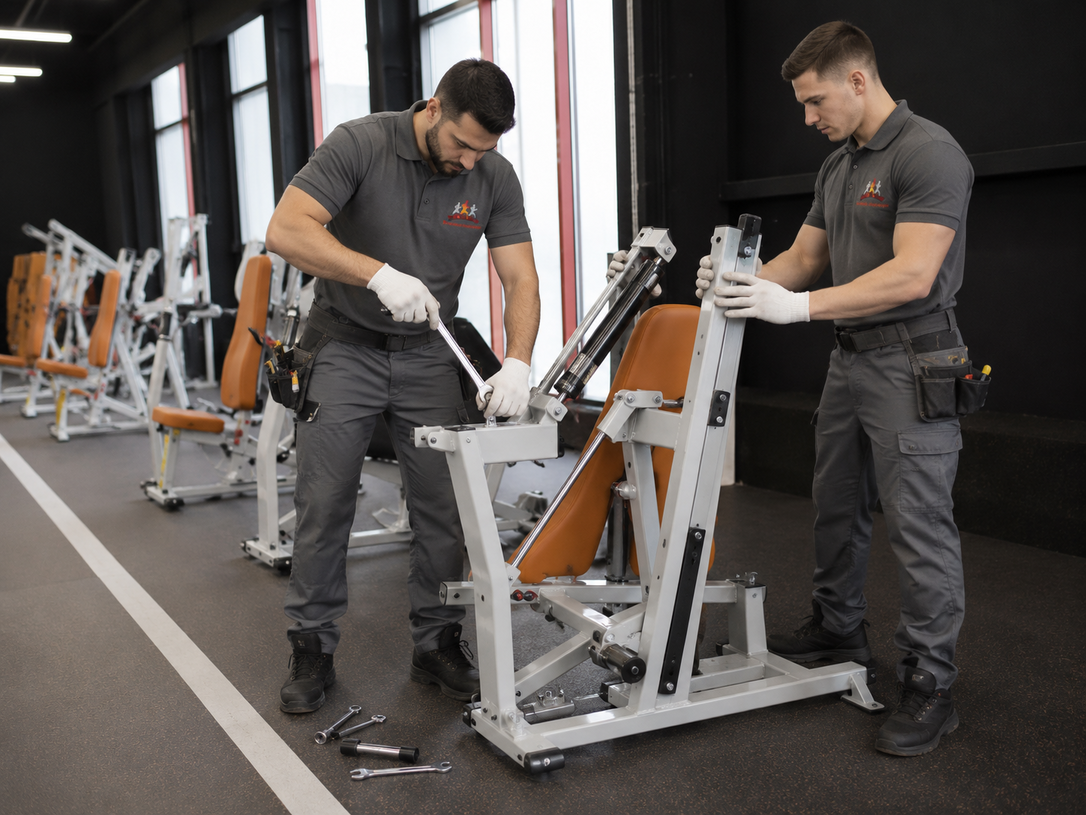
Precision installation begins with reading the manufacturer specs, leveling the floor area, and seating every hydraulic cylinder at the correct angle. Our crew tightens fasteners in the right sequence, checks travel range on each lever, and confirms the resistance curve feels smooth from start to finish before signing off on the unit.
Each hydraulic system behaves differently depending on piston length, fluid viscosity, and lever geometry. A rowing unit in a rehabilitation clinic needs softer resistance for early-stage patients, while a chest press in a sports performance facility needs firmer pushback for athletes. Skilled technicians handling hydraulic equipment assembly and setup understand those differences and adjust accordingly.
Machine Alignment for Smooth Resistance Flow
Misaligned pivots create jerky motion and uneven force, which wears seals faster than normal. We square the frame, level the base pads, and test each arm through full range of motion. Installers assembling hydraulic fitness equipment also confirm cylinder mounts sit flush so fluid moves without air pockets or stutter.
Hydraulic Machine Calibration and Safety Alignment
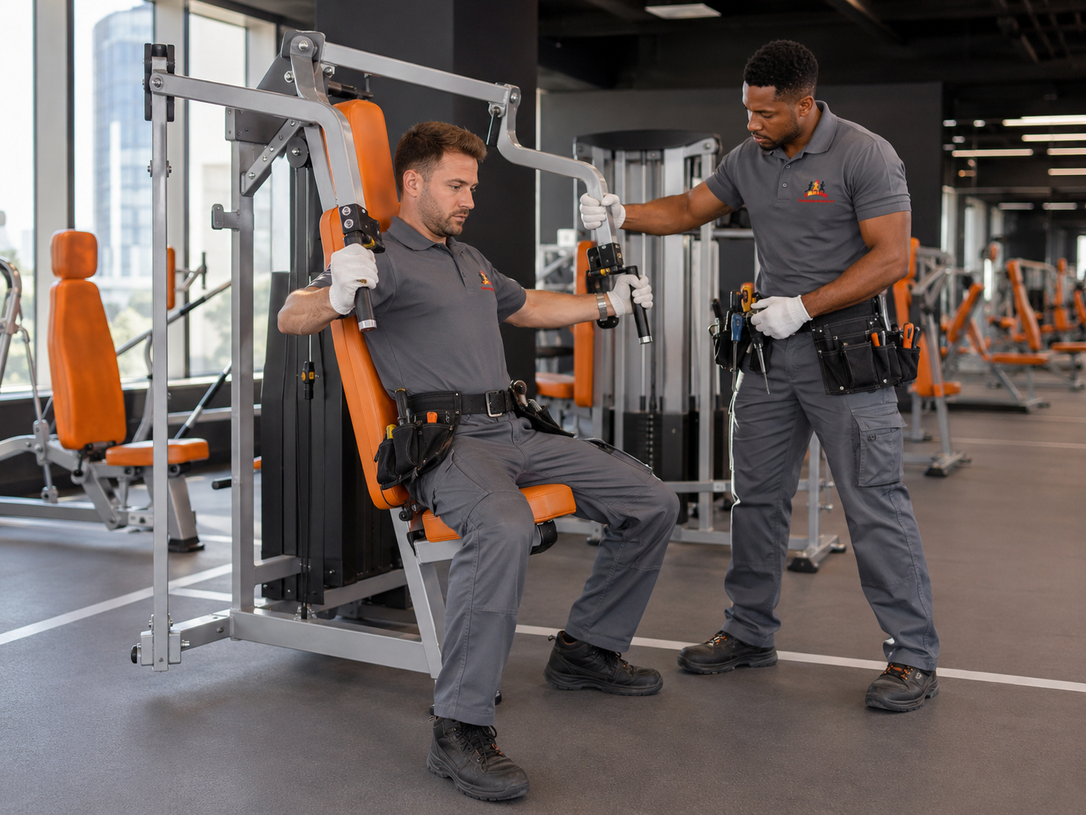
Calibration sets the pressure inside each cylinder so the resistance matches the dial setting. Our team uses pressure gauges, manufacturer charts, and live load testing to bring every machine within spec. Safety alignment then locks the frame, handles, and seat into positions that protect joints during the full movement.
Hydraulic Resistance Calibration Process
A proper calibration walk-through covers several checkpoints in a clear order:
- Inspect cylinders for fluid leaks, dents, or shipping damage
- Set baseline pressure using the brand specific gauge
- Test resistance through the lowest and highest settings
- Confirm both sides of bilateral machines feel identical
- Lock adjustment knobs and document final pressure values
| Calibration Check | What We Verify | Typical Tolerance |
|---|---|---|
| Cylinder pressure | Matches dial setting on gauge | Within 2 percent |
| Bilateral balance | Left and right arms feel equal | No perceptible drift |
| Seat and handle lock | Holds under full user load | Zero slip |
| Anchor tension | Base bolts torqued to spec | Manufacturer value |
Commercial-Grade Assembly for Hydraulic Gym Equipment Systems
Commercial environments demand stronger anchoring, tighter tolerances, and faster turnaround than home setups. We handle multi-unit rollouts for fitness centers, corporate gyms, and training studios with a structured plan that minimizes downtime. Crews work in zones, finish circuits in sequence, and hand off ready to train equipment on schedule.
Commercial Gym Installation Standards
A circuit-style facility might receive eight to twelve hydraulic stations in a single day. Each unit needs identical resistance feel so members move from machine to machine without recalibrating effort. Our commercial exercise equipment installation team follows facility blueprints, respects egress paths, and protects flooring during the build. For mixed strength layouts that include benches, we also coordinate placement of adjustable weight bench setups so the circuit flows naturally.
Load Distribution and Resistance Balance Setup
Load distribution refers to how weight, force, and user motion spread across the frame and floor. Balanced setup prevents tipping, reduces frame stress, and keeps resistance consistent on both sides. We position units on solid sub-flooring, add rubber mats where needed, and verify that bilateral arms deliver matched output.
Apartment gyms and rooftop facilities raise extra concerns because floor load ratings vary. A hydraulic squat machine concentrates force over a small footprint, so we sometimes recommend load-spreading pads. Browsing options like a hydraulic rowing machine on Amazon shows how compact these units look, yet the dynamic load during use is significant and deserves proper planning.
Equipment Positioning That Enhances Workout Control and Stability
Smart positioning gives users space to move, mirrors to check form, and clear sightlines for trainers. We map traffic flow, leave safe clearance around moving arms, and orient machines toward natural light when possible. Good placement also extends equipment life by keeping units away from humidity, direct sun, and high traffic bump zones.
Practical examples we work with include:
- Home gyms where one corner hosts a multi-station hydraulic tower
- Rehabilitation clinics that need wheelchair clearance around each unit
- Training studios running small-group circuits on a tight clock
- Apartment gyms with low ceilings and sensitive floor structures
- Sports performance facilities pairing hydraulic units with free weights
Comparing layouts against retail catalogs such as the hydraulic weight machines collection at Walmart helps clients picture footprint and clearance before delivery day.
Installation Mistakes That Lead to Hydraulic System Failure Risks
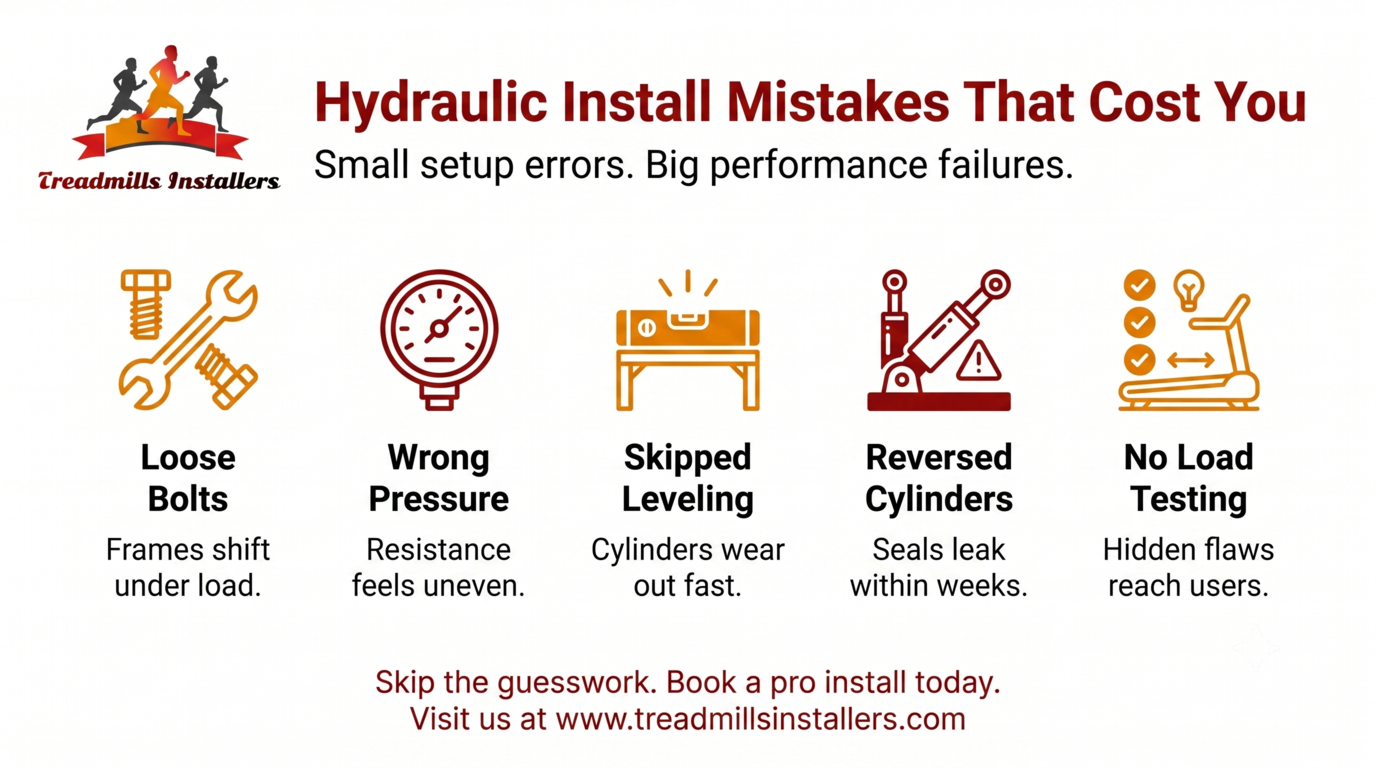
Most hydraulic failures trace back to install errors, not manufacturer defects. Skipping the torque sequence loosens frames, forcing cylinders past their stroke damages seals, and ignoring level checks creates lateral stress that warps mounts. An improper hydraulic fitness equipment installation hazard can sideline a machine within weeks of opening day.
Safety Inspection for Hydraulic Components
Common errors we correct on rescue jobs include cross-threaded bolts, missing washers, reversed cylinders, and seats anchored at the wrong height. A useful overview of home gym setup mistakes that damage equipment shows just how often DIY shortcuts shorten machine life. Professional crews follow checklists, photograph each stage, and back the work with a warranty.
Performance Testing and Post-Installation Safety Verification
Every install ends with a full performance test under realistic loads. Installers testing hydraulic fitness machines after installation cycle each arm through dozens of reps, listen for hisses or knocks, and watch for fluid weeping at the fittings. Only when every checkpoint passes do we release the equipment for member use.
Stability Testing After Assembly
We rock the frame, push from multiple angles, and apply offset loads to confirm nothing shifts. Specialty providers documenting
specialty fitness equipment installation services describe similar protocols, which reflect industry best practice. Documentation is handed to the facility manager for compliance files.
Hydraulic Equipment Relocation and Reinstallation Support
Relocation needs the same care as a first time install, sometimes more. Fluid lines, mounting brackets, and seat hardware can be damaged during a careless move. Our team disassembles units in the right order, protects cylinders, transports the parts safely, and rebuilds the machine at the new address with fresh calibration.
Relocation and System Rebalancing
Whether a studio is moving across town or a homeowner is shifting equipment to a new basement, the process follows the same logic shown in guides for moving gym equipment and treadmills safely. For larger disassembly projects, methods used in specialized disassembly and relocation work also translate well to hydraulic gear. Once units arrive, we recalibrate every cylinder before handover.
Get Professional Hydraulic Fitness Equipment Installation Services
Ready to put your hydraulic gear into safe, expert hands? Our crew delivers accurate resistance calibration, rock-solid mounting, and long-term performance reliability for home gyms and commercial facilities alike. We protect floors, respect your schedule, and stand behind every install.
Reach out through our Treadmills Installers contact page or send project details using the quick service request form to book a visit. While you plan, our partners also handle related home needs including recliner repair and adjustment services, reliable home furniture assembly, office furniture assembly specialists, and basketball hoop installation near me.
Frequently Asked Questions
How long does hydraulic fitness equipment installation usually take?
Most single units take two to four hours from unboxing to final testing. Multi-station commercial rollouts can run a full day or longer depending on the number of machines and floor prep involved.
Do hydraulic systems need calibration after setup?
Yes, calibration is essential because shipping vibration and temperature shifts can change cylinder pressure. A trained installer adjusts each unit so the resistance dial matches the actual force the user feels during exercise.
How do hydraulic resistance machines work after assembly?
Hydraulic machines use sealed cylinders filled with fluid to create smooth, adjustable resistance as you push or pull. Once assembled and calibrated, the resistance stays consistent through the full motion without weight plates or cables.
Is hydraulic gym equipment safe for home use?
Hydraulic equipment is one of the safer options for home gyms because there are no heavy plates to drop or cables to snap. Proper installation, secure anchoring, and routine inspections keep the machines safe for daily use.
Can hydraulic machines be relocated safely?
Yes, hydraulic machines can be moved safely when handled by experienced installers. The cylinders, brackets, and seat hardware must be disassembled in the correct order and recalibrated after the unit is rebuilt at the new location.
What maintenance does hydraulic equipment need?
Hydraulic equipment needs occasional checks for fluid leaks, loose bolts, and worn handles. A simple wipe-down, periodic torque check, and an annual professional inspection keep the machines running smoothly for years.
Is professional installation really necessary for hydraulic equipment?
Professional installation is strongly recommended because improper setup leads to uneven resistance, seal damage, and safety risks. Trained installers follow manufacturer specs, calibrate each cylinder, and verify stability before the equipment is ready to use.