Stair Climber Assembly and Installation Services
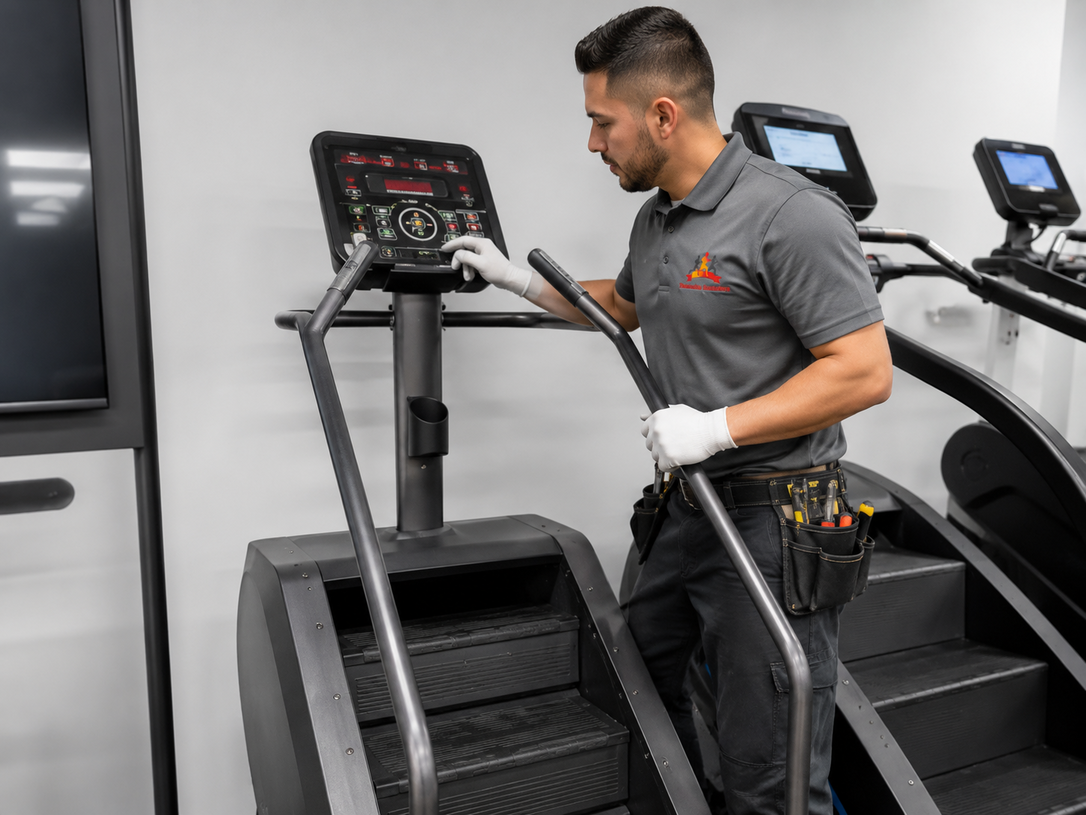
Stair climber assembly and installation services are designed to deliver safe setup, accurate calibration, and stable alignment for every type of step machine. Each unit is leveled, secured, and tested so smooth motion and consistent resistance are guaranteed from the first workout.
- Safer setup with verified structural integrity
- Proper alignment and precise calibration
- Reduced risk of mechanical failure
- Improved workout performance and comfort
- Longer equipment lifespan and fewer repairs
Stair climbers are often underestimated during setup, yet they carry heavy frames, rotating drives, and sensitive electronics. When bolts are left loose or the base is uneven, instability quickly develops, followed by squeaks, slipping pedals, and inaccurate resistance.
Over time, these small flaws escalate into motor strain and serious injury risks. Fortunately, professional installation removes those hazards through trained technicians, correct tools, and a structured process built around stability and long-term safety.
Why Professional Stair Climber Assembly and Installation Matters
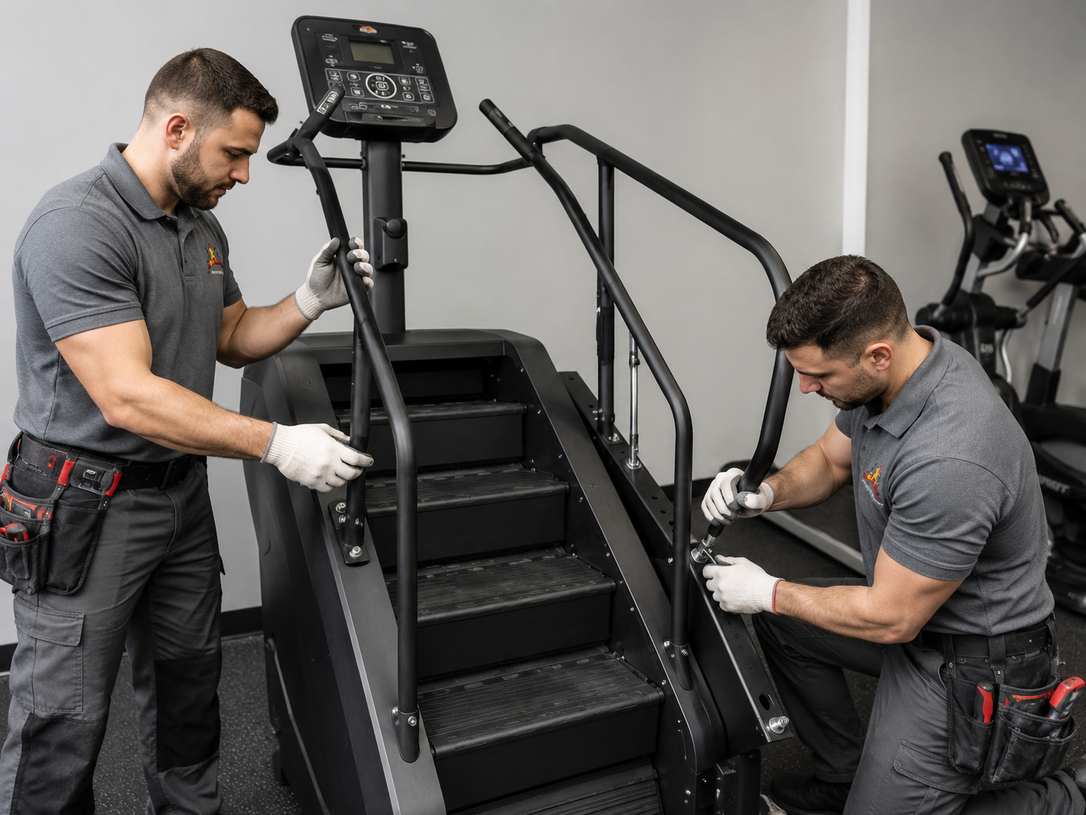
Professional installation matters because step machines must be assembled with precision to perform safely. Bolts are torqued to spec, sensors are synced, and the frame is leveled so wobble and breakdowns are prevented across daily, high-load use.
Moreover, downtime is costly for any facility. A hotel gym can lose guest confidence after one unstable unit, while apartment gyms face liability when pedals slip. With trusted safe stair climber installation and setup, both the equipment and the users are protected.
What Types of Stair Climbers Can Be Installed Safely
Nearly every model can be installed safely when handled by qualified technicians. However, each design carries unique torque values, belt tensions, and calibration steps, which is why brand familiarity is essential.
| Stair Climber Type | Typical Setting | Installation Focus |
|---|---|---|
| Step Mill | Commercial gyms, hotels | Frame anchoring, chain tension |
| Pedal Stepper | Home gyms, apartments | Hydraulic balance, base stability |
| Mini Stepper | Small spaces | Floor grip, resistance setup |
| Commercial Climber | Fitness centers | Motor wiring, console sync |
| Rehab Trainer | Clinics, therapy | Handrail security, calibration |
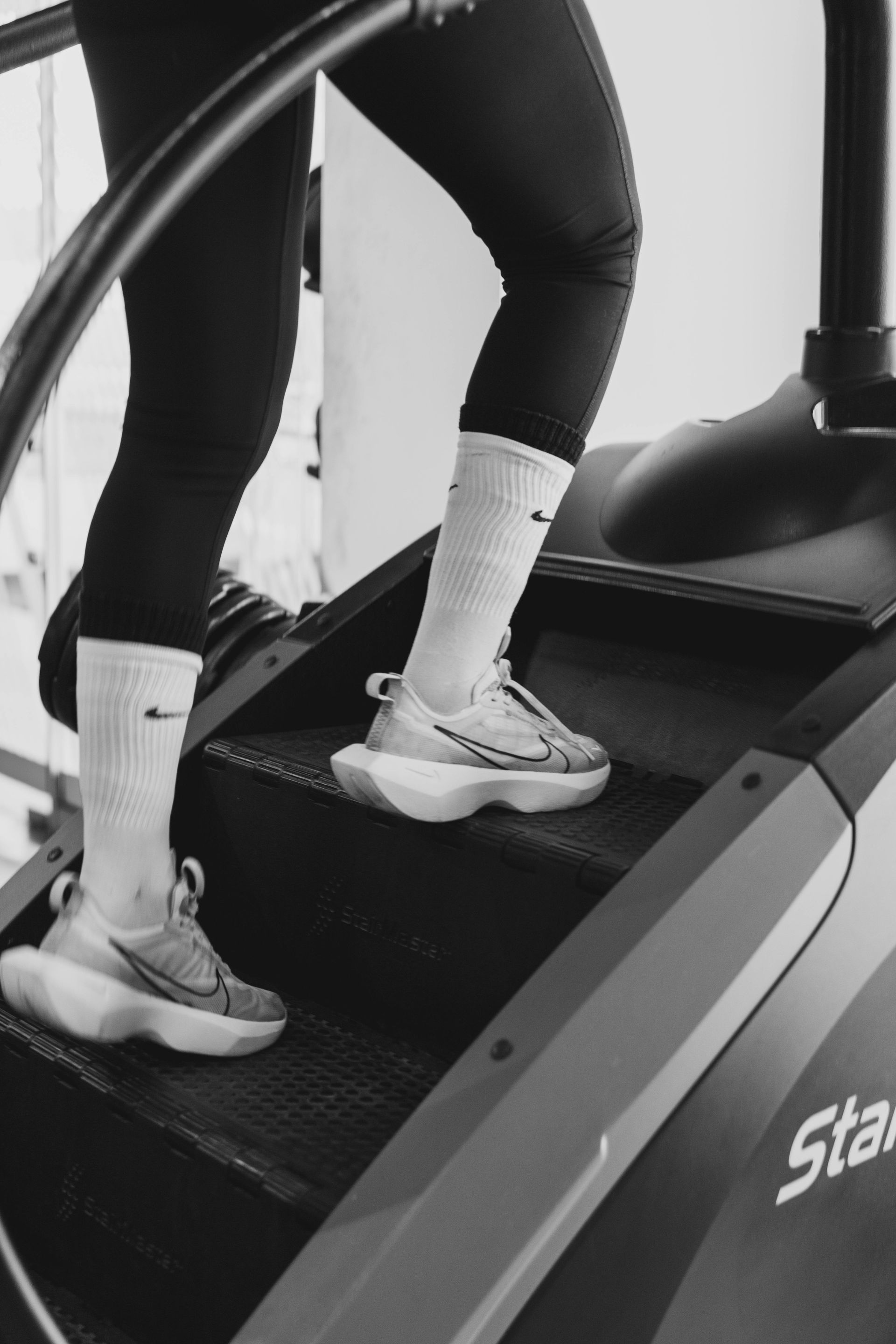
Major brands such as StairMaster step mills and the commercial range from Life Fitness stair climbers and steppers are regularly handled by trained installers.
Who Benefits Most From Professional Stair Climber Setup
Anyone responsible for uptime, safety, or user experience benefits from expert setup. Poorly installed units are repaired more often, and reputations are damaged when machines fail in front of members.
- Commercial fitness centers with high-traffic equipment
- Hotels and wellness centers needing quiet operation
- Apartment gyms with limited maintenance staff
- Corporate fitness rooms governed by safety policies
- Rehabilitation facilities relying on stable motion
- Home gym owners protecting a serious investment
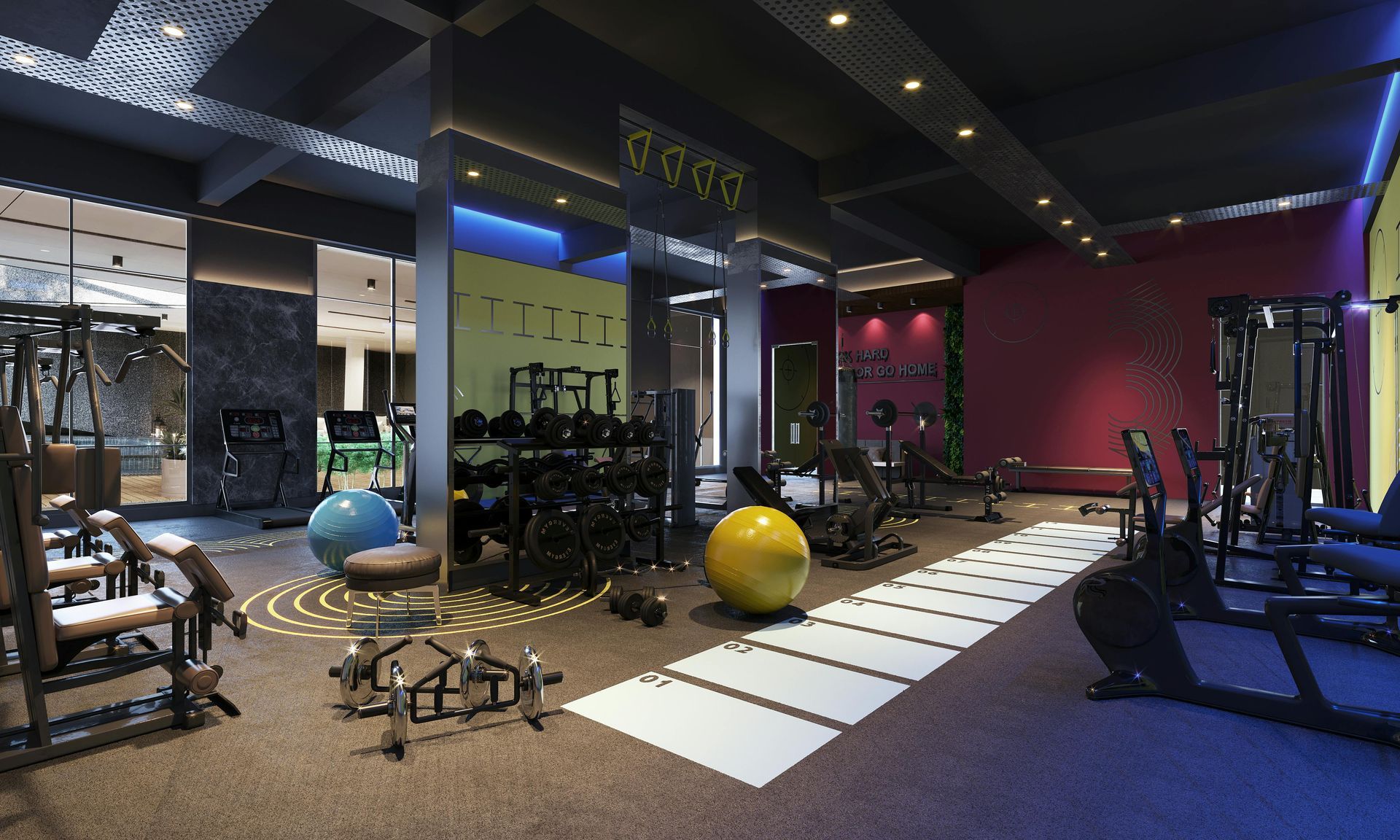
For dedicated training spaces at home, a complete home gym setup approach keeps every piece aligned and functional.
How Stair Climber Assembly and Installation Works
Installation is performed through a structured workflow. First, components are inspected, then the base frame is assembled on a level surface. Next, the drive system, console, and sensors are connected, followed by full calibration and user-load testing.
In addition, similar multi-stage methods are used in gym equipment assembly for home and commercial gyms, which highlights how disciplined sequencing prevents avoidable issues later.
Common Installation Errors That Affect Stair Climber Safety
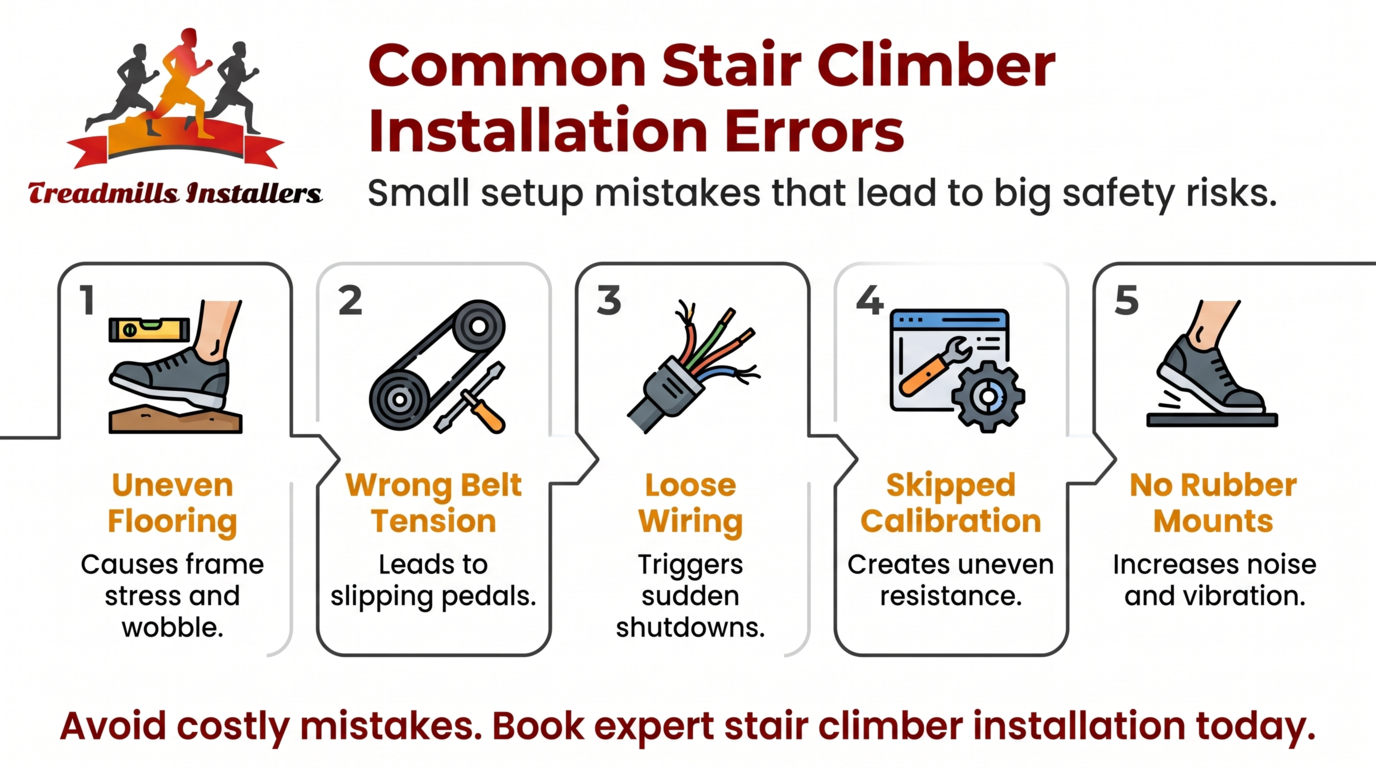
Most failures are caused by a few preventable mistakes. Even one overlooked detail can compromise the entire machine under repeated use.
- Uneven floor placement leading to frame stress
- Incorrect belt tension causing slipping pedals
- Loose console wiring triggering shutdowns
- Skipped calibration producing uneven resistance
- Missing rubber mounts increasing vibration
These same patterns are frequently corrected during treadmill and cardio equipment installation call-outs, which proves how avoidable they truly are.
How Proper Calibration Improves Machine Performance and Stability
Calibration is what turns an assembled unit into a smooth, predictable training tool. Without it, resistance feels uneven and console metrics drift, which frustrates users and weakens training results.
During calibration, motor response is fine-tuned, sensors are synced, and resistance is balanced across the full stepping range. As a result, every user receives a consistent feel, while rehab patients gain the predictable motion required for safe recovery.
Why Alignment and Structural Balance Are Critical for Stair Climbers
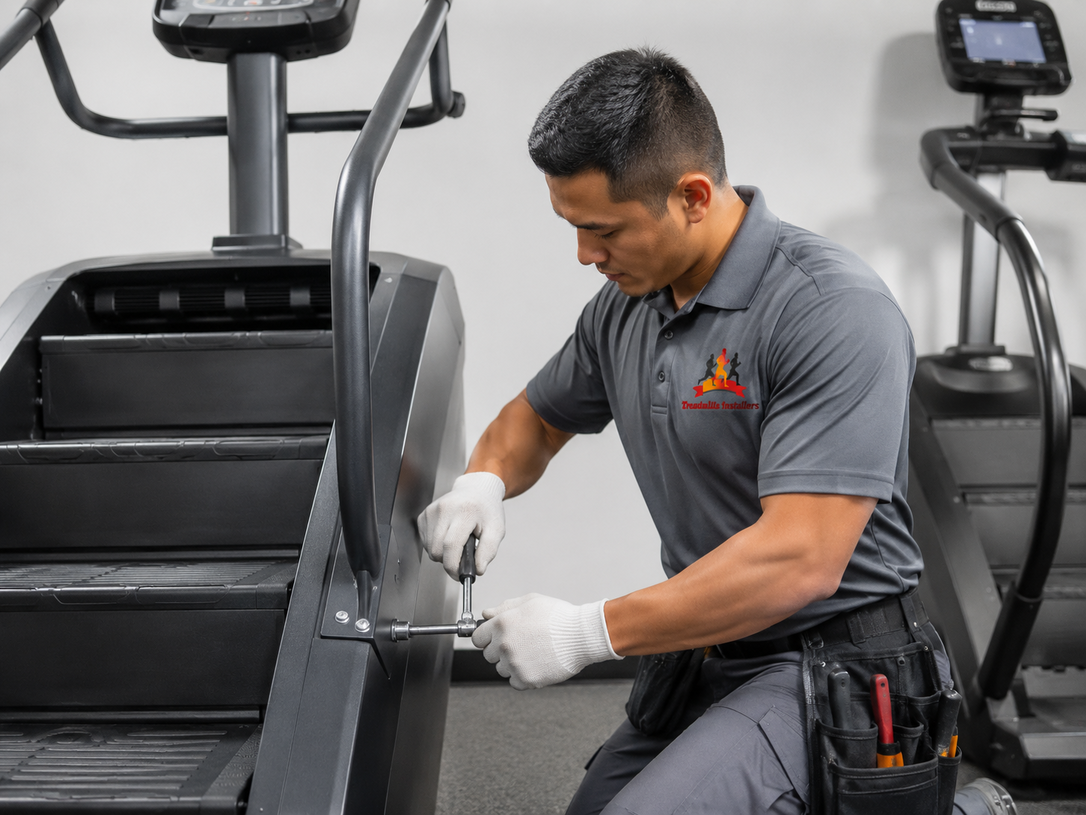
Alignment determines whether a stair climber stays quiet, stable, and safe. Even a slight tilt forces the drive system to compensate, which accelerates wear on bearings and belts.
Therefore, precision levels and torque tools are used to confirm balance before release. In multi-story buildings, this also reduces noise transfer, which is a common complaint when setup is rushed.
Mistakes to Avoid During Stair Climber Assembly and Setup
Many problems are created outside the actual assembly stage, especially during transport and handling. Consequently, careful work can be undone within days.
- Dragging units instead of using dollies
- Tightening bolts before the frame is squared
- Ignoring manufacturer torque specifications
- Powering on before calibration is complete
- Skipping a full load test after assembly
Disciplined handling protocols used in moving gym equipment and treadmills safely show how pre-install care directly shapes final performance.
How to Prepare Your Space Before Installation
A little preparation makes installation faster and safer. The goal is to give technicians a clear, level, and accessible area.
- Confirm the floor is level and load rated
- Clear two feet of space around the location
- Use rubber flooring for vibration control
- Provide a grounded power outlet nearby
- Measure doorways for delivery clearance
For commercial layouts, planning insights from modular office furniture assembly and installation are useful. Additionally, workplace safety guidance from OSHA standards and accessibility principles from ADA-compliant fitness and health club design should shape commercial decisions.
Get Professional Stair Climber Assembly and Installation Support
Safe assembly, precise calibration, and long-term stability are delivered by Treadmills Installers for every gym setting. Heavy lifting, leveling, wiring, and testing are handled by trained technicians so equipment performs exactly as intended.
To schedule a session, the stair climber service request form can be submitted, or the contact page for Treadmills Installers may be used for project questions. Relocations are easily bundled with professional fitness equipment moving and reinstallation, while broader projects often pair with home setup using professional furniture assembly and outdoor add-ons like the best basketball hoops for small driveways.
For breakdowns, methods from specialized disassembly and relocation and furniture disassembly for moving are applied.
Frequently Asked Questions
How long does stair climber installation usually take?
Most home units are completed within one to two hours. However, commercial step mills may require three to five hours, especially when several machines are installed together.
Do stair climbers really need professional setup?
Yes, because heavy frames and sensitive electronics must be aligned precisely. Otherwise, wobble, motor strain, and avoidable injuries are likely to develop over time.
Why do machines become unstable after installation?
Instability is usually caused by uneven flooring or skipped torque steps. Consequently, vibration spreads through the frame, and parts wear out far sooner than expected.
Is calibration required after relocating a stair climber?
Yes, recalibration is strongly recommended after any move. Transport vibration often shifts sensors, so a fresh calibration restores accurate resistance and stepping feel.
What flooring works best for stair climbers?
Dense rubber flooring or thick mats are preferred because vibration is absorbed effectively. Additionally, noise transfer is reduced, which matters in apartments and hotels.
How much space is needed around a stair climber?
At least two feet on each side and three feet behind the unit are recommended. Such clearance allows safe mounting, dismounting, and emergency stepping off.
Do commercial gyms need expert installers?
Absolutely, since commercial machines run for many hours daily. Therefore, expert installation ensures correct anchoring, calibration, and safer long-term operation.