What to Plan Before Booking a Home Gym Installation for Your New Fitness Equipment
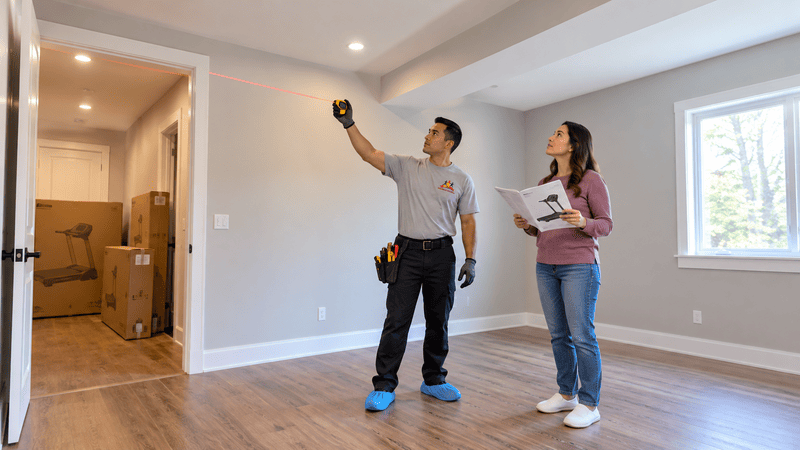
Start your home gym project with room measurements, equipment footprints, floor checks, access planning, power availability, assembly space, and placement. Your setup approach depends on equipment type, manufacturer instructions, ceiling height, doorway access, floor surface, electrical needs, and workout clearance.
- Measure the room before equipment arrives.
- Check doors, stairs, and hallways.
- Prepare the floor before assembly.
- Plan machine positions in advance.
- Keep manufacturer instructions available.
The Room Comes Before the Equipment
Choose your workout room by matching its dimensions, ceiling height, access, flooring, and power availability to your equipment. Home Gym Installation becomes harder when new machines overwhelm the available space. Measure first, then compare the room against each model’s assembly and operating requirements.
A treadmill blocking a doorway can disrupt everyday movement. Likewise, a rack under a low ceiling can limit exercise choices. A heavy machine assembled in the wrong room may require partial disassembly before relocation.
Professional installation offers a practical way to coordinate preparation, assembly, placement, and final checks. Start with the room, not the boxes. That approach helps you identify constraints before they create unnecessary rework or compromise your intended workout layout.
Measure Beyond the Floor Plan
Record usable dimensions rather than relying on the room’s advertised size. Closets, radiators, columns, and existing furniture reduce workable space.
Check ceiling height at the proposed machine location. Include overhead beams, sloped ceilings, lights, and fans. Consider the user’s position during exercise, not just the equipment’s frame height.
- Doorways and circulation: Keep household routes separate from equipment operating areas.
- Ventilation and windows: Consider airflow, window access, and direct sunlight on consoles.
- Lighting: Provide clear visibility around adjustment points, steps, and weight storage.
- Noise: Think about vibration and nearby bedrooms, neighbors, or shared walls.
- Electrical outlets: Identify suitable outlets before choosing positions for powered equipment.
A basement, garage, spare bedroom, or apartment space may work. The best choice depends on your machines and household layout.
For a Washington, DC apartment, check building rules and elevator access early. Renters should also confirm permission before anchoring equipment. Through professional home gym installation services, Treadmills Installers helps coordinate residential equipment assembly and placement.
Floor Conditions Affect Every Machine
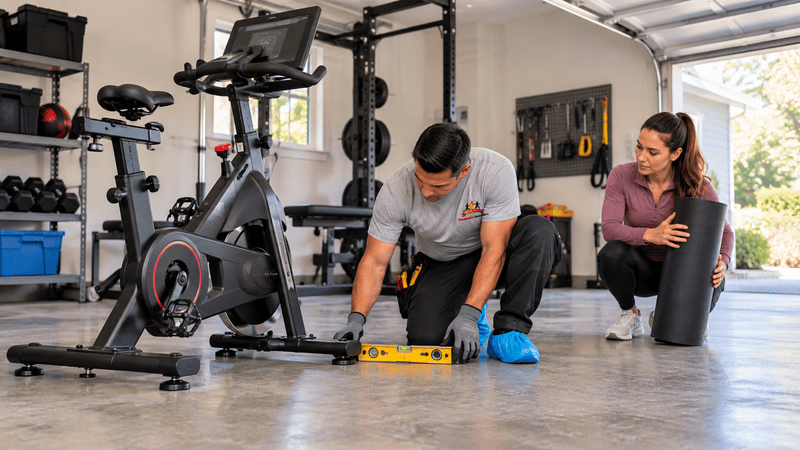
Prepare a clean, dry, stable installation surface before assembling heavy fitness equipment. Concrete, wood, tile, and carpet each present different concerns. Floor suitability depends on equipment weight, manufacturer guidance, and actual property conditions, so do not assume an existing surface suits every machine.
Match Floor Protection to the Equipment
Concrete floors can have slopes, cracks, or moisture issues. Meanwhile, wood floors may need protection from concentrated contact points and repeated movement.
Tile can create uneven contact where joints or damaged sections interrupt the surface. Carpet may compress beneath machine feet, depending on its thickness.
- Equipment mats: Choose compatible mats that support the machine without excessive compression.
- Uneven floors: Check how all feet contact the surface before adjusting manufacturer-provided leveling feet.
- Floor protection: Position protective materials before building a heavy frame over them.
- Moisture: Address dampness before placing mats or equipment over affected areas.
- Machine feet: Confirm their intended contact points rest on the prepared surface.
Mats do not establish a floor’s structural capacity. Neither does a room’s ground-floor location automatically confirm suitability for concentrated equipment loads.
If floor capacity raises concerns, consult an appropriate building professional. Installers should not substitute for a structural assessment.
Check Basements and Garages Early
For a Maryland basement gym, inspect the intended area for dampness and uneven patches. Resolve moisture concerns before installing residential fitness equipment.
Garage floors may slope toward an entrance or drain. Confirm that the machine’s permitted leveling adjustments suit the actual surface. Do not improvise with loose blocks or unstable packing materials. Follow the manufacturer’s instructions when correcting uneven contact.
Different Machines Need Different Plans
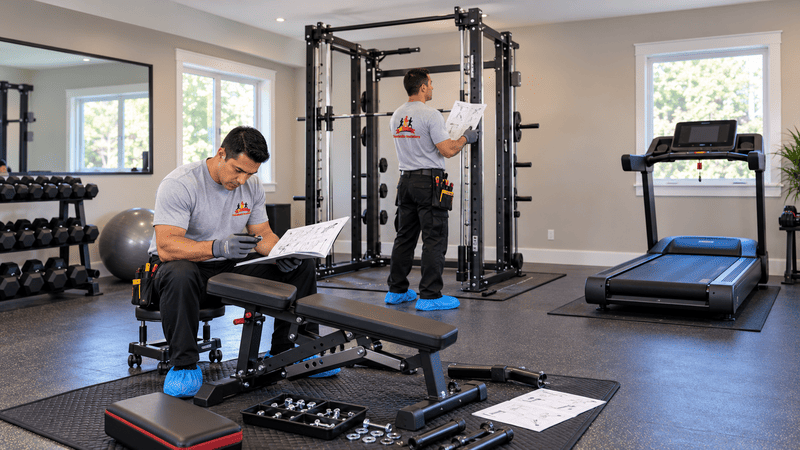
Plan each machine around its assembled footprint, operating height, moving parts, and required access. Treadmills, stationary bikes, benches, and racks do not share one setup method. Manufacturer instructions determine component order, adjustment procedures, anchoring requirements, and model-specific clearances throughout the home gym setup.
Home Gym Installation means assembling, positioning, leveling, checking, and preparing residential fitness equipment according to manufacturer instructions, room conditions, and intended use.
Compare Equipment Before Choosing Positions
Use the manufacturer’s assembled dimensions, not shipping measurements, when drawing your layout. However, keep packaging dimensions for delivery planning.
| Equipment | Planning priority | Detail to confirm |
|---|---|---|
| Treadmill | Deck access, overhead space, and power | Operating clearance and electrical instructions |
| Stationary bike | Mounting access and riding position | Seat, handlebar, and pedal adjustments |
| Adjustable bench | Movement between training positions | Backrest travel and locking mechanisms |
| Power rack or squat rack | Frame height and exercise space | Bar clearance, attachments, and anchoring instructions |
| Smith machine | Frame layout and assembly sequence | Bar travel, guide components, and service access |
| Other cardio machines | Full operating movement | Handle travel, stride path, or unfolding space |
| Strength machines | Cable routes and moving assemblies | Weight-stack access and attachment movement |
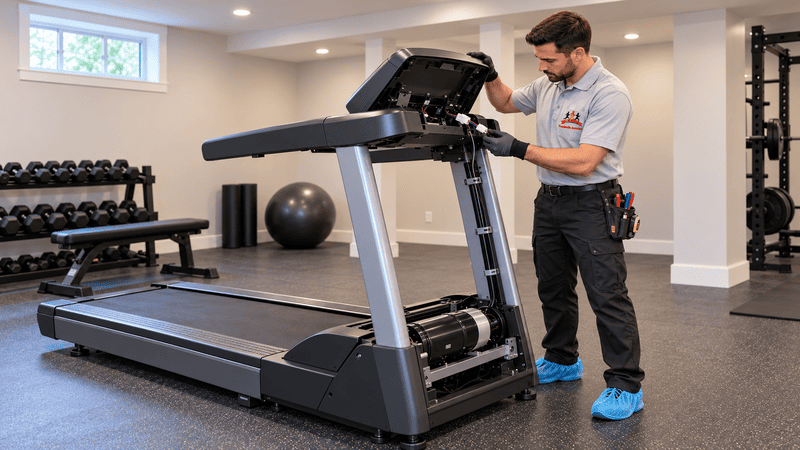
Treadmill assembly may involve uprights, console wiring, and a heavy deck. Keep cable connections clear of pinch points during construction. Plan professional treadmill assembly services around both the access route and the intended operating position.
For stationary bike assembly, confirm pedal installation directions and adjustment procedures. Exercise bike setup also requires checking the available mounting space.
Leave Room for Strength Equipment
An adjustable bench needs room for backrest changes and repositioning. Consider how it moves into a rack or beneath a bar. Professional weight bench assembly services help address frame assembly, adjustment mechanisms, and final placement.
Power rack installation requires attention to uprights, crossmembers, attachments, and any specified anchoring. Do not assume every rack is freestanding.
Smith machines may combine guided bars, cables, pulleys, and plate storage. Therefore, professional Smith machine assembly services can help organize a more involved build. Finally, allocate space for dumbbells, plates, resistance bands, and accessory equipment. Storage belongs in the layout from the beginning.
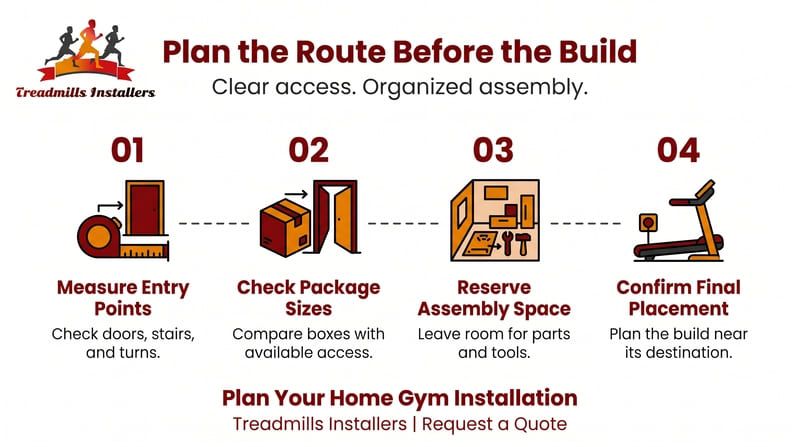
Access Can Decide Where Equipment Goes
Measure the complete delivery route before deciding where equipment will go. Front doors, staircases, corners, hallways, and elevators can restrict access. Compare packaging dimensions and component sizes with the route, then confirm whether the manufacturer permits assembly near the final position.
Check Every Turn Along the Route
A wide entrance does not guarantee access beyond the front door. Tight landings and overhead obstructions can create separate problems.
- Front doors: Measure the usable opening and note thresholds or steps.
- Staircases: Check width, landings, headroom, and turning space.
- Hallways: Consider corners and the room needed to rotate long components.
- Elevators: Confirm door openings, cabin dimensions, and building requirements.
- Basement stairs: Identify low ceilings, narrow turns, and restricted landing areas.
- Garage access: Check the route between unloading and the prepared workout area.
Share photographs and measurements before installation day. Include the equipment model and any delivery restrictions.
For a Northern Virginia basement gym, check both stair turns before selecting a large treadmill. Some equipment may not fit.
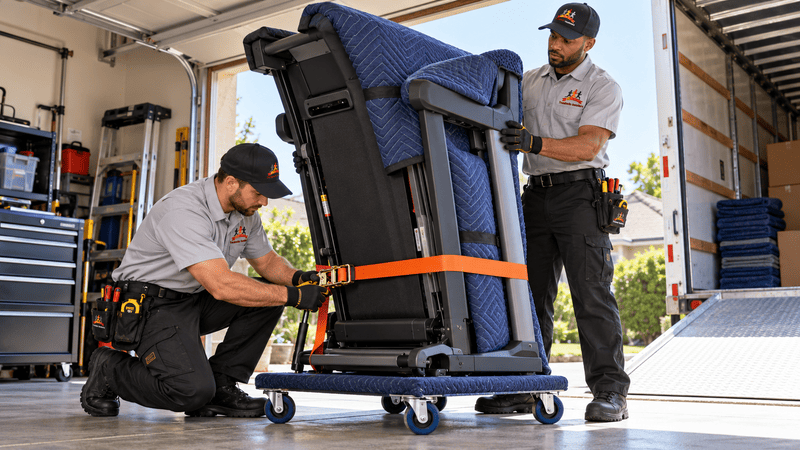
If existing machines need relocation, professional fitness equipment moving services can help address transport and access planning.
Reserve Space for the Build
Assembly often needs more room than the finished machine occupies. Components, tools, packaging, and installers all need temporary working space. Create a staging area without blocking the delivery route. Keep hardware packs labeled and group components by assembly step.
Check box counts against the delivery paperwork. Report missing or visibly damaged components before assembly progresses. Some machines need partial assembly near their final location. Otherwise, the completed frame may no longer pass through the doorway.
Follow the documented assembly sequence. Do not attach every component early simply to clear packaging from the room.
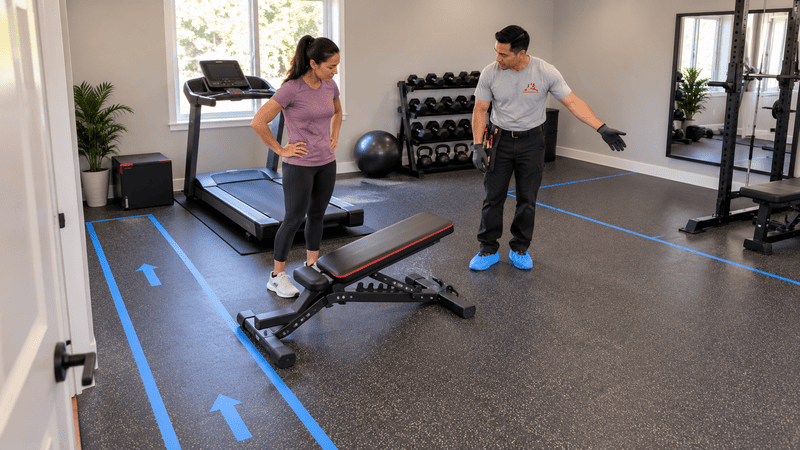
Placement Shapes the Workout Space
Position equipment around its full operating movement and the way people enter, exercise, and leave. A machine’s footprint is only its base area. Walkways, access points, moving attachments, weight storage, and maintenance needs also shape a practical workout room setup.
Plan Working Space, Not Just Parking Space
Mark proposed equipment positions with removable tape before assembly. Then walk through the room as though every machine were present.
- Treadmills: Follow specified rear, side, and overhead clearance guidance.
- Exercise bikes: Preserve access for mounting, adjustments, and maintenance.
- Benches: Allow room to change settings and move between exercise positions.
- Racks: Keep entry points, bar paths, and weight loading areas accessible.
- Storage: Place weights where retrieval does not obstruct another machine.
- Doors, windows, and mirrors: Keep openings usable and equipment clear of fragile surfaces.
Shared workout areas need particular care. One person’s bench movement should not intrude into another person’s treadmill operating area.
Plan Power Before Final Placement
Check each powered machine’s electrical instructions before positioning it. Requirements vary by model, including circuit, grounding, and connection guidance.
Do not assume an extension cord or power strip is acceptable. Route permitted cords away from walkways and moving components.
Consult a qualified electrician when outlet suitability or circuit requirements remain unclear. Equipment assembly does not replace electrical work.
Why Choose Our Team for Home Gym Setup
Treadmills Installers provides residential fitness-equipment assembly and home gym setup support. Services include treadmills, stationary bikes, weight benches, power racks, and Smith machines. Our approach supports component organization, manufacturer-led assembly, equipment positioning, leveling, and final setup checks. Clean work practices help keep the assembly area orderly.
Professional project coordination can make multi-machine projects easier to manage. It also helps reduce equipment setup guesswork before regular use.
For Delaware spare rooms or Pennsylvania garage gyms, residential home gym equipment setup helps coordinate equipment placement.
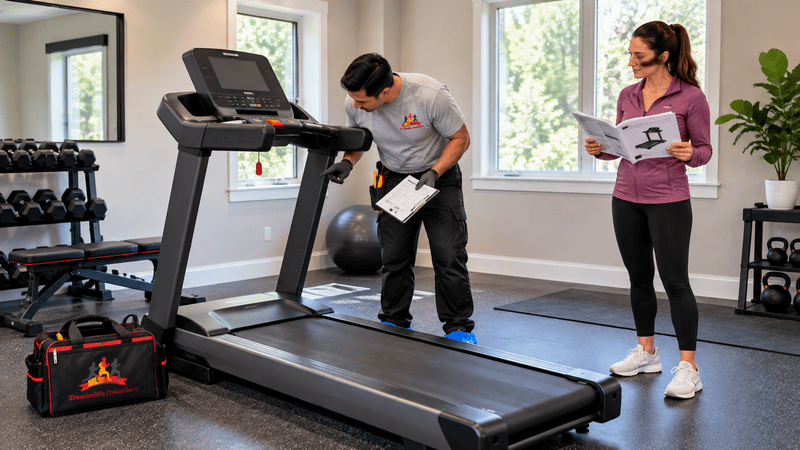
Final Checks Catch Setup Problems Early
Check hardware, connections, adjustments, and permitted operating functions before putting equipment into regular use. Follow the manufacturer’s startup procedures rather than improvising a test. Final setup checks help identify missing parts, uneven contact, incorrect adjustments, and unusual operation that need attention.
Inspect Hardware and Adjustment Points
Confirm that bolts, washers, and other hardware match the instructions. Apply specified tightening sequences and torque values where the manufacturer provides them.
Inspect cables and console connections for correct routing. Check that moving parts do not trap wires during their intended movement.
For benches, confirm that adjustment pins engage fully at the selected settings. Check rack components, attachments, and specified locking mechanisms.
Leveling feet should contact the prepared surface as directed. Address unexpected rocking before normal use.
Follow the Startup Procedure
For treadmills, check the safety key and prescribed startup sequence. Observe belt tracking and incline movement according to the manual. Stop if moving parts bind or unusual noise develops. Do not attempt repairs beyond the manufacturer’s user instructions.
On strength machines, inspect cable routing and adjustment movement as directed. Confirm that accessories match their intended mounting points.
Final checks do not replace manufacturer maintenance or qualified repair services. Keep the manual accessible for future inspections and adjustments.
When Assembly Support Is Useful
Professional fitness equipment installation can help with heavy machines, complex instructions, tight access, or limited assembly space. Large treadmills, Smith machines, and power racks may require multiple installers. Share the equipment details so the provider can assess staffing.
Multi-machine projects also benefit from an agreed assembly order. Building a large frame first might otherwise block access for remaining equipment. Professional help supports accurate equipment placement and may reduce avoidable assembly errors. It does not guarantee performance or eliminate every risk.
What Shapes the Installation Quote
Installation costs depend on actual equipment, property access, and requested services. Share a complete equipment list before requesting pricing. Machine count, type, size, weight, part count, and assembly complexity all affect project scope. Stairs and restricted access can add handling requirements.
Floor conditions, positioning, leveling, and multiple installers may also affect the work. Existing assembly can require inspection or partial disassembly. Travel and the full requested scope also influence pricing. Clarify whether your project includes relocation, anchoring, or packaging removal before confirming arrangements.
Book Home Gym Installation
Professional assistance can coordinate room planning, floor preparation, equipment assembly, positioning, leveling, and final setup checks.
Treadmills Installers helps organize Home Gym Installation around your equipment and property conditions. Share model details, room measurements, access photographs, and your preferred layout.
To discuss the project, contact home gym installers with your equipment list and preparation questions.
Prepare Your Residential Workout Room
Homeowners, renters, landlords, and fitness enthusiasts across Washington, DC, Maryland, and Northern Virginia can request setup assistance.
Residential fitness-equipment installation services are also available across Delaware and Pennsylvania. Confirm your project’s location, access requirements, and requested work when arranging service.
Start with Treadmills Installers and request a home gym installation quote for your planned workout space.
Frequently Asked Questions
What should I measure before home gym installation?
Measure room dimensions, ceiling height, access routes, equipment footprints, and manufacturer-required operating clearances.
What flooring works for home gym equipment?
Suitable flooring depends on equipment weight, manufacturer guidance, surface condition, moisture, and the property’s structural requirements.
Can treadmills be installed in basements?
Basement installation depends on access, ceiling height, floor conditions, ventilation, electrical suitability, and the treadmill’s requirements.
How much space does a power rack need?
Follow the manufacturer’s footprint and clearance guidance, accounting for bar movement, attachments, overhead exercises, and weight loading.
Should fitness equipment be assembled before moving it into the room?
Some machines need assembly near their final position because completed frames cannot pass through the access route.
Can professionals install several gym machines at once?
Multi-machine Home Gym Installation can coordinate assembly order, component organization, positioning, and final checks within the agreed project scope.
What affects home gym installation costs?
Equipment complexity, machine count, weight, access, stairs, staffing, floor conditions, travel, and requested services affect installation costs.
When should I hire a professional home gym installer?
Consider professional help for heavy equipment, complex assembly, tight access, limited workspace, or projects involving several machines.

Why Schools Trust Professional Classroom Furniture Installation Services to Put Student Safety First