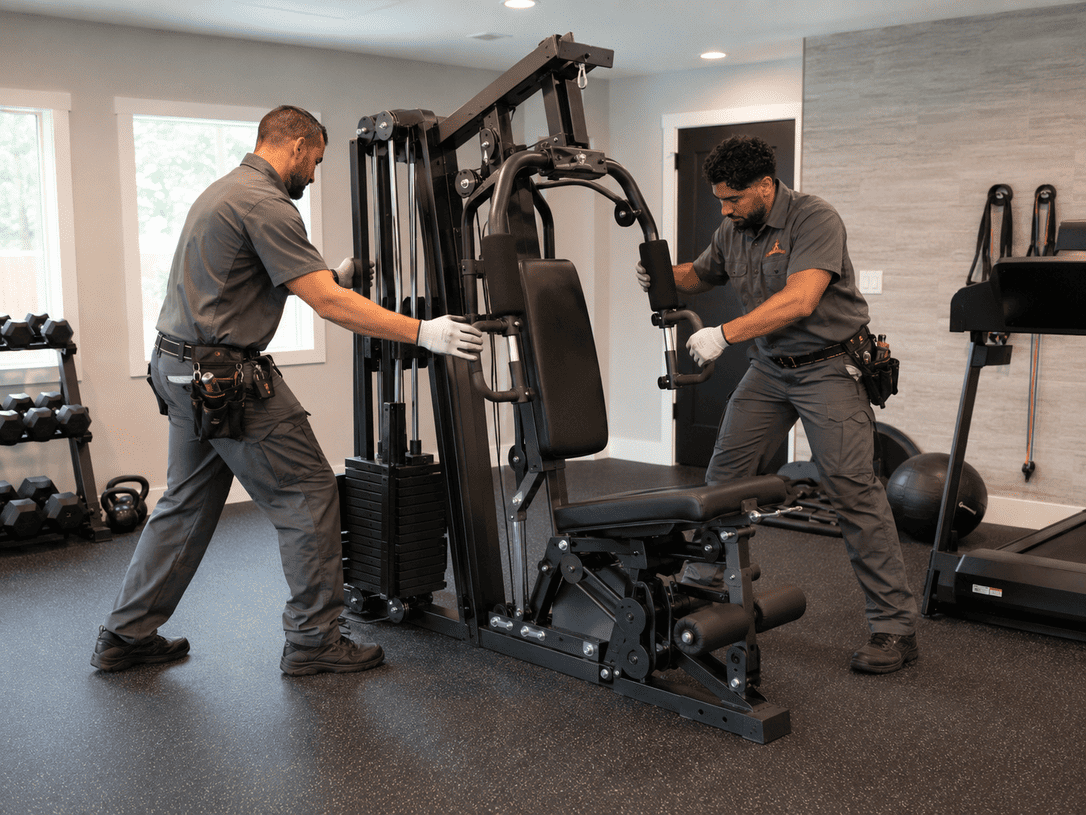
Stair Climber Installation Service for Safe and Proper Setup

Professional Stair Climber Installation Service for a Safe, Stable, and Properly Calibrated Setup
Stair climbers are among the most effective pieces of cardio equipment available, but many users underestimate what proper installation actually requires. These machines are heavy, mechanically complex, and highly sensitive to placement errors. Improper leveling, incorrect assembly, and poor space selection can affect performance from the very first use. Issues like unstable footing, electrical misalignment, and insufficient clearance are common when setup is rushed or handled without experience.
When a stair climber is installed incorrectly, the consequences escalate quickly. An unlevel machine creates abnormal wear on internal components, shortens equipment lifespan, and creates real fall risks for users. Electrical issues can void warranties or cause motor failures. Treadmills Installers provides professional stair climber assembly and installation that meets manufacturer specifications, ensures structural stability, and protects your investment from day one. Book a professional setup before your first workout.
Why Proper Stair Climber Installation Is Critical for Safety, Stability, and Performance
Proper stair climber installation directly determines how safely and reliably the machine performs over time. A correctly installed unit distributes weight evenly, operates without vibration-related drift, and responds accurately to user input. Cutting corners during setup creates compounding problems that become harder and more expensive to correct.
Understanding what professional installation includes helps homeowners and gym managers make informed decisions.
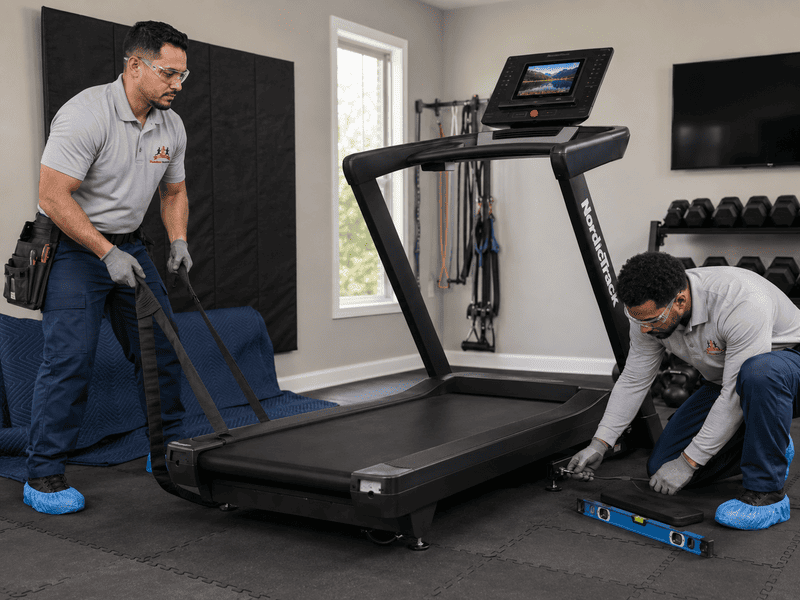
- Stair climber installation service: A structured process that includes unpacking, hardware verification, mechanical assembly, leveling, electrical connection, and operational testing performed by trained technicians.
- Proper machine leveling: Adjusting all foot pads and the frame base so the machine sits flat and stable on any floor surface, preventing side-to-side rocking and uneven wear on the drive system.
- Safe electrical setup: Routing power correctly based on the machine's voltage requirements, avoiding extension cords, and confirming outlet compatibility before powering the unit.
- Professional calibration: Adjusting speed controls, step resistance, and console settings to manufacturer defaults so the machine performs as designed and user safety features function correctly.
Common Issues with Improper Stair Climber Setup That Lead to Safety Risks and Equipment Damage
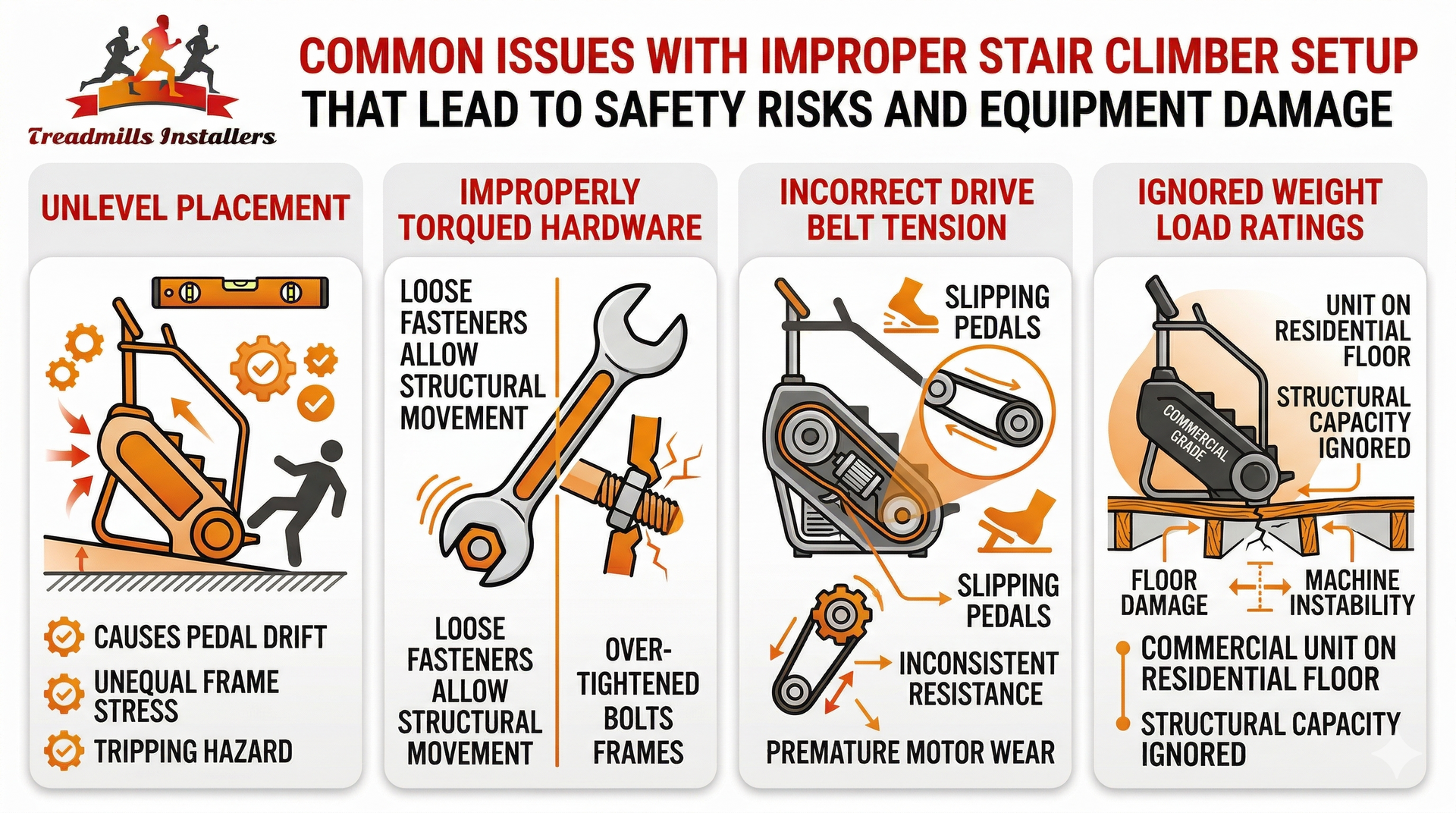
Incorrect stair climber setup causes a range of problems that compromise both user safety and machine integrity. Technicians at Treadmills Installers regularly encounter machines that were self-assembled or installed by general movers without fitness equipment experience.
The most frequent issues include:
- Unlevel placement: Causes the pedal mechanism to drift, puts unequal stress on the frame, and creates a tripping hazard during use.
- Missing or improperly torqued hardware: Bolts that are over-tightened crack frames, while loose fasteners allow structural movement under load.
- Incorrect drive belt tension: Results in slipping pedals, inconsistent resistance, and premature motor wear.
- Ignored weight load ratings: Placing a commercial-grade machine on a residential floor without checking structural capacity can cause floor damage or machine instability.
If your equipment is already showing performance issues after a recent setup, reviewing our guide to fitness equipment not working after assembly can help you identify the cause before the problem worsens.
Space Planning and Placement Requirements for Stair Climbers in Home and Commercial Gyms
Stair climbers require more vertical and horizontal clearance than most cardio equipment. Correct placement is a prerequisite for safe use and proper airflow around the machine's motor housing.
Most full-size stair climbers require a minimum ceiling height of 10 feet to accommodate a user standing on elevated pedals. Lateral clearance of at least 24 inches on each side and 36 inches behind the machine is recommended for emergency dismount and routine service access.
For home gym environments, flooring type, door clearance, and structural weight distribution all factor into placement decisions. A well-planned home gym setup accounts for all equipment dimensions before any assembly begins. Treadmills Installers evaluates each space before installation to confirm that placement meets both safety standards and practical accessibility needs.
Clients in Baltimore, Rockville, and Arlington frequently contact us after placing equipment in rooms that cannot safely accommodate the machine's footprint. Rerouting installation adds time and cost that proper pre-planning eliminates.
For gym environments where multiple machines are being installed, professional layout planning becomes even more important. Resources like gym equipment assembly for home and commercial gyms offer additional context on managing multi-equipment installations effectively.
Electrical, Flooring, and Weight Load Considerations Before Installation
Stair climbers are high-demand machines that require dedicated electrical circuits in most configurations. Commercial-grade units commonly require a 20-amp dedicated outlet and may require hard-wired connections. Running a machine on a shared circuit risks tripping breakers, damaging the motor controller, or voiding the manufacturer's warranty.
Flooring is equally important. Hardwood, tile, and laminate surfaces transfer vibration and can crack under repeated mechanical stress. Rubber flooring mats rated for heavy fitness equipment reduce vibration, protect the floor surface, and improve stability. For residential installations in Bethesda, Wilmington, or Harrisburg, our technicians assess existing flooring before finalizing placement.
Weight load is a factor that many homeowners overlook. Commercial stair climbers can exceed 400 pounds. Residential floor joists have load limits that must be verified before installation, especially in upper-level rooms or older construction. Ignoring these limits can cause structural damage that far exceeds the cost of a professional installation consultation.
Assembly and Installation Requirements for Stair Climbers and Step Machines
Stair climber assembly involves significantly more technical complexity than standard cardio equipment. Unlike treadmills or exercise bikes, stair climbers have interlocking pedal mechanisms, weighted drive systems, and tension assemblies that must be calibrated during assembly, not after.
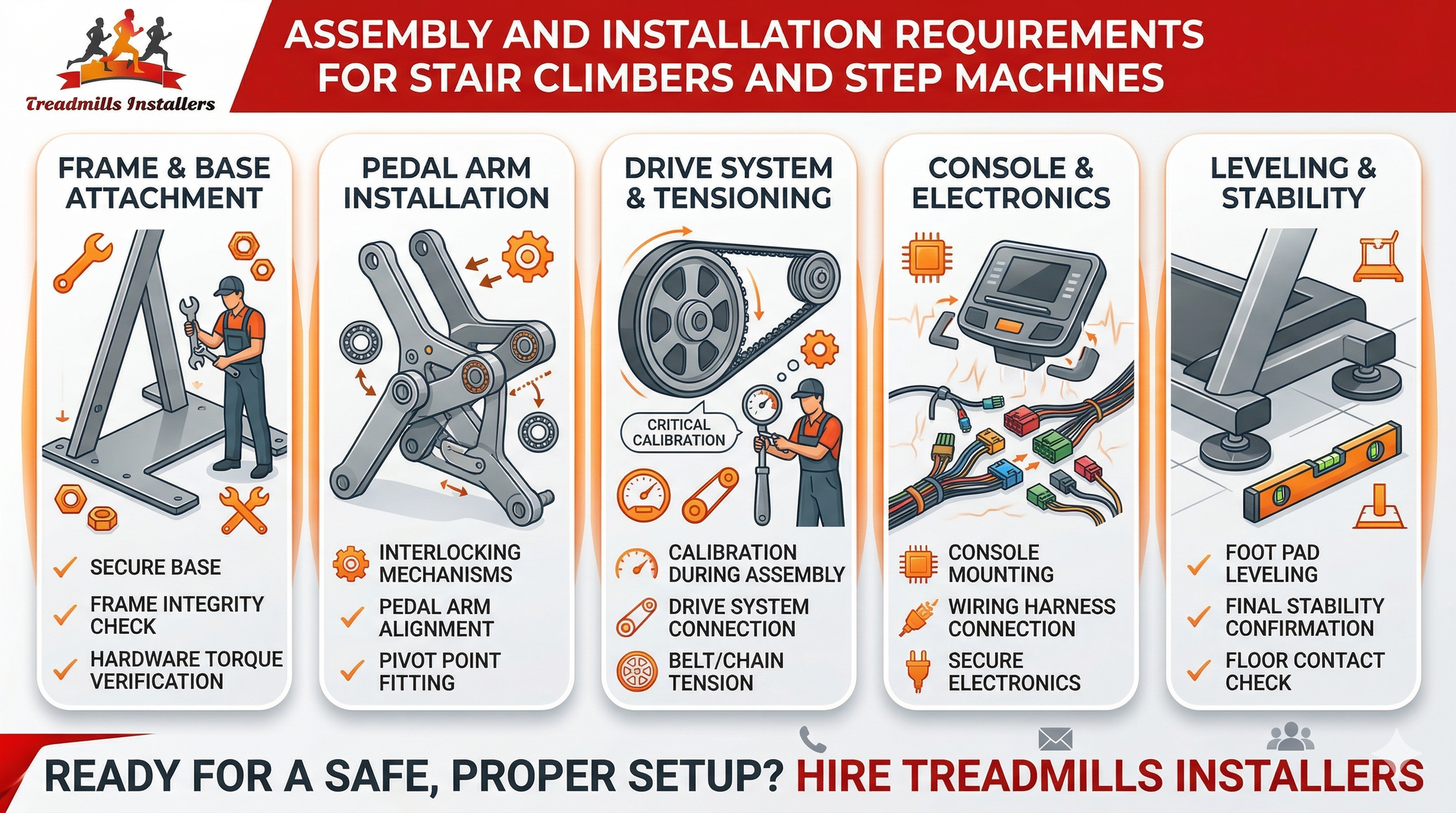
The assembly process for most models includes:
- Frame base attachment and hardware torque verification
- Pedal arm installation and pivot point alignment
- Drive system connection and belt or chain tensioning
- Console mounting and wiring harness connection
- Foot pad leveling and stability confirmation
Treadmills Installers follows manufacturer-specific assembly documentation for every installation. Our team handles equipment from full residential step machines to commercial-grade climbers used in facilities across Maryland, Delaware, and Northern Virginia. For comparison, our exercise bike assembly and elliptical assembly services follow the same precision-focused process across all cardio equipment categories.
For clients comparing assembly providers, professional cardio equipment assembly services provide a useful point of reference when evaluating service scope and technician qualifications.
Brand-Specific Installation Needs for StairMaster, Life Fitness, Matrix, and Other Leading Equipment
Different brands require different installation approaches, and familiarity with manufacturer specifications is not optional. A technician who has only assembled residential step machines is not necessarily qualified to install a commercial-grade unit with proprietary drive technology.
StairMaster StepMill machines use rotating stair mechanisms with specific chain tension requirements and sensor calibration steps that must be performed in a defined sequence. Skipping or reordering steps causes sensor misalignment and console error codes that require factory service to correct.
Life Fitness stair climbers include integrated diagnostics that must be initialized during installation. Without that initialization, the machine will not accurately track resistance levels or user metrics.
Matrix ClimbMills require specific leveling tolerances due to their aluminum frame construction. Even minor misalignment causes accelerated wear on the contact points between the step mechanism and the drive shaft.
Treadmills Installers technicians are trained on brand-specific requirements across all major fitness equipment manufacturers, ensuring every machine is assembled exactly as designed.
Calibration, Testing, and Setup for Smooth and Safe Operation
Calibration is not optional. It is the final step that confirms every mechanical and electronic system on the machine is working within the manufacturer's acceptable range. A machine that has been assembled but not calibrated may appear to function normally while delivering incorrect resistance levels, inaccurate speed readings, or delayed emergency stop response.
Post-assembly testing at Treadmills Installers includes:
- Step pedal travel verification across all resistance settings
- Console display and metric tracking accuracy check
- Emergency stop and safety key function test
- Vibration and noise assessment at standard operating load
- Final stability check with simulated user weight distribution
These steps confirm the machine is safe to use and performing as intended before our technicians leave the installation site.
Safety Standards, Manufacturer Guidelines, and Compliance for Fitness Equipment Installation
Fitness equipment installation in commercial settings is governed by federal and local safety standards. OSHA guidelines apply to commercial gym environments and address equipment stability, emergency access, and electrical safety requirements. For facilities that serve the public, ADA compliance standards for fitness and health clubs also govern equipment placement, accessible pathways, and floor surface requirements.
Residential installations are not exempt from safety responsibility. Manufacturer guidelines are legally significant because improper installation can void warranties and shift liability to the equipment owner in the event of an injury.
Treadmills Installers operates in alignment with manufacturer documentation and applicable safety standards across all service areas, including Washington DC, Alexandria, and Pennsylvania. Our process creates a documented installation record that supports warranty claims and protects clients from liability exposure related to setup errors.
When to Hire Professional Stair Climber Installers for Proper Setup and Long-Term Reliability
Hiring a professional stair climber installation service is the right choice any time the machine weighs more than 150 pounds, requires a dedicated electrical circuit, or will be used in a commercial or semi-commercial environment. These conditions apply to the vast majority of full-size stair climbers and step mills on the market.
Professional installation is also the correct choice when the installation space involves stairs, limited door clearance, or upper-floor delivery. Moving heavy equipment through residential or commercial spaces without proper technique and equipment creates damage risks to both the machine and the property. For moves involving relocation, specialized disassembly and relocation services and professional guidance on furniture and equipment disassembly for moving are valuable resources to consult before any move begins.
For gym owners in Maryland and DC managing multi-equipment installations, Treadmills Installers provides coordinated installation scheduling that minimizes facility downtime and ensures all machines are ready for use on the same day.
When relocating equipment between facilities, safely moving gym equipment in Maryland and DC provides practical guidance on what to plan for before and during transport.
Get Your Stair Climber Installed Safely and Correctly the First Time
Treadmills Installers provides professional stair climber installation service across Maryland, Washington DC, Delaware, Northern Virginia, and Pennsylvania. Our technicians handle the full installation process, from unpacking and assembly through calibration and testing, so your machine is ready for safe use the first time you step on it.
We also offer complete home gym setup, multi-equipment installation, equipment disassembly for relocation, and fitness equipment troubleshooting for machines that were previously assembled incorrectly. Whether you need a single stair climber installed or a full commercial gym configured, our team manages every detail.
Just as professional installation matters for fitness equipment, the same principle applies to home furniture assembly and modular office furniture installation, where precision setup prevents long-term problems.
If you are planning an outdoor recreation space alongside your home gym, choosing the right basketball hoop for limited driveways is a useful read for maximizing your available space.
Ready to get started? Contact Treadmills Installers to speak with a technician, or submit your installation request online and we will respond quickly with availability in your area.
Frequently Asked Questions About Stair Climber Installation
How long does professional stair climber installation take?
Most standard stair climber installations take between one and two hours, depending on the model and installation environment. Commercial-grade units with more complex drive systems or hard-wired electrical connections may require additional time.
Do I need a dedicated electrical outlet for my stair climber?
Most full-size stair climbers require a dedicated 20-amp grounded outlet to operate safely. Sharing a circuit with other appliances risks tripping breakers and can damage the motor controller over time.
Can a stair climber be installed on the second floor of a home?
Yes, but floor load capacity must be verified before installation. Commercial stair climbers can exceed 400 pounds, and residential floor joists must be able to support the combined weight of the machine and users.
What happens if a stair climber is installed on an unlevel surface?
An unlevel stair climber creates unequal stress on the pedal mechanism and frame, leading to abnormal wear, increased vibration, and a greater risk of instability during use. Proper leveling is required before the machine is put into service.
Do different stair climber brands require different installation steps?
Yes. StairMaster, Life Fitness, Matrix, and other major brands each have unique assembly sequences, calibration requirements, and electrical specifications. Technicians must follow brand-specific documentation to ensure correct and warranty-compliant installation.
Is professional stair climber assembly worth the cost?
Professional installation protects the warranty, prevents equipment damage, and eliminates safety risks associated with improper setup. The cost of professional assembly is significantly lower than the cost of repairing a machine damaged during self-installation.
What areas does Treadmills Installers serve for stair climber setup?
Treadmills Installers provides stair climber installation service in Maryland, Washington DC, Delaware, Northern Virginia, and Pennsylvania, including cities such as Baltimore, Bethesda, Arlington, Alexandria, Wilmington, and Harrisburg.