Why Proper Bowflex Assembly Matters for Safe Home Gym Use
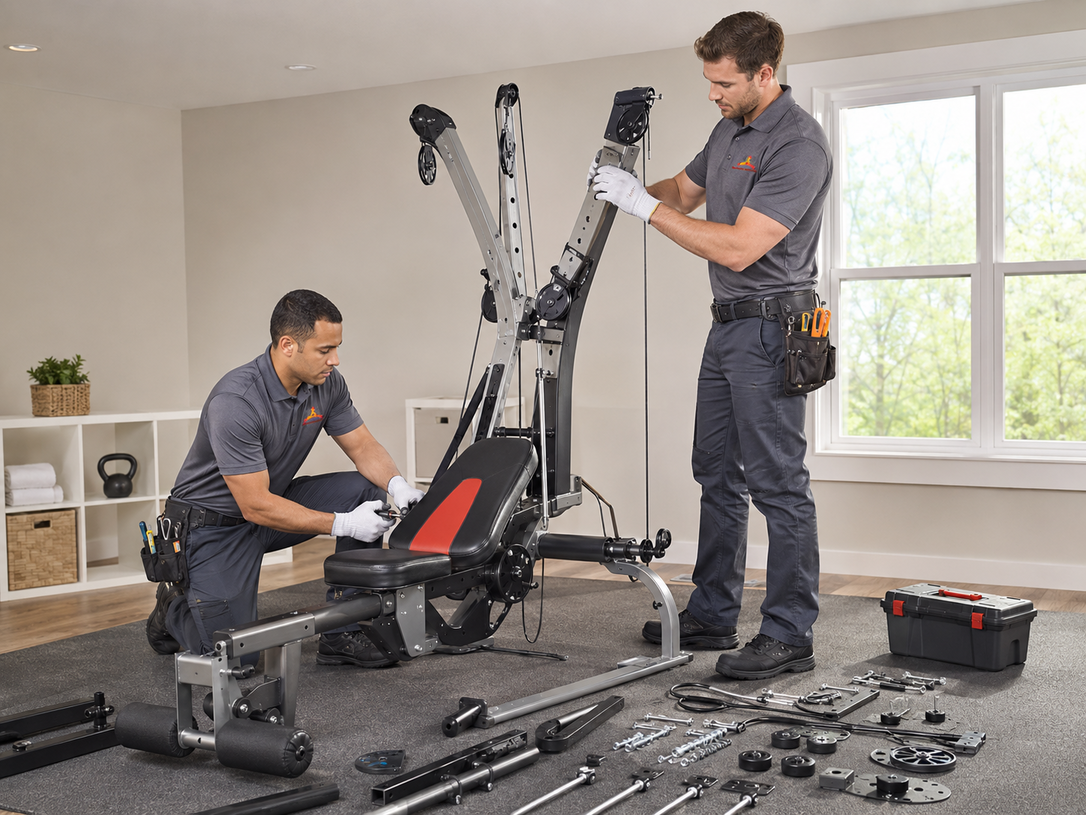
Proper Bowflex assembly keeps home gym equipment stable, aligned, and safer to use by reducing loose hardware, uneven frames, cable tension issues, and incorrect resistance setup. The right setup depends on the model, room size, flooring, ceiling clearance, user height, available workout space, assembly complexity, and whether the equipment is placed in a home gym, garage, basement, apartment, or private workout area.
- Frame stability depends on tight hardware, level placement, and correct bolt sequencing.
- Cables, pulleys, and resistance rods must be routed and tensioned correctly for smooth reps.
- Room clearance protects users during full range of motion and console interaction.
- Flooring and equipment placement affect vibration, noise, and long-term frame health.
- Professional Bowflex assembly is worth it for safety, warranty protection, and consistent performance.
Safe Bowflex Setup Starts Before the First Workout
A Bowflex looks manageable in the box until the heavy frame parts, cable routing, pulleys, resistance rods, and console hardware come out together. Suddenly the spare room feels tight, the flooring looks risky, and the instructions assume more space than most homes offer. Rushed assembly often leads to wobbling frames, loose bolts, uneven resistance, cable snags, or a machine that never feels quite right. For homeowners weighing models before delivery day, reviewing Bowflex home gym equipment options early helps match the footprint to the room.
Professional Bowflex assembly then handles the heavy lifting, hardware checks, and safety alignment from the very first bolt.
Bowflex Frames Need Solid Assembly From the Ground Up
A Bowflex frame must be square, level, and fully torqued before any cable or pulley is added. When the base is off by even a small margin, every workout afterward stresses the joints, welds, and hardware unevenly. That is where long-term safety issues begin.
Homeowners often underestimate how much the base assembly affects everything above it. For instance, a slightly twisted upright can change how the seat tracks or how the bench locks in place. Avoiding common home gym setup mistakes to avoid during this stage prevents long-term frame problems.
- Confirm every bolt is hand-started before tightening to avoid cross-threading.
- Use the correct torque sequence so the frame settles evenly.
- Check that uprights are plumb against a level floor surface.
- Inspect welds and contact points for shipping damage before final tightening.
Cable Routing and Resistance Setup Can Affect Every Rep
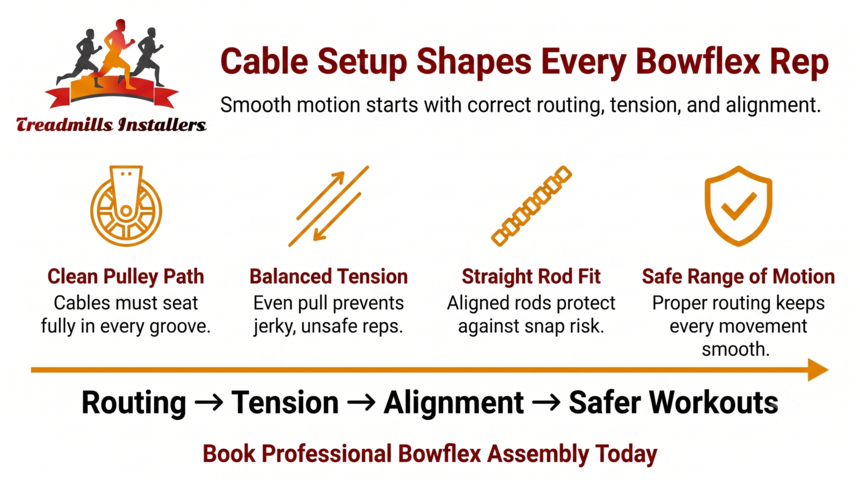
Cables and resistance systems are the heart of a Bowflex, and incorrect routing changes how every rep feels. Pulleys must spin freely, cables must seat fully in their grooves, and resistance rods must connect without binding. A small routing mistake can cause jerky motion, uneven tension, or premature wear.
Common cable and pulley issues during DIY builds
Many DIY assemblies finish with cables crossed behind a pulley, twisted at the anchor, or seated against a frame edge. These issues quietly damage the cable jacket and create unsafe tension spikes that shorten the life of the machine.
Resistance rod alignment on Power Rod models
Power Rod units need clean, straight insertion into their bushings. A bent or misaligned rod can snap under load, which is a serious safety concern in any home workout room. Trained installers verify rod seating and cable tension before the first rep.
Room Clearance Matters More Than Most Homeowners Expect
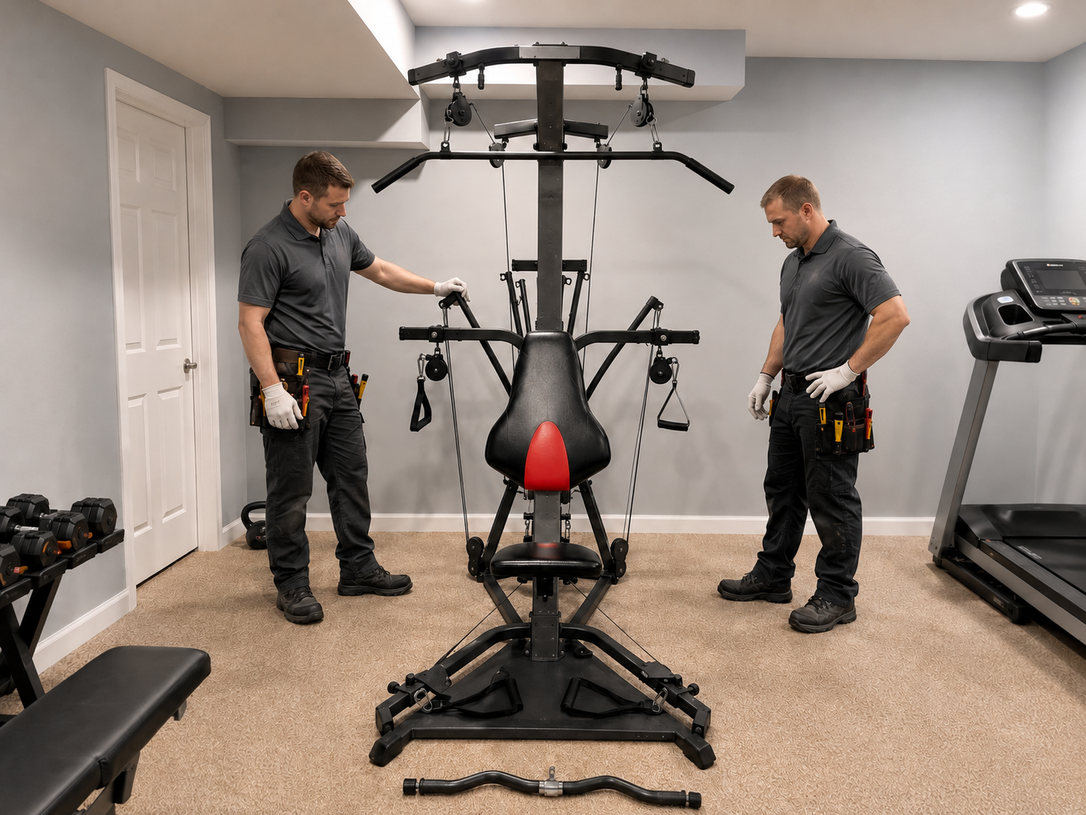
Bowflex equipment needs more clearance than the machine footprint suggests. Cable arms swing wide, seats slide back, and users need space for full extension. Without proper clearance, workouts feel cramped and accidents become more likely.
| Equipment Type | Side Clearance | Front and Rear Clearance | Ceiling Height Guidance |
|---|---|---|---|
| Bowflex Home Gym | 2 to 3 feet | 3 to 4 feet | 7 feet minimum |
| Bowflex Max Trainer | 2 feet | 2 feet front, 3 feet rear | User height plus 18 inches |
| Treadmill | 1.5 to 2 feet | 2 feet front, 3 feet rear | 7 to 8 feet |
| Elliptical | 1.5 to 2 feet | 2 feet | User height plus 20 inches |
| Weight Bench with Rack | 2 to 3 feet | 3 to 4 feet | 8 feet preferred |
Apartments and condos often need the most planning since walls, doorways, and shared ceilings limit how equipment can be positioned safely.
Flooring, Weight, and Placement Can Change Equipment Stability
Hard floors amplify vibration, while soft carpet can let frames rock under load. Either situation reduces stability and can shorten equipment life. Smart placement protects both the floor and the machine.
- Use high-density rubber mats under heavy Bowflex frames.
- Avoid placing equipment on floating floors near walls or baseboards.
- Keep machines away from direct sunlight and humidity.
- Position frames so cables pull against structural floor zones, not seams.
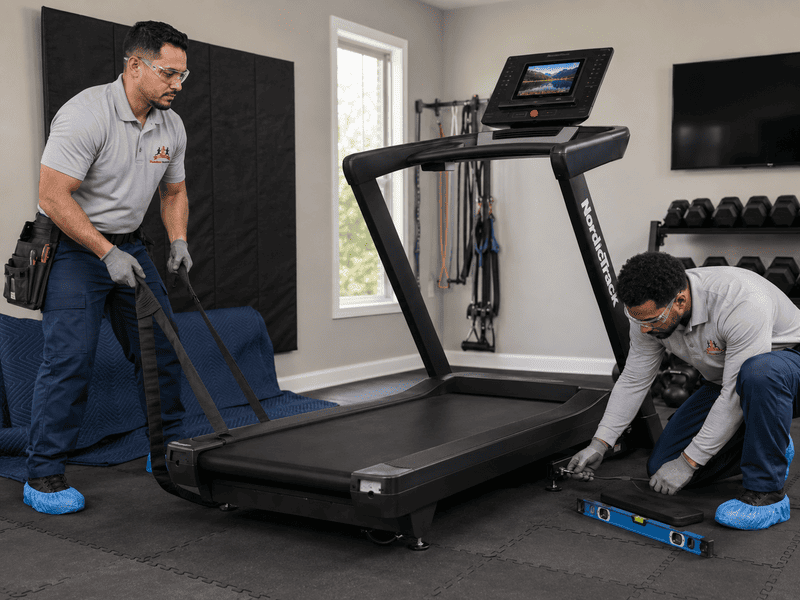
Garage gyms and basement gyms benefit most from mats because concrete transfers vibration and cold can stiffen cables. For multi-machine layouts, pairing Bowflex placement with treadmill assembly for safe workouts keeps cardio zones balanced against strength zones.
Bowflex Max Trainers Need Careful Console and Motion Setup
Max Trainer assembly differs from basic furniture setup because it combines elliptical motion, vertical climbing, and electronic console wiring. Cables must seat without pinching, pedals must align with stride paths, and the console must power on cleanly before first use.
Reviewing Bowflex Max Trainer elliptical models ahead of delivery helps confirm dimensions, power requirements, and console features. Many homeowners also rely on elliptical assembly for home gyms when stride alignment and console calibration feel beyond a typical DIY build.
Home Gyms Work Better When Equipment Is Installed Together
A single Bowflex feels different in a room that also holds a treadmill, elliptical, and weight bench. Spacing, outlet access, and traffic flow must be planned together so each machine has safe clearance and easy entry.
- Map outlets before placing motorized equipment.
- Leave walking lanes between machines for safe transitions.
- Group cardio and strength zones to match workout flow.
- Confirm ventilation in basement and garage spaces.
Bowflex assembly planning means checking the model, frame parts, cable routing, resistance system, room clearance, flooring, user space, hardware, and final placement before the equipment is built for regular workouts. Coordinating professional home gym setup services with weight bench installation for homes turns a crowded room into a balanced training space.

Moving or Reinstalling Bowflex Equipment Requires Extra Care
Bowflex units rarely move well as a single assembled piece. Cables, pulleys, and Power Rods can bend or snap if the frame is tilted incorrectly. Partial disassembly almost always protects the equipment better than dragging it across a home.
A detailed home gym equipment moving guide helps homeowners understand which sections must come apart before transport. For long-distance relocations or stair access, specialized equipment disassembly relocation service options reduce the risk of bent rods, kinked cables, and damaged consoles. Many customers prefer trained installers who move and reinstall gym equipment safely rather than risk warranty issues.
Professional Assembly Helps Prevent Unsafe Home Gym Mistakes
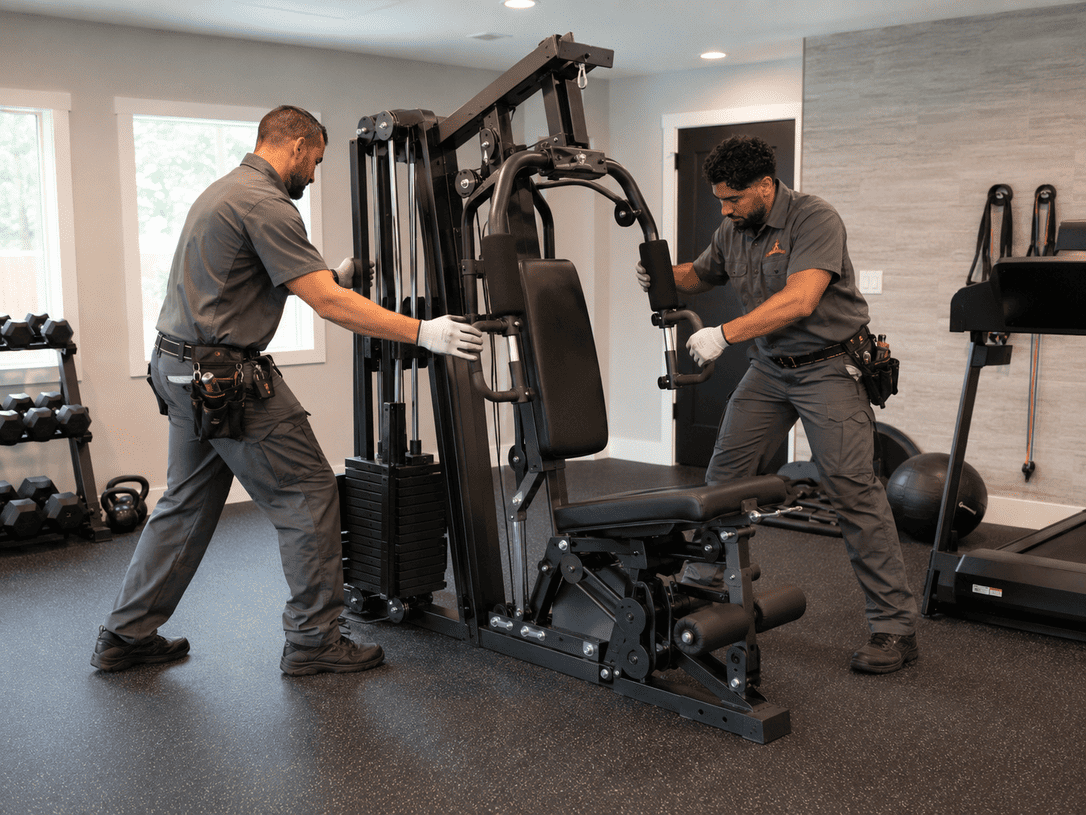
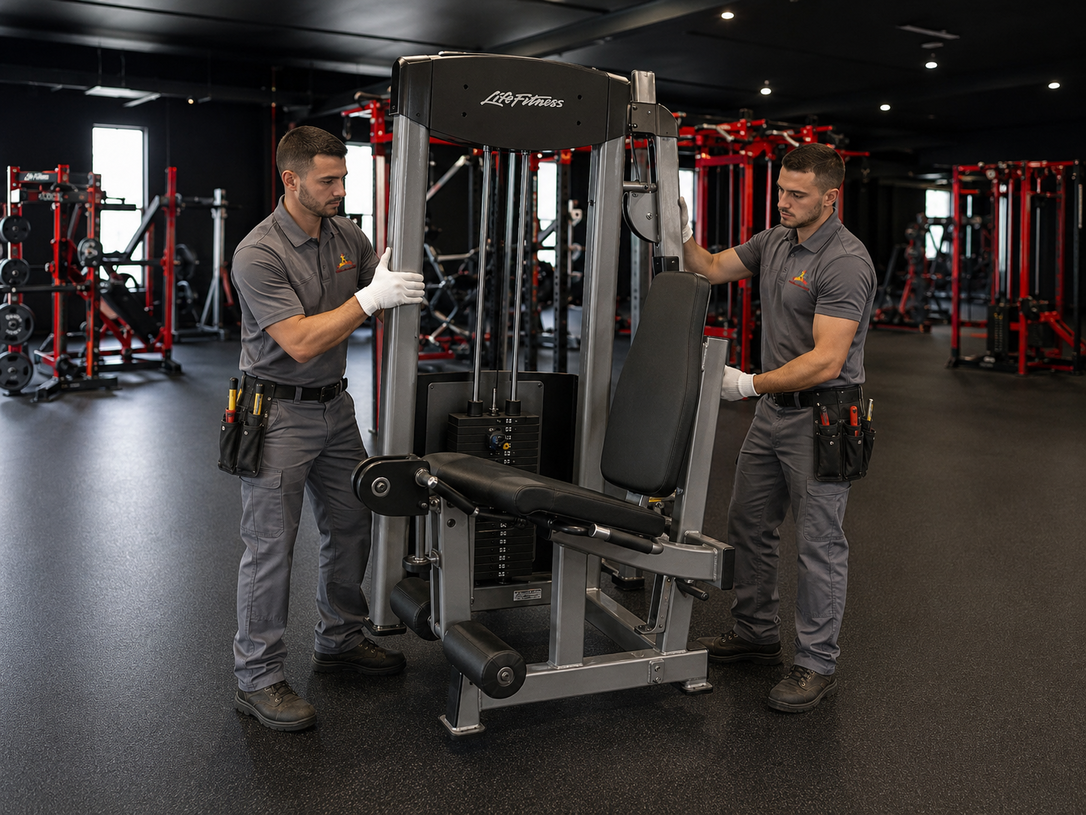
Professional assembly catches the small mistakes that cause big safety problems later. Trained installers torque hardware correctly, route cables cleanly, verify resistance alignment, and confirm the machine sits level before first use. That attention protects users, floors, and the equipment itself.
For shoppers still selecting models, browsing the Bowflex fitness equipment product selection alongside trusted home gym equipment installation help makes the path from purchase to first workout much smoother. Skipping these steps often leads to wobble, cable damage, or repeat service calls.
Schedule Bowflex Assembly With Treadmills Installers
Treadmills Installers handles Bowflex assembly with the stability checks, cable alignment, room clearance review, and floor protection your home gym needs from day one. Many of the same customers also rely on us for home furniture assembly, staging furniture disassembly, and careful office equipment moving when projects extend beyond the gym, plus facility work such as business hoop installation for shared spaces.
To schedule home gym installation help or request fitness equipment assembly service, reach out today for Bowflex assembly, treadmill assembly, elliptical assembly, weight bench installation, and full home gym moving or reinstallation.
Frequently Asked Questions About Bowflex Assembly
Does Bowflex equipment need professional assembly?
Bowflex equipment does not legally require a professional, but the heavy frames, cable routing, and resistance setup make professional assembly the safer choice. Trained installers reduce the risk of loose hardware and warranty issues.
What happens if Bowflex cables are installed incorrectly?
Incorrect cable routing creates uneven tension, jerky motion, and premature wear on pulleys and jackets. In some cases, it can also cause a cable to slip or snap under load, which is a real safety risk.
How much space is needed around Bowflex equipment?
Most Bowflex home gyms need two to three feet of clearance on each side and three to four feet at the front and rear. Ceiling height should match the user's reach during overhead movements.
Can Bowflex equipment be used in an apartment?
Yes, many Bowflex models work well in apartments when placed on a thick rubber mat for noise and floor protection. Choosing a compact model and confirming ceiling clearance makes apartment use much more comfortable.
Is Bowflex Max Trainer assembly difficult?
Max Trainer assembly is more complex than a treadmill because it combines motion mechanics with console wiring and pedal alignment. Most homeowners find professional installation faster and safer than a DIY build.
Can Bowflex equipment be moved and reassembled?
Yes, but Bowflex units should be partially disassembled before moving to protect cables, rods, and the frame. Professional reinstallation restores proper alignment and tension after transport.
What common mistakes happen during home gym setup?
Common mistakes include skipping torque steps, routing cables incorrectly, ignoring floor protection, and crowding equipment into tight rooms. Each of these reduces safety and shortens equipment life.
When should I schedule Bowflex assembly help?
Schedule assembly as soon as the delivery date is confirmed so installers can arrive shortly after the equipment arrives. Early scheduling also helps secure a preferred installation window.