How Improper Treadmill Setup Can Affect Stability, Noise, and Belt Alignment
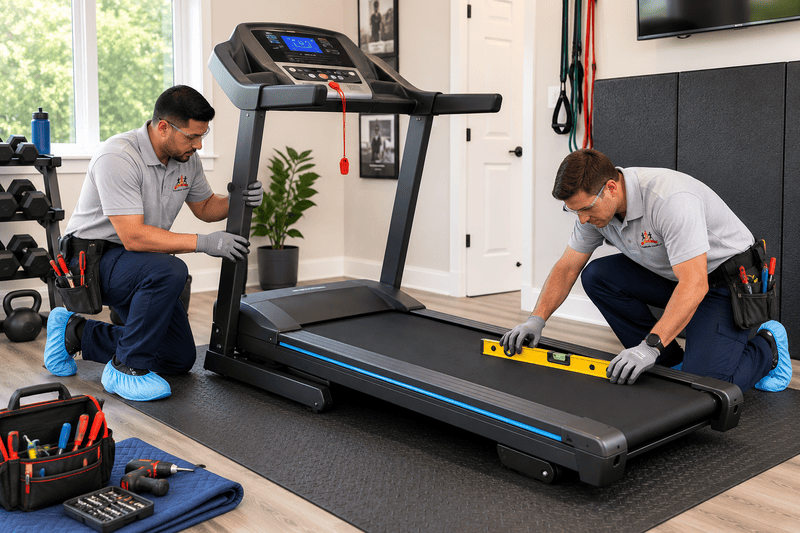
Improper treadmill setup can affect stability, noise, and belt alignment when the frame is not level, bolts are tightened unevenly, the belt is off-center, or the machine sits on the wrong surface. Performance also depends on floor level, deck support, motor housing placement, user weight, room layout, vibration control, and whether the treadmill is used in a home gym or commercial fitness space.
- Uneven floors can make treadmills feel unstable
- Loose hardware may increase rattling and noise
- Poor belt alignment can cause uneven wear
- Heavy treadmills need careful placement and setup
- Professional assembly helps reduce avoidable setup issues
A Treadmill Should Feel Steady Before the First Run
Many treadmill problems start during setup, not months later. A machine assembled too quickly, placed on carpet with hidden slope, or positioned without checking frame alignment can wobble, rattle, vibrate, or pull the belt off center. Those small mistakes can affect comfort, workout quality, and long-term wear.
That is why many homeowners, apartment residents, and facility managers choose professional treadmill assembly for home gyms when they want better placement, cleaner setup, and fewer avoidable performance issues from day one.
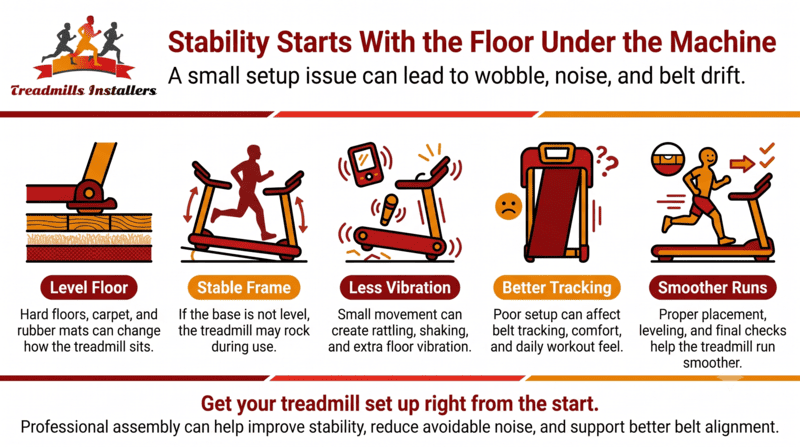
Stability Starts With the Floor Under the Machine
A treadmill can feel unstable even when the frame is assembled correctly if the floor underneath it is uneven, soft, or poorly supported. Small shifts at the base often turn into noticeable wobble during walking or running, especially in basement gyms, spare rooms, condos, and apartment fitness spaces.
- Hard floors can expose minor leveling problems faster than carpet
- Thick carpet may let one side sink more under user weight
- Rubber flooring can help with grip, but it cannot correct a sloped surface
- Folding treadmills often react faster to uneven corners than heavier fixed-frame units
Floor contact changes the workout feel
If one foot of the treadmill sits slightly higher, the frame may rock with every stride. In a garage gym or small workout room, that movement can also travel into nearby walls, furniture, or adjacent units.
Loose Hardware Can Turn Into Noise Fast
Treadmill noise after assembly often comes from bolts, uprights, console mounts, or motor covers that were not tightened evenly. Even a small gap at a connection point can create rattling, clicking, or vibration that gets louder as speed and incline increase.
- Side rails may vibrate when fasteners settle unevenly
- Console supports can rattle when the frame shifts under load
- Motor covers may buzz if they are not seated properly
- Rear roller areas can sound rough when alignment and tension are off together
Noise usually points to movement somewhere
A treadmill should follow the manufacturer’s setup instructions and feel solid before regular use. If the machine was shifted after delivery, even careful handling matters, especially during fitness equipment moving without damage.
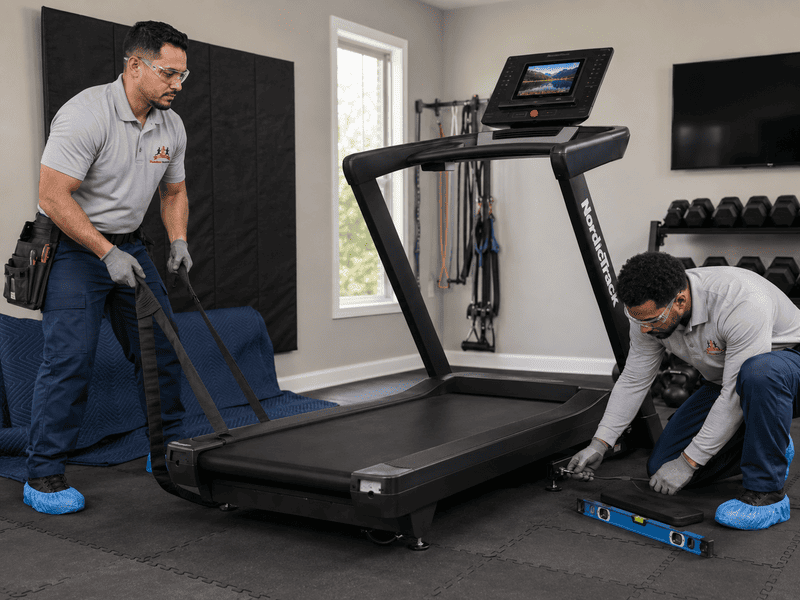
Belt Alignment Affects Every Step on the Deck
Poor treadmill belt alignment affects belt tracking, comfort, and wear because the walking surface no longer moves evenly over the deck and rollers. When the belt drifts left or right, users may feel inconsistent foot placement, hear rubbing, or notice faster wear along one edge.
- Belt drift can start after uneven rear roller adjustment
- Off-center belts may rub the deck edge or side rail
- Uneven tracking can change how stable each stride feels
- Delayed correction may shorten belt and deck life
Centered tracking supports smoother movement
Belt alignment is not just a cosmetic issue. It plays a direct role in how the treadmill feels underfoot, especially during faster intervals, incline use, or repeated daily workouts in busy home gyms.
Heavy Treadmills Need More Than Basic Assembly
Heavy treadmills need careful placement, lifting, leveling, and final adjustment because their weight magnifies small setup mistakes. A machine that is slightly off during assembly can feel much worse once full body weight, speed changes, and repeated use start loading the frame.
For that reason, many buyers review heavy gym equipment assembly guidance before setup and plan how to move home gym equipment safely into the room before tightening the final hardware.
- Delivery path affects final placement accuracy
- Basements and upstairs rooms need extra clearance planning
- Heavy frames often need better leveling on older floors
- Motor area vibration becomes more obvious when placement is rushed
Home Gyms Need Space, Power, and Vibration Planning
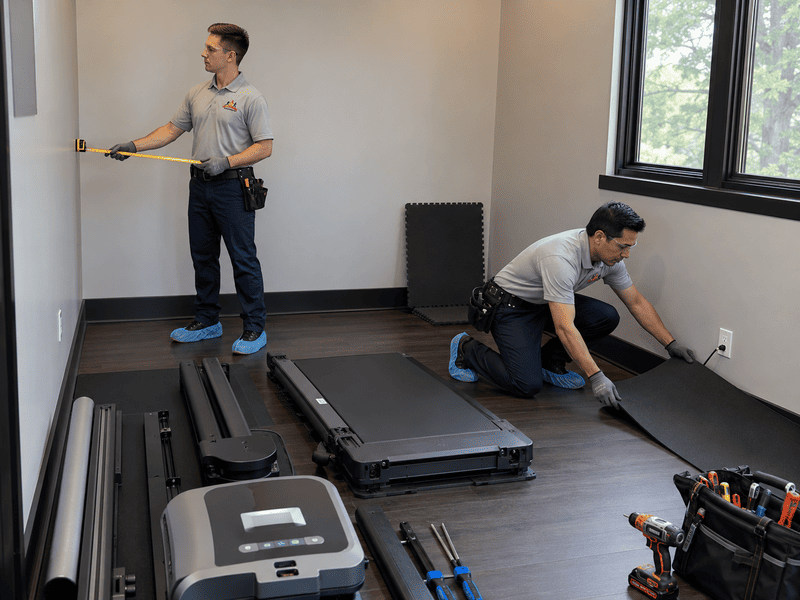
Home gym treadmill setup works best when the room supports safe placement, outlet access, deck clearance, and vibration control. Without that planning, even a well-built treadmill can feel awkward, noisy, or unstable in a bedroom gym, condo corner, or compact garage layout.
Treadmill setup planning means checking floor level, frame position, belt tracking, hardware tightness, deck support, power access, room clearance, and vibration control before regular use begins.
If you are building out a workout area, home gym setup for cardio equipment becomes easier when you compare the room against home treadmill models for comparison and the footprint you actually have.
- Keep enough rear and side clearance for entry and exit
- Avoid stretching power cords across walking paths
- Plan around hard floors, mats, and shared walls
- Account for user height, stride length, and folding space
Commercial Fitness Rooms Require a Stronger Setup Process
Commercial treadmill assembly should account for heavier traffic, repeated speed changes, more users, and stricter layout demands. Office gyms, apartment fitness rooms, training studios, and shared facilities usually need a more deliberate setup process to support leveling, spacing, power planning, and long-term performance.
Facilities that need commercial exercise equipment assembly support often compare room demands against commercial treadmill models for facilities before installation. After setup, managers may also think ahead about commercial equipment maintenance contract planning.
- Multiple units increase the need for consistent spacing
- Shared flooring can amplify vibration across the room
- High-use cardio equipment needs cleaner alignment checks
- Property managers usually benefit from organized placement plans
Setup Cost Should Include Performance, Not Just Labor
Treadmill assembly cost should cover more than putting parts together. It should also reflect placement difficulty, room access, leveling needs, belt adjustment, and the time required to help the machine run better once assembled.
What the price should actually cover
Using treadmill assembly installation cost planning can help buyers think beyond basic labor and include the factors that affect daily performance.
| Cost Factor | Why It Matters |
|---|---|
| Room access | Tight stairs, corners, or elevators slow setup |
| Floor condition | Uneven surfaces may need extra leveling time |
| Machine weight | Heavy units require more careful handling |
| Final adjustments | Belt tracking and hardware checks support smoother use |
| Intended use | Home and commercial setups often need different planning |
Professional Assembly Helps the Treadmill Run Smoother
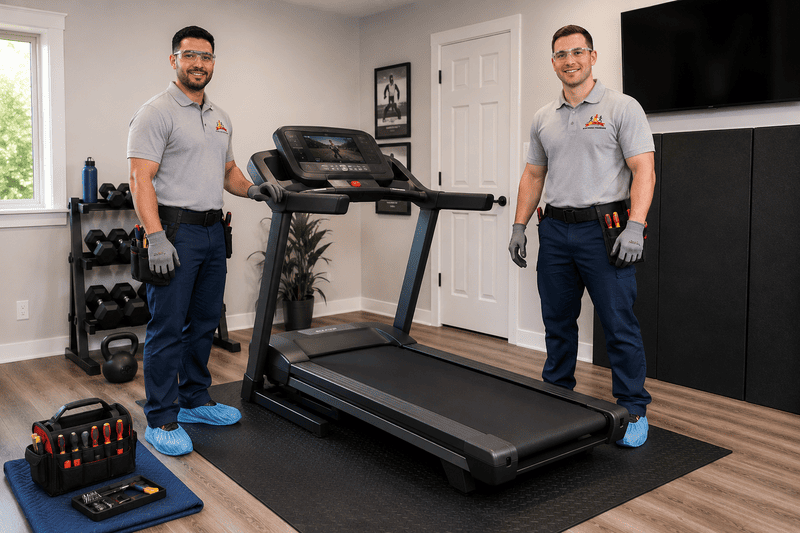
Professional treadmill assembly can help reduce avoidable setup issues by improving placement, checking hardware, supporting belt tracking, and catching room-related problems before they become daily annoyances. It does not guarantee perfect performance forever, but it may improve stability and limit unnecessary vibration from the start.
Better setup usually starts with better checks
A careful installer can spot frame wobble, outlet placement issues, floor slope, and delivery-related positioning errors before they affect the workout. Many owners also look for added treadmill cardio equipment assembly help when assembling multiple machines or mixed exercise equipment in one room.
Schedule Treadmill Assembly With Treadmills Installers
A steadier treadmill usually starts with smarter placement, better leveling, tighter hardware checks, and cleaner belt alignment. When those details are handled early, daily workouts often feel smoother and less disruptive.
If your space also includes facility basketball hoops, bunk bed assembly, office furniture moving, or estate furniture disassembly, coordinated planning can make the whole project easier.
Get the setup right before problems start
When you are ready to schedule treadmill setup help today, Treadmills Installers can assist with treadmill assembly, installation cost planning, heavy gym equipment setup, home gym support, and commercial exercise equipment assembly.
Frequently Asked Questions
Why does my treadmill wobble after assembly?
It often wobbles because the floor is uneven, the frame is not fully level, or the hardware was tightened unevenly.
Can an uneven floor make a treadmill noisy?
Yes. An uneven surface can cause frame movement, vibration, and extra rattling during use.
What causes a treadmill belt to drift sideways?
Belt drift usually starts with poor rear roller adjustment, uneven tension, or a setup issue that affects tracking.
Should treadmill bolts be tightened again after setup?
They should be checked according to the manufacturer’s instructions because some hardware can settle after initial use.
Can carpet affect treadmill stability?
Yes. Soft or uneven carpet can change how the treadmill sits and may increase rocking under load.
Do heavy treadmills need professional assembly?
In many cases, yes. Heavier machines usually need more careful placement, lifting, leveling, and final adjustment.
Can poor setup damage the treadmill belt?
It can contribute to uneven belt wear if alignment, tension, or deck support are off from the beginning.
When should I schedule treadmill assembly help?
Schedule help before first use if the treadmill is heavy, the room is tight, the floor is uneven, or you want cleaner setup and placement planning.

Why Schools Trust Professional Classroom Furniture Installation Services to Put Student Safety First