Why Professional Elliptical Machine Assembly Matters for Safety, Performance, and Warranty Protection
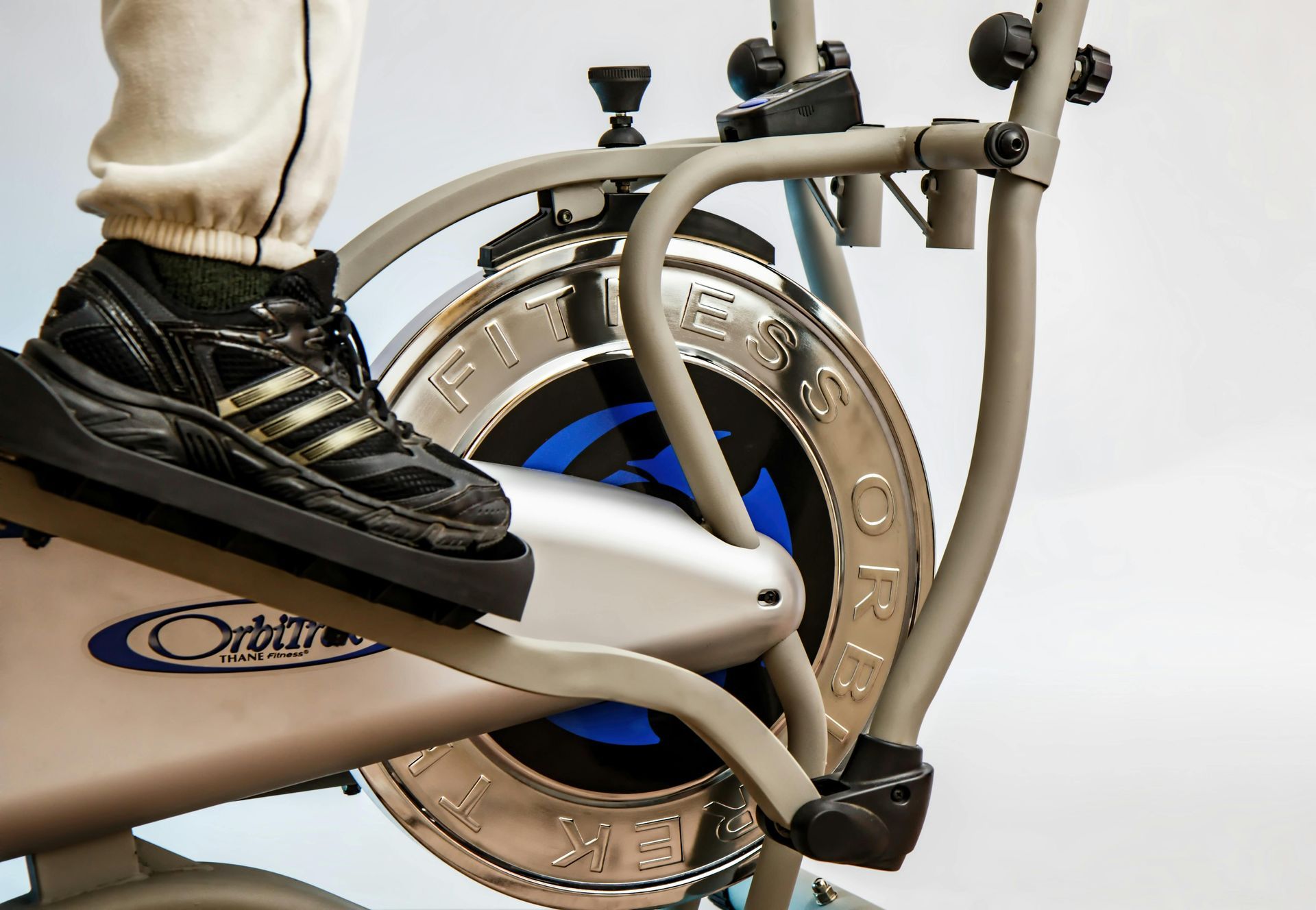
Professional elliptical machine assembly matters because safety, performance, and warranty protection depend on more than getting the machine to stand upright. A rushed or uneven setup can lead to wobbling, premature wear, odd resistance issues, and hardware problems that often show up only after weeks of use. That is where small mistakes turn expensive.
A properly assembled elliptical should feel smooth, stable, quiet, and secure from the first workout. For homeowners, fitness enthusiasts, facility managers, and gym operators, professional installation helps protect both the machine and the people using it. When the goal is reliable cardio equipment that lasts, correct assembly is not a nice extra. It is part of the investment.
Why Proper Elliptical Assembly Is About More Than Bolts
Proper elliptical assembly is about alignment, balance, torque, and long-term function, not just tightening hardware. A machine can look assembled and still be set up incorrectly. That is why professional elliptical machine assembly service matters for both home users and shared workout spaces.
An elliptical has moving arms, pedals, pivot points, rollers, electronics, and a frame that must work together smoothly. If one component sits slightly out of position, the whole stride can feel off. Over time, that can lead to noise, instability, or faster wear on key parts.
This is also why many buyers start looking at specialized elliptical setup and installation support after opening the box and seeing how many parts affect motion, comfort, and safety. It is not just assembly. It is machine setup with consequences.
What Can Go Wrong During Elliptical Machine Setup
A lot can go wrong during elliptical setup, especially when parts are installed out of sequence, hardware is unevenly tightened, or the frame is placed on an unsuitable surface. Even a small mistake can affect stability, resistance, pedal tracking, and user comfort long after installation day.
Some problems show up right away. Others stay hidden until the machine has been used for a few weeks. That delay is what catches people off guard.
Common setup issues include:
- Misaligned pedal arms that create an uneven stride
- Loose bolts that cause creaking or side-to-side movement
- Incorrect console or wire connections that affect resistance and display functions
- Uneven foot placement on the floor that makes the unit rock during use
Those issues are more common than people think, especially with larger home machines or heavier models designed for frequent use.
How Does Professional Assembly Improve Elliptical Performance
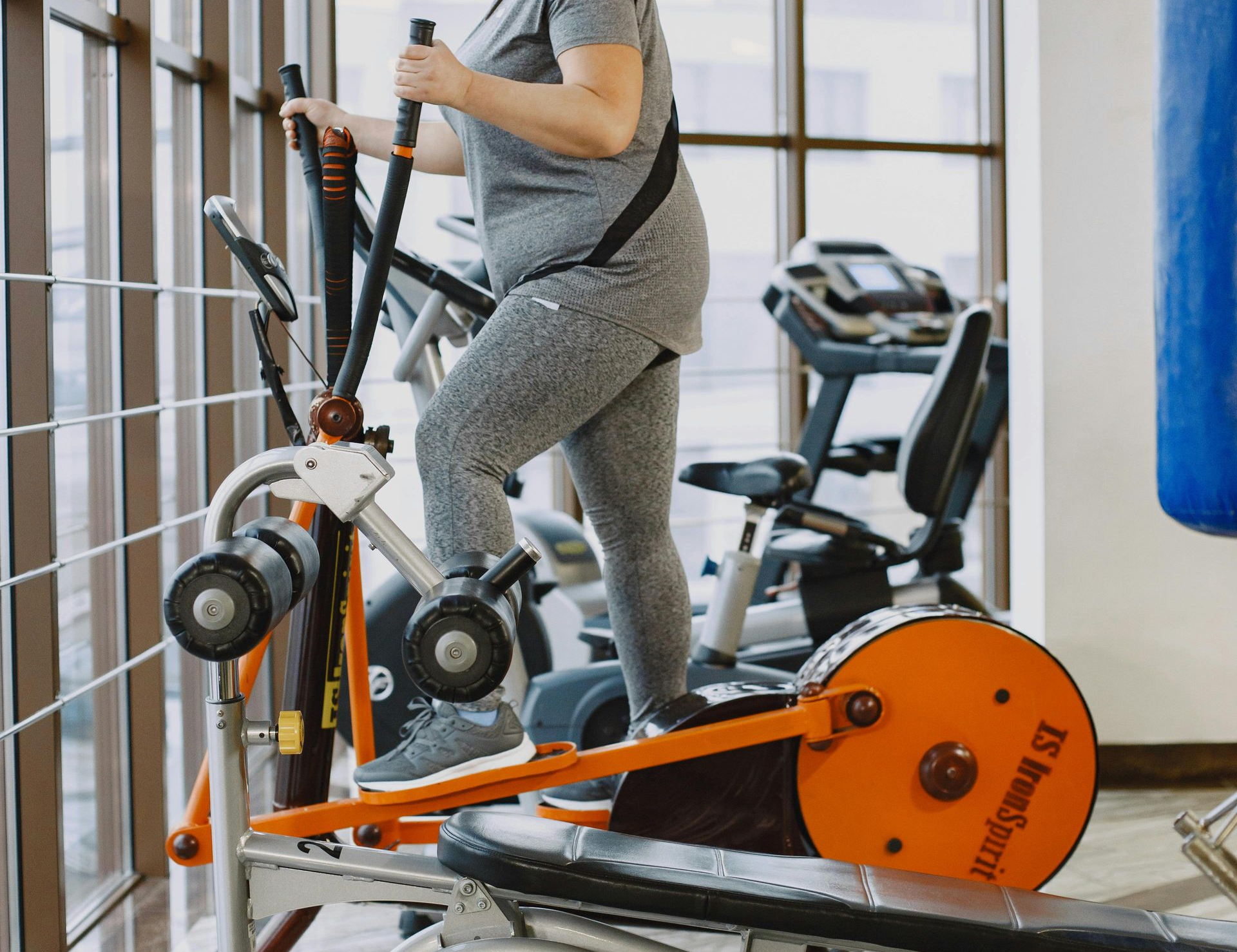
Professional assembly improves elliptical performance by making sure the machine moves as designed, with smooth resistance, balanced motion, and stable contact with the floor. When the frame, pedals, arms, and console are installed correctly, the workout feels more natural and the machine performs more consistently.
That difference matters whether you are assembling a premium home model or a unit for daily use in a shared training room. Feature-rich machines such as NordicTrack ellipticals often include added components that benefit from careful setup, while sturdier performance-focused models like Sole ellipticals depend on solid frame alignment to feel right under load.
If you are building out a full cardio room, consistency matters across every machine. The same standard should apply to related equipment like exercise bike setup services, because one poorly assembled unit can make the whole room feel less reliable.
Can Incorrect Assembly Create Safety Risks Over Time
Incorrect assembly can create real safety risks over time because instability, loose hardware, and poor alignment often worsen with repeated use. A machine that feels only slightly off on day one can become noisy, shaky, or unsafe after dozens of workouts.
General safety expectations for stationary fitness equipment are reflected in ASTM guidance for exercise equipment, and those expectations make practical sense in everyday use. People step onto ellipticals expecting controlled motion. If the frame shifts, pedals bind, or handles loosen, the user may lose balance without warning.
For households with multiple users and facilities with steady traffic, safe elliptical assembly is not just about avoiding inconvenience. It is about reducing preventable risk.
Why Warranty Protection Often Depends on Proper Installation
Warranty protection often depends on proper installation because manufacturers may deny coverage when damage appears related to setup errors, misuse, or poor placement. If the machine is assembled incorrectly and parts wear out early, the problem may be treated as avoidable rather than defective.
That point matters because ellipticals are not cheap, and replacement parts can add up fast. Brands design machines around expected use conditions, including proper frame assembly, hardware torque, and stable placement. If those basics are missed, warranty conversations get harder.
A simple definition helps here. Proper installation means the machine is assembled according to the manufacturer’s instructions, placed on an appropriate surface, and adjusted so all moving parts operate as intended without abnormal stress.
Which Elliptical Parts Need the Most Care During Setup
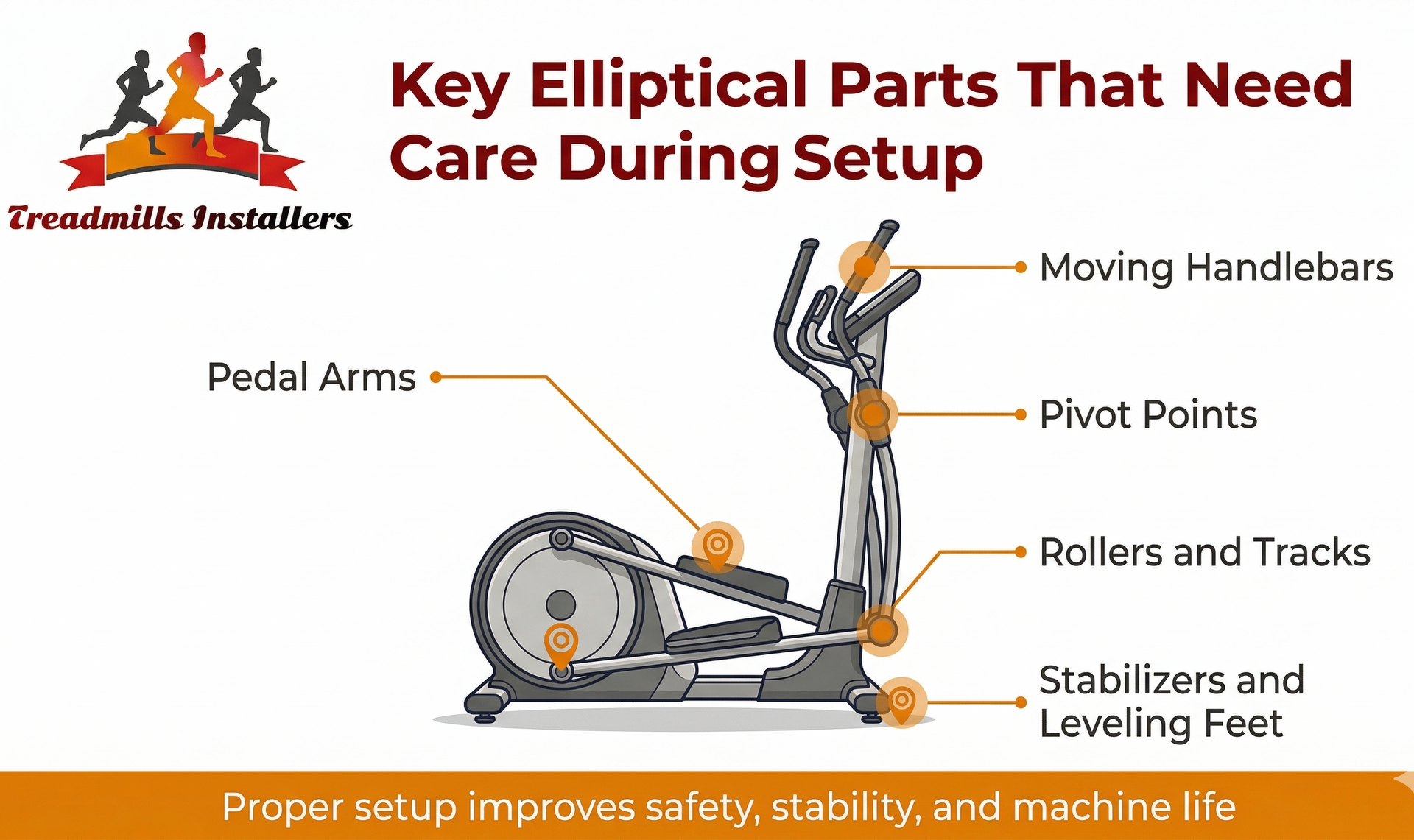
The parts that need the most care during elliptical setup are the pedal arms, moving handlebars, pivot points, rollers, stabilizers, and electronic connections. These components directly affect motion, comfort, and safety, so small errors in these areas can create bigger performance issues later.
Elliptical-specific safety and design considerations are also reflected in ASTM material for elliptical trainers, which is one more reminder that these machines are more complex than they first appear. Setup details vary by machine type too. Compact cardio designs such as Bowflex Max Trainer machines have a different footprint and movement pattern than traditional ellipticals, so assembly accuracy still matters even when the machine looks smaller.
The most sensitive areas usually include:
- Pedal arm connections that control stride balance
- Moving handle joints that must stay tight without binding
- Rollers and tracks that need clean alignment
- Stabilizer feet that support the frame evenly
- Console wires that can be pinched, stretched, or misconnected
How Do Placement and Leveling Affect Stability and Use
Placement and leveling affect stability, comfort, accessibility, and long-term wear because even a correctly assembled machine can perform poorly on the wrong surface or in the wrong location. Good setup includes enough clearance, proper floor contact, and a layout that supports safe use from every angle.
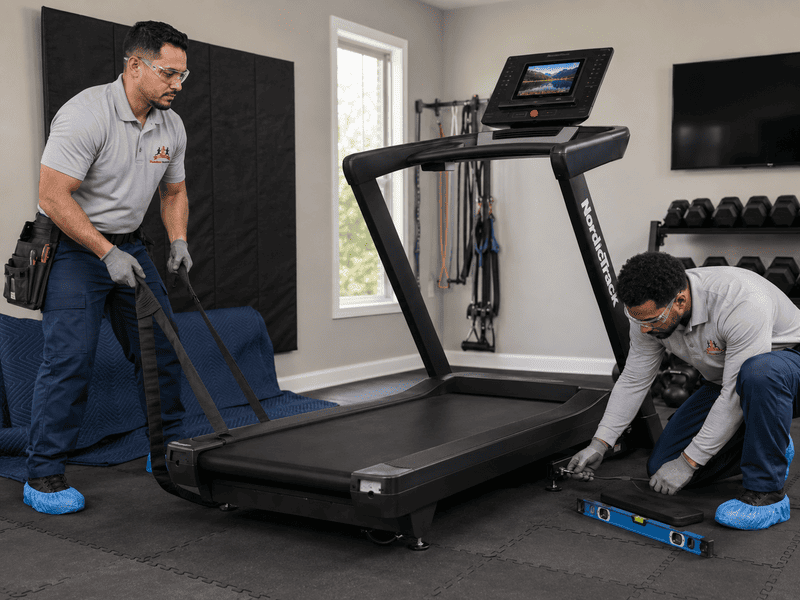
Leveling means adjusting the machine until all contact points sit evenly on the floor and the frame stays steady through the full stride.
That matters even more in a home gym, where flooring, wall clearance, and nearby equipment can vary a lot from one room to another. In apartment gyms, studios, and other shared spaces, commercial fitness equipment assembly support helps with safe spacing, traffic flow, and multi-machine layouts. Accessibility and circulation also matter in those settings, especially where shared workout access is a priority, which is why ADA fitness space considerations are worth reviewing.
If the machine needs to be moved between rooms, floors, or buildings, it is smart to follow guidance on moving gym equipment and treadmills safely instead of dragging an assembled elliptical and hoping for the best.
Mistakes That Can Shorten the Life of an Elliptical Machine
The mistakes that shorten an elliptical’s life are usually preventable. Uneven setup, ignored wobble, loose fasteners, poor placement, and delayed corrections all create extra stress on the frame and moving parts, which speeds up wear and can turn a fixable issue into a major repair.
The trouble is that owners often adapt to a bad machine instead of correcting it. They accept a click, a sway, or a rough pedal path as normal when it is really a warning sign.
The biggest lifespan killers are:
- Continuing to use the machine after it starts rocking or clicking
- Setting it on uneven or soft flooring without correcting the base
- Retightening random bolts without checking alignment first
- Moving the machine carelessly while fully assembled
- Waiting too long to get help when the motion feels wrong
When problems appear after setup, broader assembly, installation, and repair support can prevent further damage. In some cases, corrective repair service for equipment issues caused by poor setup is the smarter move than continuing to use a machine that is clearly off.
Protect Your Investment With Professional Elliptical Setup
Professional elliptical setup protects your investment by improving safety, stability, comfort, and long-term performance from the start. It also reduces the chance of avoidable warranty problems and helps make sure your machine fits the room, the users, and the way the space will actually be used.
Treadmills Installers is the company to hire when you want home elliptical setup or commercial elliptical assembly done carefully in Maryland, Washington DC, Delaware, Pennsylvania, and Northern Virginia, including areas like Baltimore, Rockville, Bethesda, Arlington, Alexandria, Wilmington, and Harrisburg. Whether you are upgrading a private workout room, refreshing a shared fitness space, or adding equipment to a larger facility, professional installation keeps the process cleaner and the result more reliable. To schedule service, contact Treadmills Installers.
That same planning mindset helps with surrounding setup needs too. Some customers are also dealing with room transitions and benefit from guidance on furniture disassembly before a move, while others are coordinating adjacent upgrades such as TV stand and entertainment center setup for media walls near home cardio zones.
In office wellness rooms and mixed-use commercial spaces, decisions about layout can overlap with technology-integrated office furniture setup. Even multi-use residential spaces can raise practical planning questions, like lighting and visibility, similar to what people consider with basketball hoop lighting solutions. The point is simple. Good setup is never just about one item. It is about making the whole space work better.
Key Takeaways
- Proper elliptical machine assembly affects more than appearance because alignment, balance, and hardware tension all shape safety and performance.
- Stable placement and precise leveling help the stride feel smoother, reduce wobble, and lower stress on moving parts.
- Pedal arms, handlebars, rollers, stabilizers, and wiring need the most care during setup because small mistakes there can cause bigger issues later.
- Correct installation supports warranty protection by reducing the chance that preventable setup errors will be blamed for damage.
- Professional help is often the safer choice for home gyms, shared fitness rooms, and commercial spaces where machine reliability matters every day.
Frequently Asked Questions About Elliptical Machine Assembly
How long does elliptical machine assembly usually take?
Most elliptical machine assembly jobs take one to three hours, depending on the model size, number of components, and room conditions. Larger machines or shared fitness spaces may take longer because placement and leveling matter just as much as assembly.
Do ellipticals really need professional installation?
Yes, professional installation is often worth it because ellipticals have moving parts, electronics, and frame connections that must work together correctly. A machine can look finished while still being unstable or misaligned.
Can incorrect setup void an elliptical warranty?
Yes, it can contribute to a denied claim if damage appears related to assembly mistakes, poor placement, or misuse. That is why proper installation and early adjustment matter so much.
How much space should an elliptical have around it?
Most ellipticals need enough space for safe entry, full arm movement, and rear and side clearance during use. The exact amount depends on the model, but cramped placement can affect both safety and comfort.
Which parts are easiest to assemble incorrectly?
Pedal arms, moving handlebars, stabilizers, and console wiring are commonly assembled incorrectly. These are also the areas most likely to affect motion quality and long-term reliability.
Can an elliptical be moved after assembly?
Yes, but moving it carelessly can knock components out of alignment or stress the frame. For longer moves or room changes, partial disassembly is often the safer choice.
How can you tell if an elliptical is level and stable?
A level elliptical should sit firmly on the floor without rocking, swaying, or clicking during a normal workout. If the frame shifts or the stride feels uneven, the setup likely needs adjustment.
When is repair better than reassembly?
Repair is usually better when the machine is already assembled but has developed a specific issue such as noise, looseness, or damaged hardware. Reassembly makes more sense when the original setup was clearly incorrect from the start.