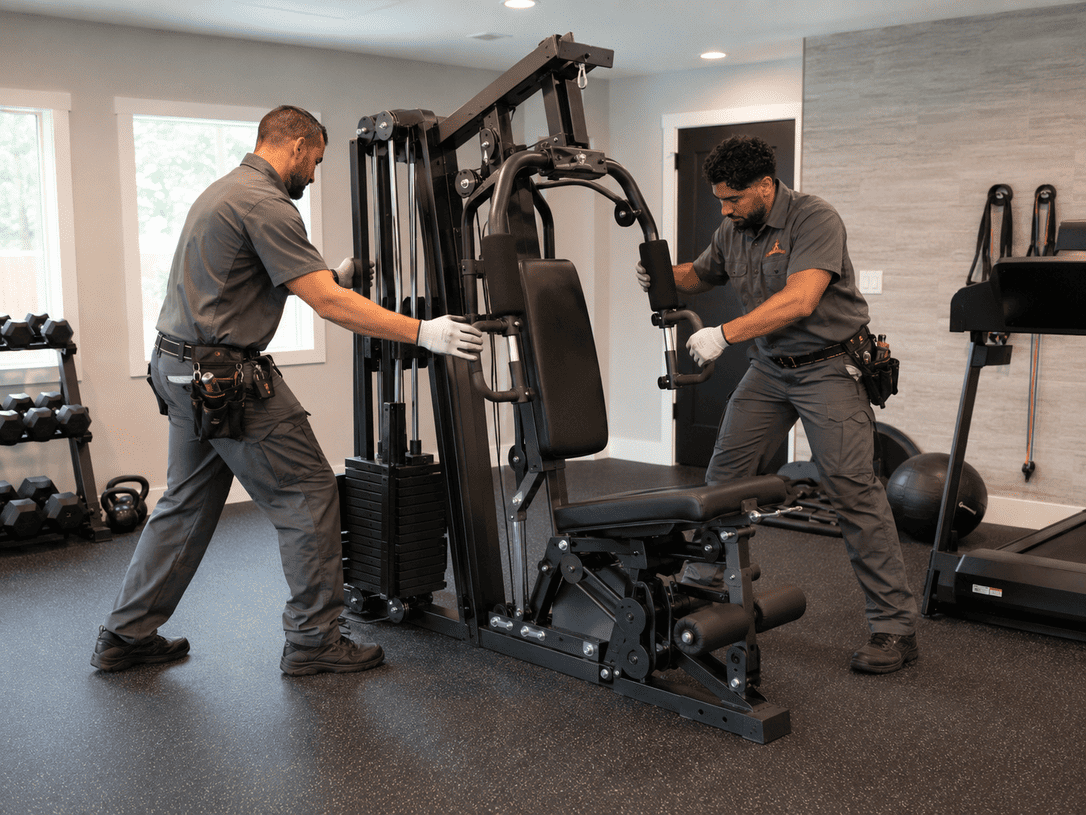
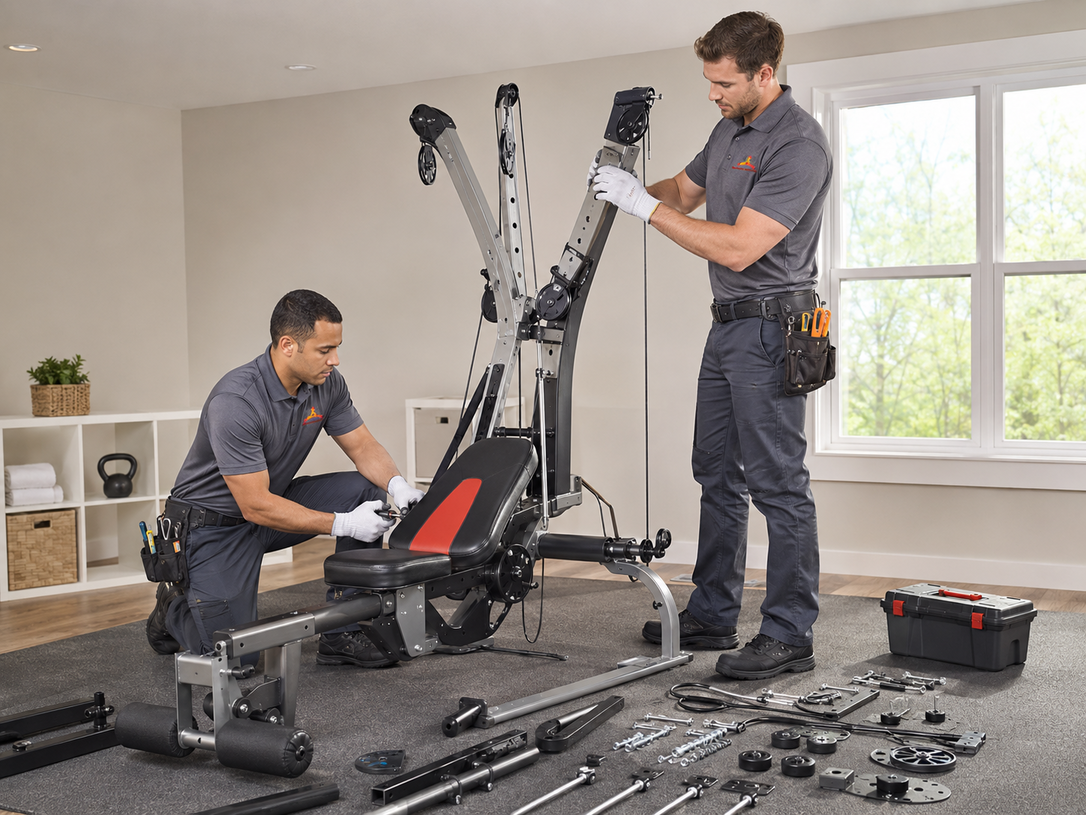
How Fitness Equipment Moving and Reinstallation Helps Prevent Damage and Downtime
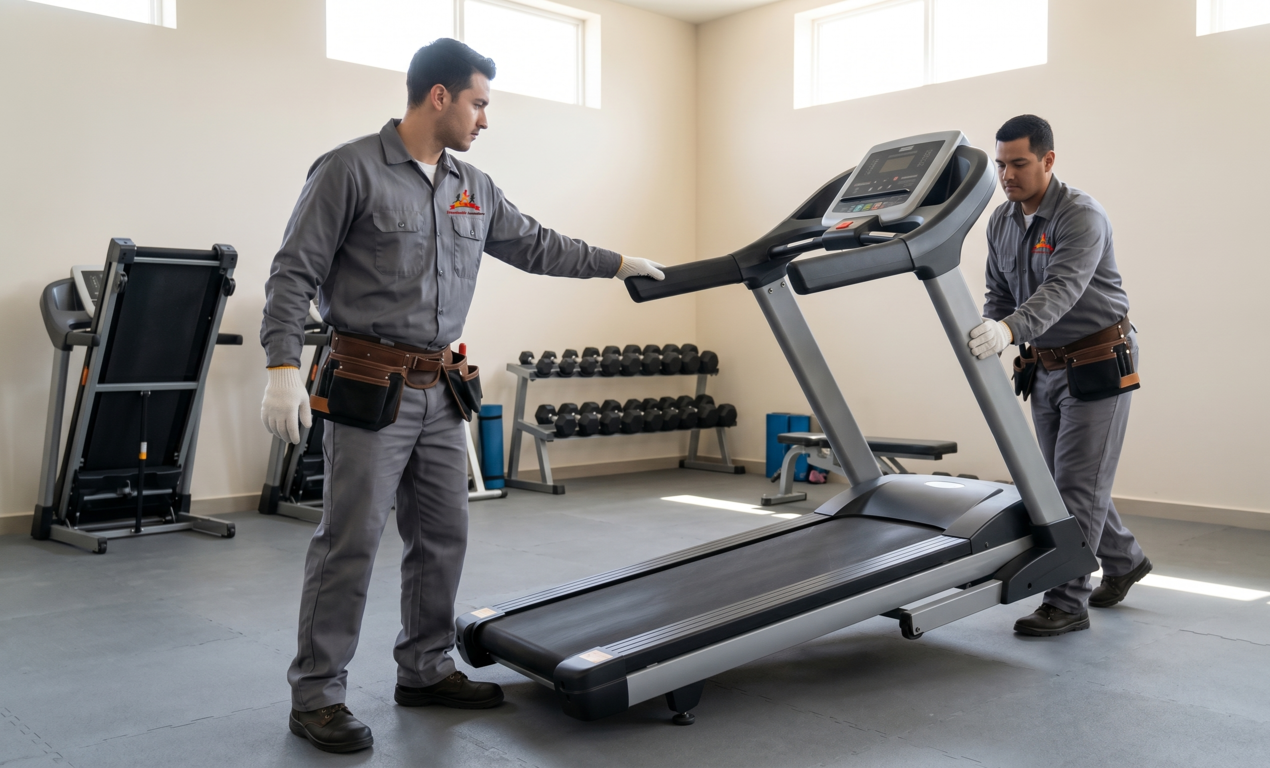
Professional fitness equipment moving and reinstallation protects heavy machines from impact, misalignment, and setup errors that often cause breakdowns and delays. When trained installers handle disassembly, transport, placement, and recalibration, your equipment gets back in service faster and with fewer problems.
- Safer lifting and transport for heavy machines
- Better protection for frames, consoles, and flooring
- Faster reopening for home and commercial gyms
- Correct placement, leveling, and performance checks
Moving fitness equipment looks simple until a treadmill belt slips, a cable machine arrives unbalanced, or a studio loses training hours waiting on reassembly. What starts as a basic relocation can quickly turn into scratched floors, damaged electronics, safety hazards, and frustrated members or homeowners. In addition, every delay stretches downtime and disrupts routines, revenue, and operations. That is why professional moving and reinstallation is the smarter path. With the right team, equipment is disassembled correctly, transported safely, set in the right position, and tested before use so the move does not create a second problem after the first one is finished.
Why Fitness Equipment Moving Requires Professional Handling
Fitness equipment moving requires professional handling because these machines are heavy, awkward, and mechanically sensitive at the same time. A safe move depends on proper breakdown, route planning, protection materials, and accurate reinstallation, not just strength.
Using experienced professional moving services helps protect frames, consoles, cables, and floors during every stage of the move. That matters even more because U.S. fitness equipment is shaped by safety, labeling, and performance expectations discussed in guidance on fitness product regulations in the United States. However, when tight stairs, corners, or upper-floor installs are involved, the same injury-prevention logic seen in heavy item moving best practices becomes essential.
What Types of Fitness Equipment Need Relocation Services
Nearly any machine with weight, electronics, moving parts, or calibration needs should be relocated professionally. The bigger the unit and the tighter the access path, the higher the chance of damage, delay, or unsafe reassembly.
| Equipment type | Common moving risk | Why reinstallation matters |
|---|---|---|
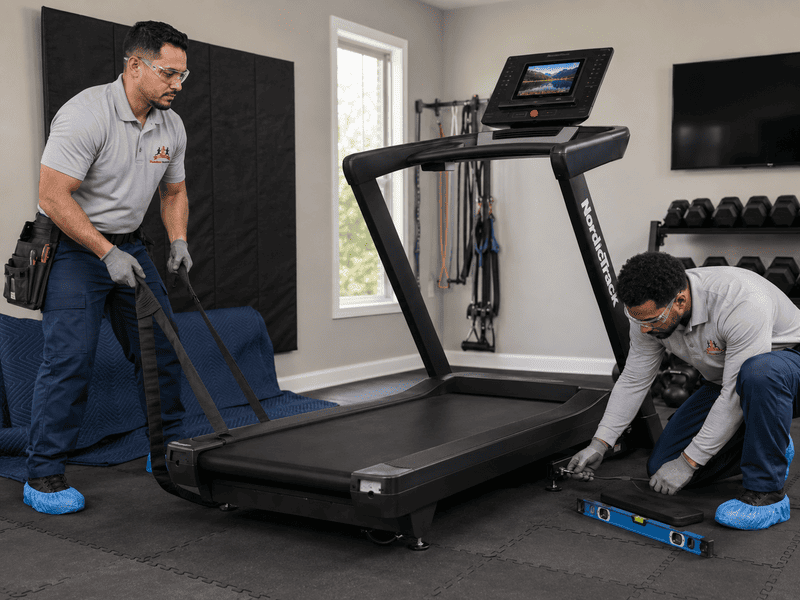
| Treadmills | Console damage, frame twist, belt misalignment | Leveling and testing restore smooth operation |
| Ellipticals | Loose arms, pedal damage, wiring strain | Correct assembly protects motion and stability |
| Home gyms | Cable mix-ups, missing hardware | Proper routing and tension prevent unsafe use |
| Spin bikes and rowers | Bent parts and transport scratches | Correct placement improves safety and performance |
| Commercial strength machines | Layout errors and long downtime | Fast reinstall supports member access |
For mixed cardio and strength projects, professional support with gym equipment assembly for home and commercial gyms helps keep the move organized from teardown to final setup.
How Improper Moving Causes Equipment Damage and Downtime
Improper moving causes damage when machines are dragged, partially dismantled, or reassembled without the right sequence. As a result, a short move can turn into repairs, replacement parts, schedule changes, and lost workout time.
Common problems include:
- cracked plastic covers and broken consoles
- bent uprights, rails, or adjustment arms
- missing bolts, pins, and cable hardware
- uneven placement that causes wobble or noise
In addition, transport risk is not just about the move itself. Questions about loss, damage responsibility, and coverage are exactly why federal guidance on mover liability protection matters before equipment is loaded.
Can Fitness Equipment Be Moved Without Professional Help
Some small benches or mats can be moved without professional help, but most treadmills, ellipticals, and multi-station machines should not be. The risk usually comes from awkward lifting, not from distance alone.
A homeowner may only be moving a treadmill across town, yet the real challenge is getting it through a doorway without damaging the handrails, wall corners, or motor housing. Therefore, DIY moves often cost more once repairs, rework, and lost time are added back in.
What Causes Delays During Gym Equipment Reinstallation
Most reinstallation delays come from poor prep, missing hardware, blocked access, or unclear placement decisions. Therefore, the fastest projects are usually the ones planned before moving day rather than solved room by room after arrival.
Typical delays include:
- parts packed in multiple unlabeled boxes
- power outlets or ceiling clearance issues
- uncertain room layouts and machine spacing
- damaged hardware discovered mid-install
When a project needs staged teardown and setup, a coordinated disassembly and relocation service reduces handoff mistakes. The same is true for larger moves that mix equipment with cabinetry or furnishings, where furniture disassembly, reassembly, moving, and storage support keeps the schedule tighter.
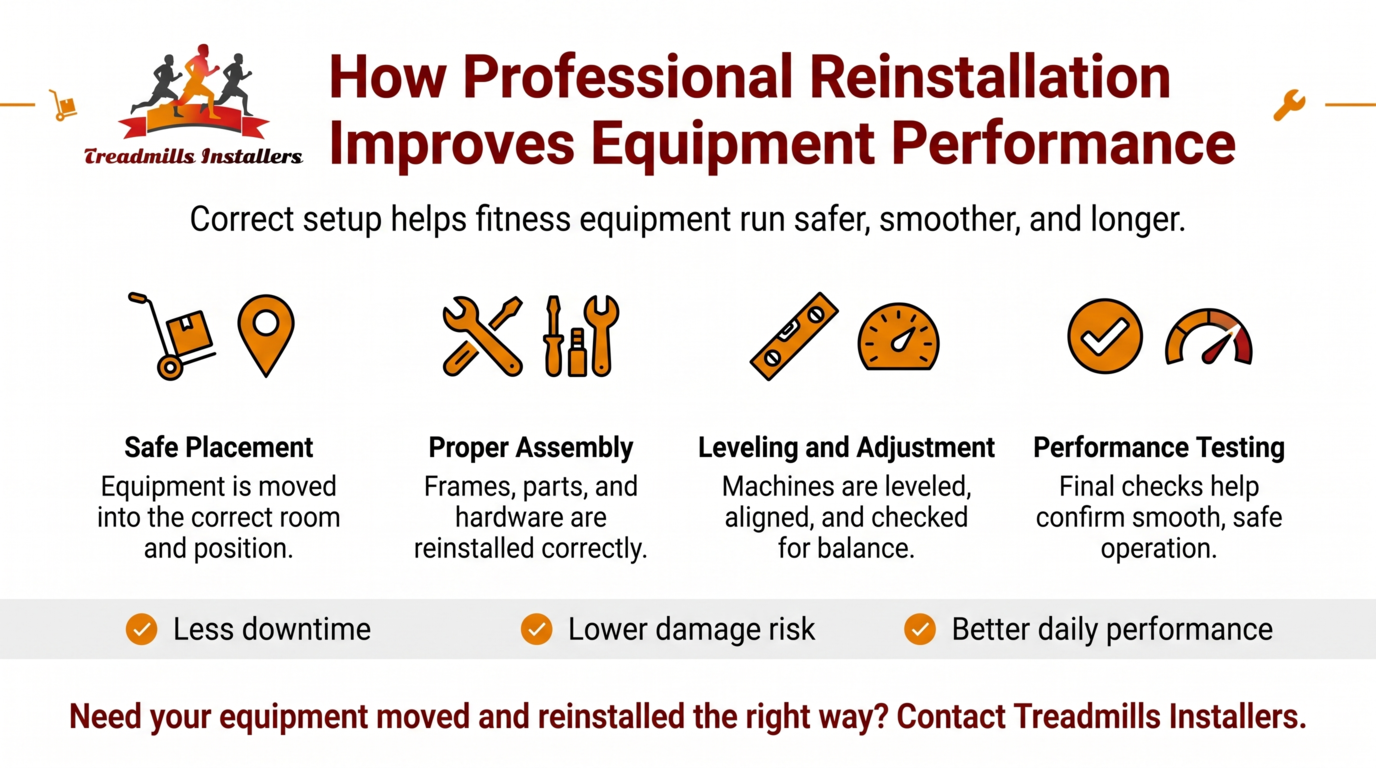
How Professional Reinstallation Improves Equipment Performance
Professional reinstallation improves equipment performance by restoring level placement, proper bolt tension, cable routing, and safe spacing. In addition, it helps catch small setup errors before they become daily performance problems.
A relocated treadmill, for example, should not just be moved into place. It should be checked for stability, clearance, and post-move function through proper treadmill assembly. For broader projects, added fitness equipment installation and setup support can help ensure the full room is ready to use, not just unpacked.
Why Home and Commercial Gyms Have Different Moving Needs
Home and commercial gyms have different moving needs because they serve different traffic levels, layouts, and performance expectations. A home project focuses on access and floor protection, while a commercial project must also support reopening speed, user flow, and compliance.
Home gym moves often involve spare bedrooms, basements, and garage conversions, which is why home gym relocation and setup support matters for residential customers. Commercial projects usually involve multiple machines, phased installation, and tighter schedules, so commercial exercise equipment assembly becomes part of operational planning. For public-use spaces, layout decisions should also respect accessibility principles outlined for ADA-compliant fitness and health clubs.
What Mistakes Lead to Equipment Damage During Relocation
The most common relocation mistakes are rushing disassembly, skipping labels, and forcing large machines through tight paths. However, many preventable problems happen after transport, when equipment is placed fast but not set up correctly.
Watch for these mistakes:
- removing parts without documenting the order
- mixing hardware from different machines
- dragging machines across finished floors
- guessing at final placement and clearances
- tightening or reconnecting components unevenly
How to Prepare Fitness Equipment Before Moving Day
The best way to prepare fitness equipment before moving day is to clear access, confirm the final layout, and keep all parts organized. As a result, movers can work faster, install more accurately, and reduce unnecessary downtime.
A simple checklist helps:
- remove nearby obstacles and protect floors
- keep manuals, keys, and hardware together
- photograph cable paths or accessory placements
- confirm outlets, ceiling height, and workout clearance
- keep pets, children, and members away from the work zone
Get Safe and Efficient Fitness Equipment Moving Services
If you want to protect your equipment, reduce downtime, and get every machine reinstalled correctly, contact Treadmills Installers for professional moving and setup. If you are also improving adjacent spaces, you may want to explore basketball hoop lighting solutions, storage cabinet placement tips, and what to expect from professional furniture assembly services.
Frequently Asked Questions About Fitness Equipment Moving
How long does fitness equipment moving usually take?
Most single-machine moves take a few hours, while full home gyms or commercial spaces may take half a day or longer. The timeline depends on access, disassembly needs, travel distance, and how much reinstallation is required.
Do treadmills need to be disassembled before moving?
Many treadmills should be partially disassembled before moving, especially when stairs, tight doorways, or upper-floor placement are involved. This helps protect the frame, console, and surrounding walls during transport.
How do you prevent damage when moving gym equipment?
Damage is prevented by using the right lifting method, protective materials, organized hardware handling, and careful transport planning. Correct reinstallation also matters because poor leveling or loose connections can create problems after the move.
How much does professional gym equipment moving cost?
Cost depends on the number of machines, size, weight, stairs, access difficulty, and whether reinstallation is included. In most cases, professional service costs less than repairing damaged equipment or extending downtime.
Does reinstallation affect equipment performance?
Yes, reinstallation can affect performance if the machine is not leveled, tightened, or calibrated correctly after the move. Professional reinstallation helps restore stable operation, reduce noise, and prevent early wear.
Is professional moving worth it for a home gym?
Yes, especially when the equipment is heavy, expensive, or awkward to move through a house or apartment. Professional help reduces injury risk, protects your property, and gets your workout space running again faster.